Applications Made to the Foreign Intelligence Surveillance Court During Calendar Year 2012
Open PDFDocument date: -
Pages: 1
Genre: report
Classification: -
Dissemination: -
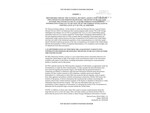
The statutory report on applications to the Foreign Intelligence Surveillance Court in calendar year 2012: 1,856 applications, 1,789 of them seeking electronic surveillance, one withdrawn by the government and none denied in whole or in part.
My notes
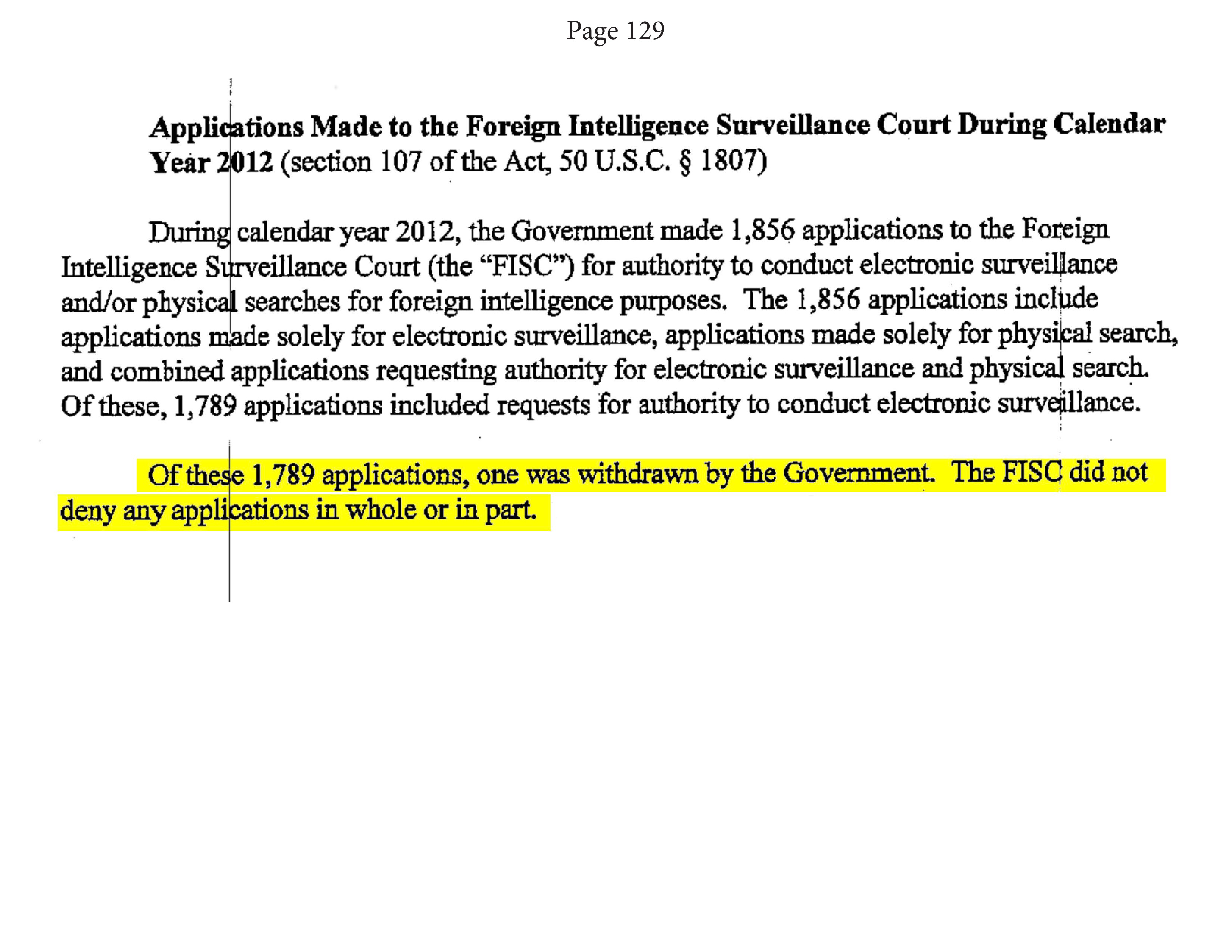
Applications Made to the Foreign Intelligence Surveillance Court During Calendar
Year 2012 (section 107 of the Act, 50 U.S.C. § 1807)
During calendar year 2012, the Government made 1,856 applications to the Foreign
Intelligence Surveillance Court (the "FISC") for authority to conduct electronic surveillance
and/or physical searches for foreign intelligence purposes. The 1,856 applications include
applications made solely for electronic surveillance, applications made solely for physical search,
and combined applications requesting authority for electronic surveillance and physical search.
Of these, 1,789 applications included requests for authority to conduct electronic surveillance.
Of these 1,789 applications, one was withdrawn by the Government. The FISC did not
deny any applications in whole or in part.
Published in the Same Report
(10 of 62 documents)
-
NSA Intelligence Relationship with Canada's Communications Security Establishment Canada (CSEC) [pdf]
This document describes the close, long-standing SIGINT partnership between the NSA and Canada’s CSEC, emphasizing cooperative efforts in global intelligence collection, cyber operations, information assurance, and critical infrastructure defense. It highlights mutual contributions, including CSEC’s unique geographic access, covert sites, cryptographic capabilities, and R&D collaboration, supporting U.S. and North American security objectives.
“Communication Security Establishment's cyberwarfare toolbox revealed” - CBC News ↗ (2015-03-23) · “Documents Reveal Canada’s Secret Hacking Tactics” - The Intercept ↗ (2015-03-23) · “No Place to Hide” - Metropolitan Books ↗ (2014-05-13) · Seglins, Dave · Hildebrandt, Amber · Pereira, Michael · Greenwald, Glenn · Gallagher, Ryan -
Close Access SIGADS [pdf]
A 10 September 2010 NSA reference list of Close Access SIGADs revealing the codenames, locations and collection methods used to bug the embassies and UN missions of 38 targets — including US allies France, Italy, Greece, Japan, India, Mexico, South Korea and the EU — through implants, computer-screen capture, hard-drive imaging and electromagnetic emanation collection, most conducted against diplomatic facilities in Washington DC and New York.
Programs: KATEEL · POCOMOKE · MERCED · BANISTER · PERDIDO · MAGOTHY · BLACKFOOT · WABASH · NAVARRO · POWELL · KLONDIKE · NASHUA · OSAGE · OSWAYO · BRUNEAU · HEMLOCK · MULBERRY · ALAMITO · FLEMING · DOBIE · SULPHUR · REQUETTE · YUKON · WESTPORT · NAVAJO · PANTHER · LIFESAVER · HIGHLANDS · VAGRANT · MINERALIZ · DROPMIRE · PBX · MAGNETIC · OCEAN · GENIE · BLACKHEART · CRYPTOENABLED · CUSTOMS · DEWSWEEPER · RADON · MINERALIZE · COOP · STARRUBY · TRASHINT“No Place to Hide” - Metropolitan Books ↗ (2014-05-13) · “Espionnage de la NSA : la diplomatie française était sur écoute aux Etats-Unis” - Le Monde ↗ (2013-10-22) · “Da qui ci spiano gli americani” - L'Espresso ↗ (2013-12-05) · Greenwald, Glenn · Follorou, Jacques · Maurizi, Stefania -
Cyber Integration [pdf]
The leaked 2012 GCHQ JTRIG presentation detail a wide range of offensive cyber and influence operations designed to “deny, disrupt, degrade, and deceive” targets, including hackers, foreign governments, companies, and individuals. Tactics include hacking, DDOS attacks, disinformation, honey traps, credential harvesting, and psychological operations, reflecting a shift from traditional surveillance to active disruption and manipulation campaigns.
“Exclusive: Snowden Docs Show British Spies Used Sex and 'Dirty Tricks'” - NBC News ↗ (2014-02-07) · “No Place to Hide” - Metropolitan Books ↗ (2014-05-13) · Cole, Matthew · Esposito, Richard · Schone, Mark · Greenwald, Glenn -
XKEYSCORE intro [pdf]
A TOP SECRET NSA presentation from 2008 introducing XKeyscore — one of the earliest overview documents in the archive — describing the system as a globally distributed Linux cluster across approximately 150 sites and 700+ servers that stores a ~3-day rolling buffer of all unfiltered internet traffic, and demonstrating its core capabilities for finding previously unknown targets by mining metadata, tracking documents by embedded image hashes, detecting encryption and VPN use, and language tracking.
Programs: XKEYSCORE · TURMOIL · TURBULENCE · TRAFFICTHIEF · WEALTHYCLUSTER · MOONSHINE · SEARCHLIGHT · MARINA · PSC · SSO · TIMBERLINEPeople: bin Laden, Osama“'Brasil é um grande alvo', diz jornalista sobre vigilância dos EUA” - O Globo ↗ (2013-07-07) · “XKeyscore: NSA tool collects 'nearly everything a user does on the internet'” - The Guardian ↗ (2013-07-31) · “No Place to Hide” - Metropolitan Books ↗ (2014-05-13) · “XKEYSCORE: NSA’s Google for the World’s Private Communications” - The Intercept ↗ (2015-07-01) · Greenwald, Glenn · Bridi, Sônia · Marquis-Boire, Morgan · Lee, Micah -
Intelligently filtering your data: Brazil and Mexico case studies [pdf]
These documents reveal that the NSA conducted targeted surveillance operations against high-profile Brazilian and Mexican figures, including President Dilma Rousseff and presidential candidate Enrique Peña Nieto, using advanced contact-graph filtering and data analysis techniques to extract relevant intelligence from intercepted communications. These documents show how NSA analysts systematically developed intelligence on foreign leaders during election periods and diplomatic activities, framing it as “target development,” but in practice enabling deep political espionage under the guise of analytical innovation.
“Veja os documentos ultrassecretos que comprovam espionagem a Dilma” - O Globo ↗ (2013-09-02) · “No Place to Hide” - Metropolitan Books ↗ (2014-05-13) · Greenwald, Glenn -
Sharing Computer Network Operations Cryptologic Information with Foreign Partners [pdf]
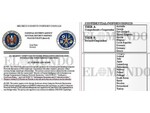
The document is a secret NSA/CSS policy outlining guidelines for sharing Computer Network Operations (CNO) cryptologic information with foreign partners, including rules for cooperation in CNE and CND within existing intelligence relationships. The “Purpose and Scope” section on the first page appears to be unpublished elsewhere, while the Tier A and Tier B country lists match those publicly revealed in sources like Glenn Greenwald’s No Place to Hide.
“El CNI facilitó el espionaje masivo de EEUU a España” - El Mundo ↗ (2013-10-30) · “No Place to Hide” - Metropolitan Books ↗ (2014-05-13) · Greenwald, Glenn · Aranda, Germán -
NSA Spied On Porn Habits As Part Of Plan To Discredit 'Radicalizers' [pdf]
Top-secret document reveals how NSA has been gathering records of online sexual activity and evidence of visits to pornographic websites as part of a proposed plan to harm the reputations of those whom the agency believes are radicalizing others through incendiary speeches
-
Discovery SIGINT Targeting Scenarios and Compliance [pdf]
This document is a top-secret NSA guidance manual detailing SIGINT targeting scenarios, compliance procedures, and legal guidance for querying foreign actors, malware, and potentially U.S.-linked systems, including considerations for minimizing incidental collection of U.S. persons’ communications. It outlines specific rules, approvals, and exceptions for using SIGINT tools, foreign intelligence tasks, and cases involving ambiguous or dual-use selectors like WikiLeaks, The Pirate Bay, and foreign actors operating through U.S. infrastructure.
-
Elegant Chaos: collect it all, exploit it all [pdf]
This document outlines a classified project, "Elegant CHAOS," focused on advanced signals intelligence (SIGINT) collection, processing, and analysis using cutting-edge technologies like automated surveys and modems. It highlights goals such as real-time data analysis, collaboration with international partners, and integration with cloud-based platforms to manage massive data. See also the document with notes (by GCHQ): "Elegant-Chaos-collect-it-all-exploit-it-all-plus"
Programs: ELEGANTCHAOS · ASPHALT · ASPHALT-A · ASPHALT-A-PLUS · STORMFORCE · DARKQUEST · TORUS · XKEYSCORE · MHS CLOUD · TURMOIL · TARMAC · ASDF · SLR · POPQUIZ · WEALTHYCLUSTER2 · TRAVELLINGWAVE · BILBOBADGER · DRINKYBIRD · GLOBETROTTER · MASTERSHAKE · REST · TRAFFICTHIEF · VENUSAFFECT · FOGHORN · MATCHMAKER · ROADBED · MOONPENNY · AMULETSTELLAR · CLOUD · WEALTHYCLUSTER · MVR · TINT · IPGEOTRAP · MARINA · PLUS -
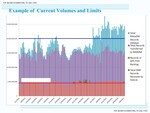
FASCIA: The NSA's huge trove of location records [pdf]
FASCIA is the National Security Agency's enormous database containing trillions of metadata records, many with device locations, that are collected from a variety of sources. This document shows the volume and types of device-location data collected by the agency.
“NSA tracking cellphone locations worldwide, Snowden documents show” - The Washington Post ↗ (2013-12-04) · “No Place to Hide” - Metropolitan Books ↗ (2014-05-13) · Gellman, Barton · Soltani, Ashkan · Greenwald, Glenn
Related Documents
-
Procedures Used By The National Security Agency For Targeting Non-United States Persons Reasonably Believed To Be Located Outside The United States To Acquire Foreign Intelligence Court Information Pursuant To Section 702 Of The Foreign Intelligence Surveillance Act Of 1978 [pdf]
The NSA’s 2009 Section 702 targeting procedures lay out how analysts decide who can be surveilled without a warrant, supposedly limiting spying to foreigners abroad. In reality, the rules give the agency wide latitude to presume people are foreign, rely on vague “totality of the circumstances” tests, and allow broad technical methods like IP filters and metadata checks. Oversight is mostly internal and after-the-fact, creating significant potential for U.S. communications to be swept up with little accountability.
People: Holder, Eric H. Jr. -
Minimization Procedures Used By The National Security Agency In Connection With Acquisitions Of Foreign Intelligence, Information Pursuant To Section 702 Of The Foreign Intelligence Court Surveillance Act Of 1978 [pdf]
The NSA’s Section 702 minimization rules expose how the agency can collect, keep, and use Americans’ communications without warrants, despite claiming to target only foreigners. While the document sets out procedures for handling U.S. data, it includes broad loopholes—like keeping “inadvertently” collected domestic messages for years, sharing unfiltered data with the FBI, CIA, and even foreign governments, and giving NSA analysts wide discretion over who gets surveilled—all under secret FISA Court approval.
People: Holder, Eric H. Jr. -
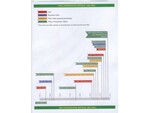
N.S.A. Timeline of Surveillance Law Developments [pdf]
This chart, apparently from an internal N.S.A. presentation, lists milestones in surveillance rules over nearly four decades. The July 2002 “Raw Take” sharing order, whose existence has not previously been disclosed, is just one of three rulings by the Foreign Intelligence Surveillance Court to make the list. The other two were 2004 and 2006 rulings allowing bulk collection of data about emails and phone calls.
-
New Intelligence Oversight Training Process SIDtoday [pdf]
Each year, as part of Intelligence Oversight training, all SID employees are required to read the five legal documents that govern SID's mission. "The basic principle behind these documents is the right to privacy. Since the SID mission involves electronic surveillance, it is subject to strict control under the U.S. Constitution."
The Intercept ↗ (2016-12-07) -
Fisa court warrant authorising NSA surveillance procedures [pdf]
One-paragraph order, signed by a Fisa court judge, declares procedures submitted by the attorney general on behalf of the NSA are consistent with US law and fourth amendment
Marking: SECRET