Tag: GSM 86 documents
Search documents matching “GSM” →Free-text subjects the curators added. Unlike the other axes these are not necessarily from the documents' own vocabulary, so they are the loosest thing to browse by (and the most forgiving).
Graphs
By document date (11 years)
By Banner
By Classification
Refine (combine with another filter, via search)
Sort: Title
Documents
-
Cooperation between the NSA and BND [pdf]
Comprehensive internal summary of the history and current state of cooperation between the NSA and BND
Programs: RT-RGPeople: Schindler, Gerhard -
Croats May Hold Key to Vital Intelligence on Montenegro SIDtoday [pdf]
Ahead of Montenegro’s secession referendum, the Croatian Intelligence Agency has intercepted phone signals of high intelligence value, which may give access to the future Montenegrin government’s communications.
The Intercept ↗ (2018-08-15) -
Digby geolocation [pdf]
The document reveals that RAF Digby was equipped with advanced profiling and analytics tools to enable (near) real-time co-location of GSM handsets, supporting intelligence operations across the Middle East and North Africa. It highlights the operational use of the RUM PUNCH algorithm on the DISTILLERY framework, which was jointly developed through an NSA–IBM–GCHQ partnership, allowing large-scale stream mining and independent analyst-led tracking operations. Enhancements at Digby extended beyond communications interception to include a new cyber mission, with capabilities to geo-locate emitters linked to IED arming and detonation under the FLAKJACKET mission, expanding the site’s role from surveillance to active battlefield support.
-
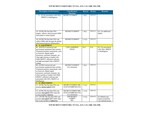
Excerpt of May 2008 NSA Afghanistan Dataflow Analysis [pdf]
The document outlines how the NSA’s Real Time Regional Gateway (RT-RG) in Afghanistan progressively expanded from late 2007 through 2008 to ingest massive amounts of GSM, VHF, HF, and telephony metadata from dozens of locations across Afghanistan, supplemented by third-party “dirtbox” collection from allied nations such as the Netherlands, Denmark, Norway, Germany, and Spain. It details the specific collection sites, data types, and timelines (SPIN 9, 10, 11, etc.), illustrating how partner contributions and multiple signals sources fed into the RT-RG system to enable real-time intelligence.
Programs: FOURCORNERS · FORTRESS · WARRIOR · ECHIDNA · CASSIEOPIA · KARUS · SOUNDER · SNICK · TEMPOWOLFE · CALYPSO · TATTERAN · AIRBORNE · LEAVEBEHIND · UDEAUS · NELEUS · CROSSHAIR · SSO · DRT · RIVET JOINT · VOICESAIL“Mission Creep: How the NSA’s Game-Changing Targeting System Built for Iraq and Afghanistan Ended Up on the Mexico Border” - The Intercept ↗ (2019-05-29) · “Norges hemmelige krig i Afghanistan” - NRK ↗ (2019-05-29) · Moltke, Henrik · Skille, Øyvind Bye · Døvik, Olav · Hansen, Ståle Ellingsgard · Fjørtoft, Martin -
FASCIA: The NSA's huge trove of location records [pdf]
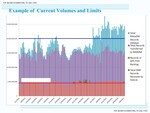
FASCIA is the National Security Agency's enormous database containing trillions of metadata records, many with device locations, that are collected from a variety of sources. This document shows the volume and types of device-location data collected by the agency.
“NSA tracking cellphone locations worldwide, Snowden documents show” - The Washington Post ↗ (2013-12-04) · “No Place to Hide” - Metropolitan Books ↗ (2014-05-13) · Gellman, Barton · Soltani, Ashkan · Greenwald, Glenn -
Field Station Rattler SIDtoday [pdf]
The Signals Intelligence Directorate team led by Maj. Gen. Richard Quirk visited the Baghdad international zone and met with diplomats at the U.S. embassy, and the NSA deployed staffers at the "No Heads Palace" headquarters of signals intelligence in Iraq.
People: Price, Wally · Quirk, Richard · Jeffrey · Kett · Allston · al-Zarqawi, Abu Musab · Hussein, SaddamThe Intercept ↗ (2017-09-13) -
GCHQ - PCS Harvesting [pdf]
A TOP SECRET STRAP1 report details how GCHQ industrialized the theft of GSM subscriber authentication keys (Ki) by automating trawls of bulk “C2C” content to extract IMSI/Ki pairs from emails and FTP transfers between SIM personalisation centers and mobile operators. It shows the program scaling key harvesting across networks and countries, complementing computer network exploitation against core mobile infrastructure to suppress billing and lift authentication secrets.
-
GCSB SIGINT Development Quarterly Report [pdf]
This GCSB quarterly report from July 2009 provides a Top Secret review of major telecommunications developments in the South West Pacific, focusing on the intelligence challenges posed by competitive deregulation and new infrastructure projects, while also detailing GCSB's efforts to enhance its collection capabilities, including the fine-tuning of GSM collection in the Solomon Islands, supporting DSD analyses in Fiji, and preparing for full-take XKEYSCORE data sharing with allies.
“New Zealand Spies on Neighbors in Secret "Five Eyes" Global Surveillance” - The Intercept ↗ (2015-03-04) · “Snowden revelations / The price of the Five Eyes club: Mass spying on friendly nations” - The New Zealand Herald ↗ (2015-03-04) · “New Zealand Spy Data Shared With Bangladeshi Human Rights Abusers” - The Intercept ↗ (2015-04-15) · “Secret documents shine light on GCSB spying in Bangladesh” - The New Zealand Herald ↗ (2015-04-16) · Gallagher, Ryan · Hager, Nicky -
Going on TDY to Help Protect a VIP SIDtoday [pdf]
During Dick Cheney's visit to Lithuania, an NSA team working out of the US embassy unsuccessfully tries to break local cell phone networks' encryption. They do, however, find 'relevant' airport and local police communications to exploit.
People: Cheney, DickThe Intercept ↗ (2019-05-29) -
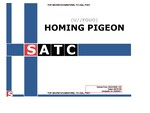
HOMING PIGEON [pdf]
Slides on a query-focused dataset that would correlate GSM handsets seen on two or more aircraft flights with their subscribers.
“US and Britain refine their ability to tap into airline passenger’s mobile phones while they are in the air” - Le Monde ↗ (2016-12-07) · “American and British Spy Agencies Targeted In-Flight Mobile Phone Use” - The Intercept ↗ (2016-12-07) · “No Place to Hide” - Metropolitan Books ↗ (2014-05-13) · Follorou, Jacques · Greenwald, Glenn -
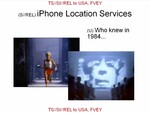
How the NSA Accesses Smartphone Data [pdf]
This document reveals how the NSA and its Five Eyes partners developed sophisticated methods to exploit iPhone location services and BlackBerry communications, framing smartphone users as “zombies” willingly sharing data. It includes examples of intercepted geolocation data and decrypted BlackBerry emails, illustrating targeted surveillance capabilities against both consumer and government communications.
-
How the NSA Pinpoints a Mobile Device [pdf]
This document is an internal National Security Agency classification guide outlining the agency's abilities to intercept cellular communications.
Programs: ARCVIEW -
How to tell if a target is 'foreign' [pdf]
The document describes a human intelligence (HUMINT) report indicating that a specific intelligence target, identified by a Foreign Source ID, is located outside the U.S., including details such as email, telephone number, and mobile network type, with checks confirming no U.S. roaming over a 60-day period. It illustrates the use of HUMINT to corroborate foreign location data for surveillance purposes.
-
IR.21 – A Technology Warning Mechanism [pdf]
This 2010 TOP SECRET NSA briefing defines the IR.21 roaming document as a critical tool for "horizon scanning" and "forecasting" global telecommunications shifts. The document outlines how the NSA uses these technical files to proactively identify emerging 3G and 4G technologies, pinpointing vulnerabilities for exploitation before new systems are even fully deployed.
-
Learn About Cutting-Edge Analysis Tools SIDtoday [pdf]
New analysis tools developed by Tailored Access Operations help locate and visualize target devices.
The Intercept ↗ (2018-08-15) -
MHS Lends a Hand in the Aftermath of the London Bombings SIDtoday [pdf]
The NSA’s base at Menwith Hill in the U.K. supported the GCHQ in tracking phone, GSM, SMS, and high-powered cordless phone signals in the wake of the London bombings on July 7, 2005. This included putting nine U.K. cities under mass surveillance by monitoring satellite phones via “VOICESAIL.” NSA analysts also found a certain area in Pakistan with a high density of calls to the U.K. and were able to use intercepted communications from a subsequent attempted bombing to add potential terrorism-related cover terms for attacks to their database.
The Intercept ↗ (2018-03-01) -
MYSTIC [pdf]
These excerpts provide foundational details on the MYSTIC program, including its inception in 2009 and its structural organization. It defines MYSTIC as a program managed by the Special Source Operations (SSO) division, focusing on "embedded collection systems" within foreign wireless and mobile networks. The document confirms a deceptive operational model: the equipment is overtly installed to provide "commercial services" for telecommunications companies, while its secret purpose is to provide SIGINT (Signals Intelligence) to U.S. agencies.
-
New NSA Policy on Modeling and Simulation SIDtoday [pdf]
A new policy on “Modeling and Simulation Verification, Validation and Accreditation” has been implemented.
The Intercept ↗ (2018-08-15) -
New RT-RG Overview Video Available on NSANet SIDtoday [pdf]
The NSA's Meade Operations Center released a 10-minute video overview of the Real-Time Regional Gateway (RT-RG), a tool suite designed for forward-deployed analysts. The suite enables faster access to real-time metadata and reporting, improving tactical support for military operations, with new functionalities being developed for use in Afghanistan and beyond.
-
New Technology Making Waves: MMS SIDtoday [pdf]
At the time of writing, Multimedia Messaging Service, was a new technology that allowed cell phone users to send text, sound, pictures, and videos. "No doubt you've seen advertisements of MMS-capable phones, some of which are called camera phones." Because the technology is so new, SID is not yet able to collect SIGINT from MMS. But not for long. They're taking steps to build automated systems to spy on MMS.
Programs: DISHFIREThe Intercept ↗ (2017-04-24)