Publisher: The Intercept 489 documents
Search documents matching “The Intercept” →Who published each document. Mostly a news outlet, but sometimes a book. A partner outlet that reported the story without publishing the documents keeps its byline and its article, but is not a publisher here.
Graphs
By document date (14 years)
By Banner
By Classification
Refine (combine with another filter, via search)
Sort: Title
Documents
-
GHOSTHUNTER aerial image (2009) [pdf]
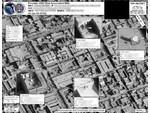
This imagery showcases a real-world application of the GHOSTHUNTER program operated out of Menwith Hill Station in the UK. The document features an aerial satellite photograph used to pinpoint the precise physical location of VSAT (Very Small Aperture Terminal) satellite dishes. By linking a target's digital footprint—specifically their MAC address and IP address—to a specific set of geographic coordinates, the NSA and GCHQ can identify the exact building or compound where a person is using the internet. This capability is a cornerstone of the "find, fix, finish" cycle used to support "covert operations" and targeted killing missions in conflict zones like Yemen, Somalia, and Afghanistan.
Programs: GHOSTHUNTER -
Ghosthunter and the geolocating of internet cafes [pdf]
This document announces an NSA “R Spotlight” webcast introducing GHOSTHUNTER, a multi-agency geolocation program designed to locate Time Division Multiple Access (TDMA) VSAT Internet access points, particularly internet cafés across the Middle East and North Africa in support of U.S. military operations. By mid-2009, GHOSTHUNTER had successfully geolocated over 5,000 VSAT terminals across Middle East demonstrating its operational effectiveness and integration with broader intelligence efforts.
Programs: GHOSTHUNTER -
Ghosthunter future capabilities (2008) [pdf]
This document indicates that Menwith Hill Station (MHS) provides approximately 99% of the FORNSAT data used by GHOSTHUNTER for geolocating targets, while additional FORNSAT sites can be tapped as needed to cover other regions. Although GHOSTHUNTER offers near-global geolocation capabilities, certain areas remain blind spots where coverage is limited.
Programs: GHOSTHUNTER -
GHOSTHUNTER Goes Global [pdf]
This document announces that GHOSTHUNTER, operated from Menwith Hill Station (MHS), is being used to geolocate terminals associated with high-value targets in Iraq and surrounding Middle Eastern countries. It references a hyperlinked article in the station’s Horizon newsletter for further details, which requires a secure NTS-PKI certificate to access due to its classification. The title suggests that GHOSTHUNTER has achieved global reach.
Programs: GHOSTHUNTER -
GHOSTHUNTER Tasking Process [pdf]
The document outlines the GHOSTHUNTER (GH) tasking process at Menwith Hill Station, describing how geolocation requests for VSAT terminals and internet-connected targets are managed through coordination with the NSA’s Network Analysis Centre (NAC) and other sites. It details priority levels, task submission procedures, use of locational data from MASTERSHAKE, integration with imagery, and how results are shared with GCHQ and other authorized parties.
-
GHOSTMACHINE: Identifier Lead Triage with ECHOBASE [pdf]
This June 2012 presentation introduces ECHOBASE, an NSA analytic architecture designed to automate the triage of massive identifier lead lists (ranging from 50 to 10,000+ entries). By applying behavior-based analytics and "yes/no" behavioral queries against raw SIGINT, the system allows analysts to prioritize high-interest targets and discard irrelevant leads at scale.
Programs: GHOSTMACHINE · ECHOBASE · IDENTIFIERSCOREBOARD · FOREMAN · CONTRAOCTAVE · OCTAVE · UTT · WAVELEGAL · CASPORT · PSC -
Global Collaboration Environment: Director’s talking points [pdf]
This NSA document reveals discussions between the agency and GCHQ about establishing a permanent joint surveillance facility in the UK to host the "SIGINT Seniors Europe" coalition, with both agencies coordinating messaging to overcome "persistent pushback" from some member nations. The memo indicates concerns that some European partners were reluctant due to "uncertainty on what missions the center will support, and associated concerns for European human rights laws," while the NSA preferred UK hosting as "optimal in terms of having the most flexibility in tuning the operation to benefit the Five Eyes."
-
Graph theory in the operational environment – GCHQ [pdf]
This document details GCHQ’s research on identifying “closed loops” of communication, where targets use a small set of phones to communicate exclusively among themselves, often with cheap, disposable handsets like the Nokia 1100. It explains the methodology for analyzing anonymized metadata, constructing contact graphs, and extracting non-giant, non-tree components to discover operationally relevant closed loops for intelligence and counterterrorism purposes.
Programs: VOICESAILPeople: Rumsfeld, Donald -
GRIMPLATE - First Steps Toward Identifying Adversarial Use of BitTorrent [pdf]
This document outlines the NSA's GRIMPLATE program, which was developed to monitor and analyze BitTorrent traffic on the Department of Defense's NIPRnet to identify potentially malicious activity. The program focuses on crawling the Distributed Hash Table (DHT) of BitTorrent networks to gather data on file-sharing nodes and peer connections, in order to detect and mitigate threats while building a case for halting unauthorized P2P usage on secure networks.
-
GSM tower geolocation [pdf]
This TOP SECRET STRAP 1 note describes DYMO, a prototype GSM-tower geolocation system that combines RUFIS-bis (which demodulates co-channel GSM ARFCN streams per cell-ID) with WHAMI Fast Image (WFI) to remodulate and correlate signals to produce high-quality tower geolocation and matching metadata. The remodulated “synthetic geolocation” improves accuracy and is under development in the NMDC/Midas studies.
-
GSM tower mapping made easier and more accurate with new tool SIDtoday [pdf]
This document details DYMO, a prototype developed at the NSA’s Menwith Hill Station—the agency’s large British base operated in close cooperation with GCHQ—for highly accurate GSM tower geolocation. It highlights DYMO’s superior performance in mapping accuracy and metadata integrity, its extensive operational use across regions such as Iraq, Iran, and Somalia, and its integration with tools like GOLDENEYE and the Integrated COMINT System (ICS) to streamline analysis and intelligence fusion.
-
Guide to Using Contexts in XKS Fingerprints [pdf]
This technical guide explains how NSA analysts use "contexts" within XKEYSCORE fingerprints to create highly targeted surveillance queries by restricting searches to specific scopes (e.g., web searches, document bodies, geographic locations), enabling precision targeting such as finding "all people in Kabul performing web searches on Jihad" while avoiding the overwhelming noise of broader keyword searches.
-
Hackers are Humans too - Cyber leads to CI leads [pdf]
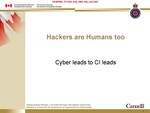
This document from Canada’s Communications Security Establishment (CSE) analyzes the Russian hacking team MAKERSMARK, highlighting how its operators misused technically sophisticated but poorly secured infrastructure, mixing personal and operational activity, which made them traceable despite their advanced tools. It details CSE’s methods for attributing cyber intrusions, monitoring malware-infected systems, and exploiting operational security lapses to gain intelligence on Russian cyber operations.
-
HAPPY TRIGGER/LOVELY HORSE/Zool/TWO FACE – Open Source for Cyber Defence/Progress [pdf]
A TOP SECRET STRAP1 COMINT GCWiki page cataloguing GCHQ's open source intelligence gathering for cyber defence, listing approved and pending data sources fed into internal databases HAPPY TRIGGER, LOVELY HORSE, ZooL and TWO FACE, covering malware tracking, vulnerability intelligence, infrastructure mapping and domain monitoring.
Programs: HAPPYTRIGGER · LOVELYHORSE · TWOFACE · ZOOL · XKEYSCORE · POSITIVEPONY · NETPLATE · HIDDENSPOTLIGHT · SNORT · FOXTRAIL · REFRIEDCHICKEN · GEOFUSION · GLOBALSURGE · SHORTFALL · JTRIG · BIRDSEED · BIRDSTRIKE · MARBLEPOLLSPeople: Stewart, Joe -
HOMING PIGEON [pdf]
Slides on a query-focused dataset that would correlate GSM handsets seen on two or more aircraft flights with their subscribers.
“US and Britain refine their ability to tap into airline passenger’s mobile phones while they are in the air” - Le Monde ↗ (2016-12-07) · “American and British Spy Agencies Targeted In-Flight Mobile Phone Use” - The Intercept ↗ (2016-12-07) · “No Place to Hide” - Metropolitan Books ↗ (2014-05-13) · Follorou, Jacques · Greenwald, Glenn -
How Is Human Language Technology (HLT) Progressing? SIDtoday [pdf]
This document provides an operational update on the deployment of "HLT Labs"—a specialized suite of voice analytics designed to automate the discovery of intelligence "nuggets" within massive volumes of audio collection. The document highlights successful field applications in Afghanistan, Georgia, Texas, and Latin America, noting that these tools are becoming "force multipliers" that allow linguists to bypass manual listening in favor of automated keyword searching and speaker recognition.
-
How to configure category throttling in XKEYSCORE [pdf]
An NSA technical guide explains how to configure "category throttling" in XKEYSCORE—a feature that automatically stops forwarding intercepted communications once analyst-defined collection targets hit predetermined data volume or session count limits, allowing the surveillance system to continue processing but prevent overflow from high-volume targets.
-
HRA auditing [pdf]
This GCHQ internal wiki page provides detailed procedural guidance for conducting Human Rights Act (HRA) compliance audits of analyst activities using surveillance databases like BROAD OAK and Events, establishing quarterly and six-monthly random sampling schedules, defining compliance metrics (Red <75%, Amber 75-94%, Green ≥95%), and specifying the responsibilities of analysts, auditors, and business unit heads to demonstrate that targeting, tasking, and examination of intercept content or metadata meet legal requirements for necessity and proportionality.
Marking: UK CONFIDENTIAL -
HTTP Activity in XKEYSCORE [pdf]
This training presentation from March 2009 provides NSA and Five Eyes analysts with detailed instructions on exploiting HTTP web browsing activity collected by XKEYSCORE, explaining how to differentiate client-to-server requests (GET/POST) from server-to-client responses, extract metadata like search terms, URLs, cookies, language, and browser types, and use this data to discover new surveillance targets, track individuals' online behavior, and conduct "pattern of life" analysis.
-
HTTP Activity vs User Activity [pdf]
This NSA training document from June 2009 explains the distinction between HTTP Activity (general web browsing data) and User Activity (communications metadata from specific protocols like webmail and chat) within the XKEYSCORE surveillance system, demonstrating through Iranian examples how analysts combine both search types to develop comprehensive intelligence on targets.
Programs: XKEYSCORE · MARINA · FOXTRAIL · DECODEORDAIN · YACHTSHOP · BRUTUS · WINDCHASER · NKB · UIS · STARPROC