Classification: UNCLASSIFIED 22 documents
Search documents matching “UNCLASSIFIED” →Each document's classification level, as component values. If a document contains multiple classifications, the highest is used here.
Graphs
By Banner
Refine (combine with another filter, via search)
Sort: Title
Documents
-
Are YOU the SIGINT Philosopher? SIDtoday [pdf]
A November 2010 SIDtoday recruitment notice seeking an NSA analyst to write a recurring philosophical opinion column for the internal newsletter, inviting workforce submissions for consideration as the "Socrates of SIGINT."
Programs: SCQAWK -
BOUNDLESSINFORMANT – Frequently Asked Questions [pdf]
This document outlines the NSA’s internal metadata analysis tool, designed to provide real-time visualizations and statistics on global SIGINT collection by country, organization, and site. It explains the tool’s purpose, data sources, technical architecture, views, data limitations, and the process for requesting feature enhancements, highlighting its role in cataloging surveillance activity without human intervention.
Programs: BOUNDLESSINFORMANT · ASDF · GAO · RAMPART-A · SPINNERET · GM-PLACE · FALLOUT · TUSKATTIRE · FASCIA · MUSCULAR · Terrestrial RF · MachineShop · TurkeyTower · CloudBase · GXT · ExtGWT · JUGGERNAUT · LOPER · FLAWMILL · SSO · MAPREDUCE“Boundless Informant: the NSA's secret tool to track global surveillance data” - The Guardian ↗ (2013-06-08) · “NSA-files repeatedly show collection of data «against countries» - not «from»” - Dagbladet ↗ (2013-11-22) · “New NSA Revelations: Inside Snowden's Germany File” - Der Spiegel ↗ (2014-06-18) · Greenwald, Glenn · MacAskill, Ewen · Becker, Sven · Gude, Hubert · Horchert, Judith · Müller-Maguhn, Andy · Poitras, Laura · Reißmann, Ole · Rosenbach, Marcel · Schindler, Jörg · Schmid, Fidelius · Sontheimer, Michael · Stark, Holger -
Classification Guide for Human Language Technology (HLT) Models (May 18, 2011) [pdf]
This document is an NSA administrative policy document that establishes the rules for what information regarding speech analytics remains public versus what must be kept secret. It explicitly confirms that the NSA possesses automated tools for gender, language, dialect, and speaker recognition, as well as speech-to-text and phonetic tokenization. While the existence of these capabilities is unclassified, the specific data used to "train" the models and the actual identity of targeted speakers are protected at the SECRET level.
Programs: HLT -
Coming Soon! A Tool that Enables Non-Linguists to Analyze Foreign-TV News Programs SIDtoday [pdf]
This document introduces eViTAP (Enhanced Video Text and Audio Processing), a fully automated system designed to monitor and translate international television broadcasts. Primarily aimed at analysts who do not possess specific foreign language skills, the tool leverages automated processing to transform open-source media into actionable intelligence.
-
'Data Is Not Intelligence' SIDtoday [pdf]
A 2007 NSA SIDtoday summary of a keynote address by Deputy DNI for Analysis Thomas Fingar at the Analytic Transformation Symposium, outlining the Intelligence Community's agenda for improving analytical quality, cross-agency collaboration, and integrated operations through training, shared standards, and new tools like A-Space and the Library of National Intelligence.
Programs: A-SPACE -
Forwarding Selected MAILORDER Files Read Me [pdf]
An UNCLASSIFIED//FOR OFFICIAL USE ONLY XKEYSCORE administrator guide explaining how to configure an XKS cluster to forward selected intercepted sessions via MAILORDER, including category throttling limits, output directory configuration and the process setup required to switch all Digital Network Intelligence filtering and selection to the XKEYSCORE collection system.
-
James Clapper's Classified Blog [pdf]
This document reveals that James Clapper, as Director of National Intelligence, maintained a classified blog called “Intercept” where he publicly responded to a citizen letter supporting expanded domestic surveillance after the Boston Marathon bombings. While Clapper endorsed the premise of sacrificing some civil liberties for security, internal commenters cautioned against eroding constitutional rights, emphasizing that increased surveillance does not guarantee safety.
-
Learning to Love English SIDtoday [pdf]
In this SIDtoday article Chief Warrant Officer John Berry reflects on his journey to appreciating the nuances of the English language, from early advice by a mentor in journalism to his experiences as a technical writer.
People: Berry, John F. -
Lesson 4: So you got U.S. Person Information? [pdf]
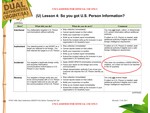
This slide is used in a training course for NSA intelligence collectors and analysts. It tells the trainees what to do if they collect communications "to, from or about" a U.S. citizen, green card holder or company. The slide's revision date is nearly one month after the Foreign Intelligence Surveillance Court ruled on Oct. 3, 2011 that the NSA's handling of some "U.S. Persons" data was unlawful. The highlighted portion of the slide is notable because it shows that "incidentally" acquired U.S. communications, which may account for the highest volume of American content collected, are not purged from NSA databases. Analysts do not need to report "incidental" collection to the NSA Inspector General because it is not deemed a violation of rules. They may use the data routinely in "minimized" form, with identities masked, and with supervisory permission they may unmask the identities of U.S. persons in reports if the "customer set" requires them.
-
N.S.A. Timeline of Surveillance Law Developments [pdf]
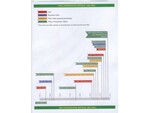
This chart, apparently from an internal N.S.A. presentation, lists milestones in surveillance rules over nearly four decades. The July 2002 “Raw Take” sharing order, whose existence has not previously been disclosed, is just one of three rulings by the Foreign Intelligence Surveillance Court to make the list. The other two were 2004 and 2006 rulings allowing bulk collection of data about emails and phone calls.
-
National Security Agency: Overview Briefing [pdf]
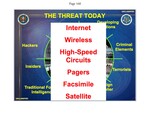
A slide from an unclassified NSA overview briefing, “The threat today”, which lists hackers, criminal elements, insiders and terrorists alongside technologies — the Internet, wireless, high-speed circuits, pagers, facsimile and satellite — as the threats the agency faces.
Marking: UNCLASSIFIED -
NSA Zelda SIDtoday [pdf]
"Ask Zelda" is a popular internal advice column at the NSA, where a pseudonymous manager offers common-sense guidance on workplace issues ranging from professional dress to managing difficult supervisors. The accompanying Intercept article highlights the profound irony of a spy agency's internal column discussing themes of trust, internal surveillance, and anonymous complaints among its own staff, drawing parallels to broader surveillance concerns.
-
Number 9... Number 9... SIDtoday [pdf]
SIDtoday is celebrating its ninth anniversary, reflecting on its history and offering a playful "top 9 reasons to read SIDtoday," ranging from staying informed at staff meetings to discovering secret SIGINT handshakes. The publication has played an essential role in keeping the community connected with its regular updates. The document is notable for revealing that in the first nine years of SIDtoday’s life, more than 4,500 stories were posted on the SIDtoday website.
Marking: UNCLASSIFIED -
Re: Ehsanul Sadequee FISA Request [pdf]
This NSA email chain from April 2006 shows NSA analysts urgently requesting FBI FISA authorization documents for Ehsanul Sadequee so they could conduct a "TAO operation" (Tailored Access Operations hack) to retrieve a file he had shared, racing against the FBI's impending arrest which would invalidate their surveillance authority. The emails reveal the NSA's dependence on FBI-obtained FISA warrants to justify their operations and their need to complete the hack before Sadequee's arrest made their authorization "invalid."
Programs: CADENCEPeople: Sadequee, Ehsanul Islam -
SINIO Seminar: Turkish Presidential and Parliamentary Elections SIDtoday [pdf]
People: Erdoğan, Recep Tayyip“Turkey Is 'Partner and Target' for the NSA” - Der Spiegel ↗ (2014-08-31) · “How the NSA Helped Turkey Kill Kurdish Rebels” - The Intercept ↗ (2014-08-31) · Poitras, Laura · Rosenbach, Marcel · Sontheimer, Michael · Stark, Holger -
The SIGINT Philosopher: Cognitive Overflow? SIDtoday [pdf]
A 2011 NSA SIDtoday opinion column reflecting on whether the SIGINT Directorate's collective analytical capacity has a finite "channel capacity" — borrowing from cognitive psychology to ask whether SID's ever-expanding mission, tools, and information load risks exceeding the combined cognitive limits of its workforce.
Marking: UNCLASSIFIED -
The SIGINT Philosopher: Lessons for Civil Servants from the American Civil War (That Don't Concern Killing Vampires) SIDtoday [pdf]
The final 2012 SIDtoday SIGINT Philosopher column using the American Civil War as a lens to examine how intelligence professionals should reconcile expert disagreement with national policy, arguing that good civil servants can find peace in the possibility that they might simply be wrong — and that committed execution of even imperfect policy can sometimes produce better outcomes than principled dissent.
Programs: SCQAWK -
The SIGINT Philosopher: The Fallacies Behind the Scenes SIDtoday [pdf]
A 2011 NSA SIDtoday opinion column in the "SIGINT Philosopher" series examining four cognitive fallacies — the Texas Sharpshooter, Gambler's, Sunk-Cost, and Appeal to Probability fallacies — and their implications for how analysts unconsciously distort intelligence assessments and decision-making.
-
The SIGINT Philosopher: Too Many Choices SIDtoday [pdf]
The inaugural 2011 NSA SIDtoday "SIGINT Philosopher" column by a Russian language analyst, using the everyday paralysis of grocery shopping to introduce the concept of "analysis paralysis" and argue that the SIGINT enterprise's greatest challenge is not a lack of access or information but the cognitive difficulty of prioritizing among an overwhelming abundance of choices.
People: Simon, Herbert -
The SIGINT Philosopher: Unlike All My Terrible Teammates, I Am a SIDtoday [pdf]
A 2012 SIDtoday SIGINT Philosopher column using the annual ACE performance review process as a springboard to examine the structural tension between individual competition and collaborative teamwork at NSA, arguing that the agency's promotion and awards system inadvertently incentivizes analysts to hoard work rather than mentor colleagues or enable others.
Programs: SCQAWK