Classification: TOP SECRET 536 documents
Search documents matching “TOP SECRET” →Each document's classification level, as component values. If a document contains multiple classifications, the highest is used here.
Graphs
By document date (14 years)
By Banner
Refine (combine with another filter, via search)
Sort: Title
Documents
-
ECI WHIPGENIE Classification Guide [pdf]
A 2004 NSA classification guide for ECI WHIPGENIE, covering the agency's Special Source Operations relationships with US corporate partners for cable collection and domestic wire access, including FISA-warranted collection and FBI-assisted compelled and cooperative partnerships.
Programs: WHIPGENIE · FAIRVIEW · STORMBREW · BLARNEY · POWERPLANT · TUMBRIL · WEALTHYCLUSTER · RAGTIME · PLUS · YELLOWSTONE · SSO -
Email Address vs User Activity [pdf]
This 2009 NSA training presentation explains how to use the XKEYSCORE system to search raw SIGINT, detailing the differences between the "Email Address" query, which finds email addresses in full content, and the more flexible "User Activity" query, which can search for selectors like cookies, usernames, and phone numbers.
“XKEYSCORE: NSA’s Google for the World’s Private Communications” - The Intercept ↗ (2015-07-01) · “No Place to Hide” - Metropolitan Books ↗ (2014-05-13) · Marquis-Boire, Morgan · Greenwald, Glenn · Lee, Micah -
Entry From SSO News [pdf]
This document discusses the initial operational capability of MONKEYROCKET, a non-Western Internet anonymization service developed as part of the OAKSTAR program, aimed at supporting counter-terrorism efforts. As of July 2012, the system was forwarding metadata to backend repositories, with a significant user base of around 16,000, primarily from countries like Iran and China. The service is expected to grow in usage, generating about 2,000 events per day.
-
Entry From SSODictionary v1.0 [pdf]
This document outlines a pending access point for MONKEYROCKET under the OAKSTAR program, focusing on full-take data collection from selected counter-terrorism (CT) targets using a non-Western anonymous browsing service. The collection will include user data, such as billing information and IP addresses, and support NSA's long-term strategy targeting terrorism and other criminal activities, with data gathered under Executive Order 12333. The system used for collection will be vPCS or XKS, and the operation is codenamed "THUNDERISLAND."
-
EP-3E Collision: Cryptologic Damage Assessment and Incident Review [pdf]
A joint US Navy and NSA report from July 2001, prepared three months after a US spy plane was forced to land in China, assessing how far surveillance sources and methods were compromised and reviewing the emergency destruction that failed to prevent it. Damage to tactical SIGINT against the PRC is rated medium and overall SIGINT damage low, with the greatest loss the LUNCHBOX PROFORMA processor and MARTES signals analysis tools; COMSEC damage is rated low because keying material was superseded within 15 hours.
Programs: LUNCHBOX · MARTES · NICKELBACK · SENSOR PACER · PROFORMA · HULTEC · STRUM · TEXTA · RASIN · CRITIC · KLIEGLIGHT · XBIT · BLACKMAGIC · NOIWON · ZIRCON · MIDB · EOB-LITE · NIMROD · ARIEL · COBRA BALL · COMBAT SENT · RIVET JOINT · SEABOOT · SETTEE · KAMPUS · DRUID · RORIPA · MARKHAM · FOREJUDGE · SAM HEARTBURN · NOVELETTE · RSBN · BEGGAR HAWK · BEGGAR SHADOW · CAPSULE JACK · DISTANT WIND · DISTANT SENT · CHILING · RIBBED · UNACCENTED · SLIPSTICK · SIERRA ONEPeople: Meals, Charlie -
Event RARE weekly summaries [pdf]
This document outlines GCHQ's ongoing surveillance efforts in Libya, focusing on intercepting and analyzing communications from the Libyan regime, including military command and control via mobile satellite phones and other communication channels. It details the use of advanced SIGINT tools and close cooperation with the NSA, US, and Canadian intelligence agencies to monitor key military targets and opposition forces, supporting both tactical military operations and strategic intelligence objectives.
People: Gaddafi, Muammar -
Excerpt of May 2008 NSA Afghanistan Dataflow Analysis [pdf]
The document outlines how the NSA’s Real Time Regional Gateway (RT-RG) in Afghanistan progressively expanded from late 2007 through 2008 to ingest massive amounts of GSM, VHF, HF, and telephony metadata from dozens of locations across Afghanistan, supplemented by third-party “dirtbox” collection from allied nations such as the Netherlands, Denmark, Norway, Germany, and Spain. It details the specific collection sites, data types, and timelines (SPIN 9, 10, 11, etc.), illustrating how partner contributions and multiple signals sources fed into the RT-RG system to enable real-time intelligence.
Programs: FOURCORNERS · FORTRESS · WARRIOR · ECHIDNA · CASSIEOPIA · KARUS · SOUNDER · SNICK · TEMPOWOLFE · CALYPSO · TATTERAN · AIRBORNE · LEAVEBEHIND · UDEAUS · NELEUS · CROSSHAIR · SSO · DRT · RIVET JOINT · VOICESAIL“Mission Creep: How the NSA’s Game-Changing Targeting System Built for Iraq and Afghanistan Ended Up on the Mexico Border” - The Intercept ↗ (2019-05-29) · “Norges hemmelige krig i Afghanistan” - NRK ↗ (2019-05-29) · Moltke, Henrik · Skille, Øyvind Bye · Døvik, Olav · Hansen, Ståle Ellingsgard · Fjørtoft, Martin -
Expanding PRISM Sharing With FBI and CIA [pdf]
An SSO item describing two projects that widened PRISM sharing with the FBI and CIA: PRINTAURA software that compiles the tasked-selector list every two weeks for both agencies, and weekly operational PRISM news and guidance from the mission programme manager.
-
Expeditionary Access Operations: NSA’s Close Access Network Exploitation Program [pdf]
The document describes NSA/TAO’s Expeditionary Access Operations (EAO, S3283), a deployable arm that conducts human-enabled Close Access Network Exploitation (CNE) worldwide—using techniques from physical implants and gifted/compromised laptops to wireless injection tools (e.g., BLINDDATE, NITESTAND) and Wi-Fi geolocation—to support tactical customers like SOCOM, DIA, and task forces in Afghanistan, Iraq, and elsewhere. It details organization, tools, operational theaters (Bagram, Kabul, Kandahar, Stuttgart, Texas, etc.), specific operations (IRONPERSISTENCE, CLIMBINGSHIRT), and plans to formalize partnerships with USCYBERCOM and expand expeditionary CANO capabilities.
Programs: NITESTAND · HAPPY HOUR · BADDECISION · MASTERSHAKE · IRONPERSISTENCE · CLIMBINGSHIRT · BLINDDATE -
Exploiting Facebook traffic in the passive environment to obtain specific information [pdf]
A GCHQ Global Telecommunications Exploitation presentation on extracting information about Facebook users from passively collected traffic: why online social networks are a rich source, how Facebook's use of the Akamai content delivery network exposes a user's ID inside image URLs, and how profile and album images are then obtained through SPRING BISHOP, GODFATHER and JTRIG.
-
Exploiting Foreign Lawful Intercept (LI) Roundtable [pdf]
Top-secret PowerPoint presentation, "Exploiting Foreign Lawful Intercept Roundtable," highlights the agency’s strategy to exploit vulnerabilities in lawful intercept systems from telecom companies, such as Ericsson, Motorola, and Nokia, in countries like Mexico, Indonesia, and Egypt. The presentation also discusses NSA's use of various "Fingerprints" for identifying data and its collaboration with industry players and foreign lawful intercept systems.
“A Death in Athens” - The Intercept ↗ (2015-09-28) · “Americans and Greeks started the 2004 wiretaps together” - Kathimerini ↗ (2015-09-29) · Bamford, James · Petropoulos, Aggelos -
FAA Certification Renewals with Caveats [pdf]
This NSA document shows that after the FISA Court found NSA’s upstream internet collection unconstitutional and illegal, the agency’s response was less about reform and more about finding technical and procedural workarounds to keep surveillance running as usual. While the court ordered changes within 30 days, NSA officials planned to sequester and filter “higher-risk” data to appease the judge—not halt collection—revealing a mindset focused on preserving operations rather than addressing legal violations.
-
FAA702 comms memo [pdf]
This document details NSA's response to concerns raised by the FISA Court over the collection of non-targeted data in FAA-702 upstream collection. To mitigate the risk of continued acquisition, NSA is implementing temporary measures, including cautionary banners and updated processes, to prevent misuse of data that may not be directly related to tasked selectors.
People: Shea, Teresa H. -
FAA702 Glossary - Section 702 of the Fisa Amendments Act (FAA) [pdf]
This document outlines NSA rules under Section 702 of the FISA Amendments Act, which prohibit directly targeting U.S. persons or individuals inside the U.S., but quietly note a 2011 rule change allowing analysts to use U.S. person identifiers to query data already collected under 702—pending internal oversight. This effectively establishes a “backdoor search” capability enabling warrantless searches of Americans’ communications stored in NSA databases. Section 702 also gives the NSA authority to target without warrant the communications of foreign targets.
-
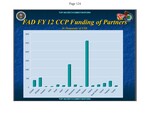
FAD FY 12 CCP Funding of Partners [pdf]
A Foreign Affairs Directorate slide showing Combined Cryptologic Program funding of foreign partners in fiscal year 2012, in thousands of dollars, across fifteen countries including Canada, Israel, Japan, Jordan, Pakistan, Taiwan and Thailand.
-
FAIRVIEW brief overview [pdf]
This document outlines the FAIRVIEW program, established in 1985, which leverages a corporate partner to exploit international communications through cables, switches, and routers. It is one of the NSA's top sources for metadata and serialized intelligence, supporting a wide range of targets including counter-terrorism, crime, and international security issues.
Programs: FAIRVIEW -
FAIRVIEW dataflow charts April 2012 [pdf]
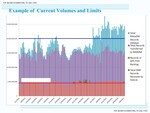
This document outlines data flow diagrams that show how various types of sensitive communication, including voice, fax, and modem traffic, are handled through systems operated by the NSA and its partners. These partners include corporations, telecommunications companies, ISPs, and other entities involved in processing and managing the data through secure and classified channels. The document covers processing flows for various data types, metadata, and communications systems under NSA's control, detailing how data is routed, stored, and analyzed across different platforms and sites.
Programs: FAIRVIEW · SAGUARO · TURNSTILE · MESA · TITANPOINT · RIMROCK · MAILORDER · PINECONE · BLARNEY · STONEGATE · TINSEL · CONVEYANCE · FISHWAY · NUCLEON · PINWALE · SCISSORS · COURIERSKILL · DRIFTWOOD · ASDF · FALLOUT · MARINA · LOPERS · WEALTHYCLUSTER · PUPR · CLEARSIGHT · MIDFIELD · CADENCE · BUGCATCHER · WAYLAND · DESOTO · GATEKEEP · HIGHDECIBEL · XKEYSCORE · YANKEE · TOPROCK · FASCIA · DISHFIRE · SEAGULL · BIGDIPPER · CORPORATE · LILDIPPER · HAVASU · WEALTHYCLUSTER2 · RAGTIME · TUMULT · TATTOO · DARKTHUNDER · ICYTWINS · TML-STATUS · WATERFRONT · VULCANDEATHGRIP · STEELFLAUTA · UNITY · KEYCARD · UTT · BTUBE · ISLANDTRANSPORT · SSO · MAINWAY · SSDM · TUBE · TITANPOINTE · TURMOIL · VPCS“NSA Spying Relies on AT&T’s ‘Extreme Willingness to Help’” - ProPublica ↗ (2015-08-15) · “AT&T Helped U.S. Spy on Internet on a Vast Scale” - The New York Times ↗ (2015-08-15) · “Titanpointe: The NSA’s Spy Hub in New York, Hidden in Plain Sight” - The Intercept ↗ (2016-11-16) · Angwin, Julia · Larson, Jeff · Savage, Charlie · Moltke, Henrik · Poitras, Laura · Risen, James · Gallagher, Ryan -
FASCIA: The NSA's huge trove of location records [pdf]
FASCIA is the National Security Agency's enormous database containing trillions of metadata records, many with device locations, that are collected from a variety of sources. This document shows the volume and types of device-location data collected by the agency.
“NSA tracking cellphone locations worldwide, Snowden documents show” - The Washington Post ↗ (2013-12-04) · “No Place to Hide” - Metropolitan Books ↗ (2014-05-13) · Gellman, Barton · Soltani, Ashkan · Greenwald, Glenn -
FASHIONCLEFT - Interface Control Document (15 June 2009) [pdf]
This 2009 NSA Interface Control Document provides comprehensive technical specifications for FASHIONCLEFT, the protocol that acts as a covert shipping system enabling TAO malware implants to send stolen network data back to NSA collection servers with minimal computer processing requirements—using multiple encryption layers (RSA-1024 and RC6-128) to disguise the traffic as it travels across the internet while allowing NSA's Common Data Receptor to reassemble and authenticate the original intercepted packets. The document details how implants make modified copies of captured network traffic (changing destination addresses to point toward NSA instead of legitimate recipients), apply various levels of encryption or scrambling ("munging") depending on how powerful the infected computer is, attach metadata instructions explaining how to reconstruct the original packets, and use pattern-matching algorithms to ensure NSA systems can identify which stolen packets belong to which collection operation.
Programs: FASHIONCLEFT · FLAXENPRECEPT · SHELLGREY · SURPASSPIN · SEAGULLFARO · ROOTKNOT · FIGBUILD · OPTICPINCH · VINYLSEAT · OLYMPUS · UNITEDRAKE · HOGTECH · SWEEPFORWARD · CONVEY · PINWALE · TREBLECLEF · FOGYNULL · FUNNELAPS · FLASHHANDLE -