Tag: phone numbers 18 documents
Search documents matching “phone numbers” →Free-text subjects the curators added. Unlike the other axes these are not necessarily from the documents' own vocabulary, so they are the loosest thing to browse by (and the most forgiving).
Graphs
By Banner
By Classification
Refine (combine with another filter, via search)
Sort: Title
Documents
-
Customers Can Help SID Obtain Targetable Phone Numbers SIDtoday [pdf]
US officials sometimes supply SID with their rolodexes. Although some of these numbers are public and others are not used to discuss sensitive information, they have lead the NSA to other useful numbers.
Marking: CONFIDENTIALPrograms: OCTAVEThe Intercept ↗ (2019-05-29) · “NSA monitored calls of 35 world leaders after US official handed over contacts” - The Guardian ↗ (2013-10-24) · Ball, James -
Exploiting US/UK/CAN Phone Numbers -- In Compliance with USSID-18 Policy SIDtoday [pdf]
The NSA can now classify certain U.S. phone numbers as foreign, allowing them to be targeted. Such targeting may occur on a U.S. number if the phone number is “identified on foreign links” and if it is associated with a “Pick Your Own Number” internet service such as Vonage.
The Intercept ↗ (2018-08-15) -
New Policy Affects SIGINT Development: The Unmasking of Canadian Phone Numbers SIDtoday [pdf]
The Communications Security Establishment — the NSA’s Canadian partner agency — has authorized the unmasking of Canadian phone numbers “incidentally” collected by the NSA. This allows for easier contact chaining and other forms of target development involving Canadian phone numbers.
Programs: FASCIAThe Intercept ↗ (2018-08-15) -
New Tool Identifies Non-Productive Phone Numbers SIDtoday [pdf]
A new tool that helps weed out phone numbers that are tasked for collection but are providing no intelligence value, based on reports showing how much of "each phone number's traffic has been reviewed, deemed relevant, and reported on." The idea is to avoid needlessly "consuming precious SIGINT resources." The tool is part of a larger project called "RAINMAN" to automatically prioritize traffic scanned by language analysts.
People: Curet, NormanThe Intercept ↗ (2017-09-13) -
New Tool Identifies Non-Productive Phone Numbers (repost) SIDtoday [pdf]
Repost of article on a new tool that helps weed out phone numbers that are tasked for collection but are providing no intelligence value, based on reports showing how much of "each phone number's traffic has been reviewed, deemed relevant, and reported on." The idea is to avoid needlessly "consuming precious SIGINT resources." The tool is part of a larger project called "RAINMAN" to automatically prioritize traffic scanned by language analysts.
People: Curet, NormanThe Intercept ↗ (2017-09-13) -
Telecomm Customers Can Now Pick Their Own Phone Numbers -- What Does It Mean for SIGINT? SIDtoday [pdf]
Pick-Your-Own-Number is a new feature made possible by VoIP providers such as Vonage, and as of 2004 rapidly gaining in popularity. Now that this phenomenon is taking off, it means that phone numbers no longer reliably correspond to the country of the subscriber. "Theoretically," the author writes, "Usama bin Laden could be using a U.S.-based number while located in Afghanistan!" This has legal complications for NSA, because they need to be able to spy on international targets, but USSID-18 regulations forbid them from spying on domestic targets. The author suggests that NSA could partner with law enforcement agencies, such as FBI, to target domestic phone numbers using the domestic surveillance law known as the Communications Assistance for Law Enforcement Act.
People: bin Laden, OsamaThe Intercept ↗ (2017-04-24) -
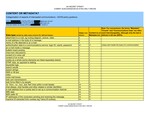
Content-Metadata Matrix [pdf]
GCHQ's internal taxonomy sorts intercepted data into "content" or "metadata" to determine what can be searched without individual warrants—email subject lines, full URLs, and buddy lists fall on opposite sides of the line, enabling analysts to mine massive troves of IP addresses, phone numbers, location data, and browsing history with just a few keystrokes and a brief justification.
-
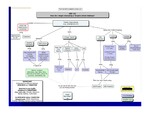
DNI101 [pdf]
This TOP SECRET training guide, "DNI 101," provides a workflow for Digital Network Intelligence analysts on how to investigate a target's email address, detailing the specific tools, databases, and methodology used, and stressing the critical difference between initial open-source/classified research and the active "targeting" of raw SIGINT repositories like XKEYSCORE, PINWALE, and MARINA.
Programs: NKB · FOXTRAIL · FOREMAN · PINWALE · LIONHEART · XKEYSCORE · DISHFIRE · MARINA · MECWEB · MAINWAY · TRAFFICTHIEF · MAUI · ANCHORY · M3 · INTELLINK · HOMEBASE · PROTON · UTT · CADENCE · SPEEDBUMP · TUNINGFORK · MASTERSHAKE · BLACKPEARL · JACKSPARROW · ROADBED · STORYDUTY · LIONROAR · DOPHONE · UIS -
Email Address vs User Activity [pdf]
This 2009 NSA training presentation explains how to use the XKEYSCORE system to search raw SIGINT, detailing the differences between the "Email Address" query, which finds email addresses in full content, and the more flexible "User Activity" query, which can search for selectors like cookies, usernames, and phone numbers.
“XKEYSCORE: NSA’s Google for the World’s Private Communications” - The Intercept ↗ (2015-07-01) · “No Place to Hide” - Metropolitan Books ↗ (2014-05-13) · Marquis-Boire, Morgan · Greenwald, Glenn · Lee, Micah -
How to tell if a target is 'foreign' [pdf]
The document describes a human intelligence (HUMINT) report indicating that a specific intelligence target, identified by a Foreign Source ID, is located outside the U.S., including details such as email, telephone number, and mobile network type, with checks confirming no U.S. roaming over a 60-day period. It illustrates the use of HUMINT to corroborate foreign location data for surveillance purposes.
-
Is There a Sustainable Ops Tempo in S2? How Can Analysts Deal with the Flood of Collection? SIDtoday [pdf]
The NSA's Deputy Director for Analysis and Production discusses the unsustainable operational tempo caused by overwhelming data collection volumes, advocating for "Analytic Modernization" that would shift from treating SIGINT as "radioactive" NSA-only material to sharing raw intelligence with other agencies for collaborative exploitation.
Programs: A-SPACE -
NSA's collection processing and dissemination of allied communications [pdf]
A secret 2007 deal between the US and UK allowed the NSA to collect, store, and analyze personal data of British citizens — including those not suspected of wrongdoing — marking a significant expansion of mass surveillance powers and breaking prior Five-Eyes agreements on mutual non-targeting.
-
Phone Number Extractor [pdf]
A top secret XKEYSCORE training document from October 2009 describing the Phone Number Extractor capability, which automatically identifies and extracts telephone numbers from intercepted internet traffic including website content, email signature blocks, HTTP GET requests from mobile devices, HTTP POST submissions, and converged DNR/DNI collection — with operational examples targeting Iran, Lebanon, and Pakistan.
-
'Top 5' SIDtoday Articles of January SIDtoday [pdf]
Links to the top five SIDtoday articles from January 2006, which saw more than 123,000 visits from over 19,000 unique visitors.
The Intercept ↗ (2018-08-15) -
Traffic Series: Is Your Collection Surveyed or Sustained? SIDtoday [pdf]
This NSA internal newsletter article explains how analysts can determine whether their collected signals intelligence traffic comes from sustained, ongoing collection (tasked through formal requirements) or temporary "survey" activities where satellite collection sites scan for new targets. The article teaches analysts how to read "case notations" (CASNs) to identify whether traffic spikes are from permanent collection or just temporary surveys—warning that valuable intelligence can suddenly disappear when survey activities end unless analysts formally request sustained collection through the SURREY system.
-
Voice Fax Users Group Minutes October 2008 [pdf]
The document is a TOP SECRET GCHQ report on the deployment of a 5-way speaker identification (SID) system targeting high-level individuals in the Afghan narcotics trade. It highlights operational success, including the identification of new phone numbers for a principal target leading to his arrest in Jakarta, and outlines plans to rebuild the system to target the remaining four narcotics barons.
-
XKEYSCORE intro [pdf]
A TOP SECRET NSA presentation from 2008 introducing XKeyscore — one of the earliest overview documents in the archive — describing the system as a globally distributed Linux cluster across approximately 150 sites and 700+ servers that stores a ~3-day rolling buffer of all unfiltered internet traffic, and demonstrating its core capabilities for finding previously unknown targets by mining metadata, tracking documents by embedded image hashes, detecting encryption and VPN use, and language tracking.
Programs: XKEYSCORE · TURMOIL · TURBULENCE · TRAFFICTHIEF · WEALTHYCLUSTER · MOONSHINE · SEARCHLIGHT · MARINA · PSC · SSO · TIMBERLINEPeople: bin Laden, Osama“'Brasil é um grande alvo', diz jornalista sobre vigilância dos EUA” - O Globo ↗ (2013-07-07) · “XKeyscore: NSA tool collects 'nearly everything a user does on the internet'” - The Guardian ↗ (2013-07-31) · “No Place to Hide” - Metropolitan Books ↗ (2014-05-13) · “XKEYSCORE: NSA’s Google for the World’s Private Communications” - The Intercept ↗ (2015-07-01) · Greenwald, Glenn · Bridi, Sônia · Marquis-Boire, Morgan · Lee, Micah -
XKEYSCORE Search Forms [pdf]
A secret XKeyscore reference guide from March 2009 cataloguing all of the system's search forms — one entry per metadata plug-in — revealing the full breadth of what XKeyscore extracts and indexes from intercepted internet traffic, from emails, logins, passwords, phone numbers and documents to Cisco router passwords, TOR routers, VoIP calls, WLAN data, Blackberry PINs, satellite terminals, passport images, internet café addresses, and exfiltrated data from TAO hacking operations.
Programs: XKEYSCORE · TRAFFICTHIEF · DECODEORDAIN · CADENCE · JUGGERNAUT · FASCIA · CERF · DURT · MOONSHINE · SPOTBEAM · RADIUS“XKEYSCORE: NSA’s Google for the World’s Private Communications” - The Intercept ↗ (2015-07-01) · “FRA has access to controversial surveillance system” - SVT Nyheter ↗ (2013-12-11) · Marquis-Boire, Morgan · Greenwald, Glenn · Lee, Micah · Bergman, Sven · Dyfvermark, Joachim · Gallagher, Ryan · Laurin, Fredrik · Struwe, Filip