Tag: browser fingerprinting 11 documents
Search documents matching “browser fingerprinting” →Free-text subjects the curators added. Unlike the other axes these are not necessarily from the documents' own vocabulary, so they are the loosest thing to browse by (and the most forgiving).
Graphs
By Banner
By Classification
Refine (combine with another filter, via search)
Sort: Title
Documents
-
Advanced HTTP Activity Analysis [pdf]
This NSA training document from 2009 teaches intelligence analysts how to analyze HTTP internet traffic and exploit it using the XKEYSCORE surveillance system to monitor and identify internet users globally.
“XKEYSCORE: NSA’s Google for the World’s Private Communications” - The Intercept ↗ (2015-07-01) · “No Place to Hide” - Metropolitan Books ↗ (2014-05-13) · Marquis-Boire, Morgan · Greenwald, Glenn · Lee, Micah -
Analyzing Mobile/Cellular DNI in XKEYSCORE, May 2009 [pdf]
The XKEYSCORE document explains how the agency analyzes mobile/cellular device internet usage by collecting and processing both converged DNI/DNR data within cellular networks and traditional internet traffic, using various tools and indicators to identify mobile users even when their device type isn't immediately evident. The document demonstrates how the system can track mobile internet activity across applications like Yahoo Mail and identifies devices through various technical "hints" including MSISDN codes, browser fingerprints, and user agent strings.
-
FOXACID Overall Briefing [pdf]
FOXACID is the NSA's exploit server infrastructure designed to gain "initial access" to target computers by tricking them into visiting malicious websites through spam emails, man-in-the-middle attacks, or split-second packet injection techniques that redirect legitimate web traffic. The document reveals how the agency has evolved from low-success spam operations (less than 1% success rate) to sophisticated "QUANTUM" techniques that achieve up to 80% success rates by exploiting web browsers through services like Yahoo and Facebook, allowing the NSA to compromise any target whose web traffic passes through monitored network chokepoints—with the chilling assessment that "if we can get the target to visit us in some sort of web browser, we can probably own them."
Programs: FOXACID · WILLOWVIXEN · GENUINEDRAFT · SECONDDATE · QUANTUMTHEORY · TURMOIL · TURBINE · WEBSNIPER · QUANTUMINSERT · QUANTUMBISCUIT · QUANTUMDIRK · QUANTUM · VALIDATOR · OLYMPUS · MISTYVEAL · SSO · STRAIGHTBIZARRE · ISLANDTRANSPORT -
HTTP Activity vs User Activity [pdf]
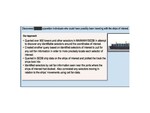
This NSA training document from June 2009 explains the distinction between HTTP Activity (general web browsing data) and User Activity (communications metadata from specific protocols like webmail and chat) within the XKEYSCORE surveillance system, demonstrating through Iranian examples how analysts combine both search types to develop comprehensive intelligence on targets.
Programs: XKEYSCORE · MARINA · FOXTRAIL · DECODEORDAIN · YACHTSHOP · BRUTUS · WINDCHASER · NKB · UIS · STARPROC -
ICTR Cloud Efforts [pdf]
A GCHQ presentation details how the agency developed cloud-based big data analytics to achieve "population scale" surveillance—processing trillions of internet events to build geographic and behavioral profiles on every online identifier worldwide, enabling discovery of unknown targets through pattern analysis rather than traditional keyword searches.
Programs: EVERYASSOC · PROBABILITYCLOUD · SILVERLINING · CULTWEAVE · KARMAPOLICE · EVERYPOLICE · AWKWARDTURTLE · GORDIANKNOT · SANDIA · BLOODHOUND · FIVEALIVE · NGE · MAPREDUCE -
Location Cookies [pdf]
These slides contain excerpts from an April 2013 National Security Agency presentation detailing signal surveillance techniques and successes. They reveal that the NSA and its British counterpart, Government Communications Headquarters (GCHQ), use a Google-specific tracking cookie to pinpoint targets for hacking.
-
Op MULLENIZE and beyond - Staining machines 10/10/12 [pdf]
This 2012 report from the NSA's British counterpart, the GCHQ, describes a method of "staining" electronic traffic to distinguish otherwise anonymous users. It is used to unmask Tor users and devices on networks in which many computers share the same Internet address. The method relies on planting code in a web browser to change the "user agent," which is the way the browser identifies itself on the web. In a two month period, the report says, GCHQ managed to implant about 200 computers with uniquely identifying stains.
-
Tailored Access Operations, FOXACID, QUANTUM [pdf]
These NSA presentation slides detail "QUANTUM," a sophisticated system that allows the agency to intercept internet traffic and inject malware onto target computers with up to 80% success rates, far exceeding traditional spam-based methods. The system works by monitoring internet traffic for specific identifiers (like Yahoo or Facebook cookies), then racing to inject malicious code before legitimate web servers can respond, thereby compromising targets' computers without their knowledge and establishing persistent backdoor access.
Programs: FOXACID · QUANTUM · QUANTUMTHEORY · QUANTUMBISCUIT · VALIDATOR · OLYMPUS · UNITEDRAKE · OLYMPUSFIRE · SSO · FORESTPLACE -
Tor Stinks [pdf]
A June 2012 joint NSA-GCHQ presentation titled "Tor Stinks" detailing the two agencies' attempts to de-anonymize Tor users through analytics, exploitation, and network disruption — candidly admitting they will never be able to identify all Tor users, but outlining a range of techniques including cookie leakage tracking, QUANTUM attacks, circuit reconstruction, timing analysis, and deliberate network degradation.
Programs: REMATION · EPICFAIL · QUANTUM · NEWTONSCRADLE · QUICKANT · GREATEXPECTATIONS · RONIN · ONIONBREATH · QUANTUMCOOKIE · SHORTSHEET · FOXACID -
User-agents: Why and How and How to [pdf]
A TOP SECRET NSA training presentation from 2010 teaching analysts how to use browser user-agent strings — the identifying information your web browser automatically sends to every website you visit — to track surveillance targets across the internet, link their known email activity to their anonymous web browsing, and identify opportunities for hacking their computers based on their operating system and software versions.
-
Using XKEYSCORE to Enable TAO [pdf]
A TOP SECRET training presentation from 2009, authored by a Booz Allen Hamilton contractor, teaching NSA analysts how to use XKeyscore to harvest the login credentials, router configurations, browser versions and server software details that the Tailored Access Operations hacking unit needs to break into foreign computer networks — with worked examples stealing Cisco router passwords, Iranian government webmail logins and jihadi web forum credentials directly from intercepted internet traffic.