Publisher: The Intercept 489 documents
Search documents matching “The Intercept” →Who published each document. Mostly a news outlet, but sometimes a book. A partner outlet that reported the story without publishing the documents keeps its byline and its article, but is not a publisher here.
Graphs
By document date (14 years)
By Banner
By Classification
Refine (combine with another filter, via search)
Sort: Title
Documents
-
Voice/Fax User Group Minutes of September 2008 meeting [pdf]
Page 3 of 7 of the minutes of GCHQ's Voice/Fax User Group (VFUG), September 2008: plans for data-quality testing, a request that linguists flag "Pick Your Own Number" calls in the B3M voice database, and the B14/MCS team's update on the Diariser and on speaker and language identification. The Intercept's PDF shows only the speaker ID section; the rest of the page is in the file (see the archive comment).
-
VoIP Configuration and Forwarding Read Me [pdf]
A SECRET XKeyscore configuration manual describing how to set up the system to intercept internet phone calls, faxes and video calls and forward them to NUCLEON — NSA's voice intercept repository which at time of writing supported over 8,000 users worldwide across 75 servers receiving 700,000 voice, fax, video and tag files per day.
-
VOIP in XKEYSCORE [pdf]
A TOP SECRET XKeyscore training presentation from 2009 describing how the system intercepts internet phone calls — automatically matching the call setup information (who is calling whom) with the actual voice data even when they travel through different countries and collection sites, then decoding the audio into playable recordings that analysts can listen to through Windows Media Player.
-
Web Forum Exploitation using XKEYSCORE [pdf]
A TOP SECRET XKeyscore training presentation from 2009 describing how NSA analysts exploit web forum traffic — revealing that US-hosted web forums under FISA warrants are subject to full-take collection of all traffic, and demonstrating XKeyscore queries for extracting forum posts, private messages, system administrator activity and encrypted communications including traffic using "Mujahideen Secrets 2.0" encryption software.
-
Welcome to the Mission Driven Access Workshop - GCHQ Bude [pdf]
This document, sourced from a Mission Driven Access (MDA) Workshop at GCHQ Bude, outlines a strategic intelligence shift toward South American targets. It identifies a historical underperformance in monitoring Brazil and highlights the Foreign Office's urgent need for intelligence to counter growing regional support for Argentina regarding the Falkland Islands dispute.
Marking: CONFIDENTIAL -
What are the Japanese like as SIGINTers SIDtoday [pdf]
This SIDtoday interview with the Chief of NSA's Special US Liaison Activity in Japan discusses NSA's reputation among Third Party intelligence partners (described as "very good across the board" with NSA seen as "the best in the field") and characterizes Japan's Directorate for SIGINT (DFS) as skilled but organizationally stove-piped and stuck in "Cold War" methods, treating SIGINT as their most sensitive special-access program.
People: Black, Bill“Japan Made Secret Deals With the NSA That Expanded Global Surveillance” - The Intercept ↗ (2017-04-24) · “アメリカに監視される日本 ~スノーデン“未公開ファイル”の衝撃” - NHK ↗ (2017-04-24) · Gallagher, Ryan · Ikegami, Akira -
What Does the Death of Usama bin Laden Mean? SIDtoday [pdf]
A 2011 NSA SIDtoday interview with SID's Associate Deputy Director for Counterterrorism assessing the significance of Osama bin Laden's death, revealing that NSA played a central role in identifying his compound and providing force-protection support during the SEAL raid, while also disclosing that bin Laden had been invisible to SIGINT since 1998.
Programs: SCQAWK -
What is the path an email takes when it is sent on the internet? [pdf]
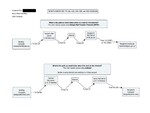
This undated NSA training document, created by Booz Allen Hamilton contractor personnel, provides technical diagrams explaining email transmission paths and network administrator traffic flows for NSA/Five Eyes collection purposes, specifically highlighting how to identify and exploit login credentials, passwords, configuration files, and communications transiting through U.S.-based webmail servers like Hotmail and Yahoo.
The Intercept (2015-06-29) -
Who's Who in Afghanistan? SIDtoday [pdf]
This SIDtoday document outlines the structure and organization of U.S. and NATO forces in Afghanistan, detailing the roles of various military and intelligence units, including NSA's deployment of Cryptologic Services Groups (CSGs) and Cryptologic Support Teams (CSTs) to support counterterrorism and tactical operations. It also highlights key NSA locations in Afghanistan, such as Kabul, Bagram, and Kandahar, where NSA personnel provide SIGINT support to U.S. and coalition forces, contributing to intelligence fusion, targeting, and operational support.
People: McChrystal, Stanley -
Wireless LAN / CNE Tool Training Course and Evaluation [pdf]
This document is a slide deck introducing a "Close Access" NSA training course to "familiarize, educate, and certify students in the operational usage" of various computer network exploitation tools.
-
WOLFRAMITE Encryption Attack [pdf]
The "WOLFRAMITE Encryption Attack" is a GCHQ strategic annex from March 2011 detailing a joint effort with the NSA to compromise the A5/3 encryption standard. The document outlines a specialized research and development program aimed at scaling up handset exploitation and securing funding—estimated at approximately £4 million—to prototype a functional decryption attack against modern mobile broadband security.
-
Work is progressing on Menwith Hill Station’s new operations building SIDtoday [pdf]
This NSA SIDtoday article from January 2010 describes construction progress on Project PHOENIX, a massive 95,000 square-foot state-of-the-art operations building at Menwith Hill Station in Yorkshire, England, featuring NSA's first "Tier III" equipment room with redundant power and cooling for critical mission systems, a 200-seat auditorium, and 10 new classrooms. The $40 million facility was expected to be completed by early 2011 with staff moving in by mid-2012, requiring 740 tons of steel, 4,200 cubic meters of concrete, and over 6,000 vehicle movements through the construction gate.
Programs: PHOENIX -
Writing XKS Fingerprints [pdf]
This internal NSA training manual serves as a technical guide for analysts using the X-KEYSCORE (XKS) system. It provides a comprehensive breakdown of how to write, name, and test "fingerprints"—the specific code signatures used to identify, tag, and categorize various types of internet traffic across the agency's global collection points. The manual transitions from basic naming conventions to advanced Boolean logic and context-sensitive scanning, illustrating how the NSA automates the discovery of high-value targets, such as those using specific encryption tools or those involved in weapons procurement.
-
X-KEYSCORE Application IDs [pdf]
A TOP SECRET XKeyscore developer training presentation teaching how to write the pattern-matching rules that automatically classify every intercepted internet session by application type, with working examples for Gmail detection, Yahoo chat, ICQ, VoIP protocols and a Mujahideen Secrets encryption fingerprint, plus a side-by-side comparison showing the migration from legacy XML-based pattern definitions to the modern C-like AppID syntax.
-
X-KEYSCORE as a SIGDEV tool 2009 [pdf]
A 2009 TOP SECRET NSA presentation describing XKeyscore as a SIGINT development tool — explaining how it captures and temporarily stores the full content of internet traffic (the 95%+ that was previously dropped because it didn't match any target) across 125 sites worldwide, "slowing down the internet" so analysts can retroactively reconstruct a target's entire online session, discover new targets, and search the content of documents, web searches, emails and chats that contain no tasked selector.
Programs: XKEYSCORE · PINWALE · TRAFFICTHIEF · MARINA · AGILITY · PILBEAM · MAILORDER · CADENCE · NKB · PSC · SSO · UIS“XKEYSCORE: NSA’s Google for the World’s Private Communications” - The Intercept ↗ (2015-07-01) · “No Place to Hide” - Metropolitan Books ↗ (2014-05-13) · “FRA has access to controversial surveillance system” - SVT Nyheter ↗ (2013-12-11) · Marquis-Boire, Morgan · Greenwald, Glenn · Lee, Micah · Bergman, Sven · Dyfvermark, Joachim · Gallagher, Ryan · Laurin, Fredrik · Struwe, Filip -
XKEYSCORE Appids & Fingerprints [pdf]
A TOP SECRET XKeyscore developer training presentation describing the complete AppID and fingerprint programming language — the system NSA analysts and developers use to write pattern-matching rules that automatically classify every piece of intercepted internet traffic by application type, protocol, encryption method and target behaviour — including syntax for keyword matching, regular expressions, binary patterns, context-sensitive scanning and embedded C++ code execution against live intercepted sessions.
-
XKEYSCORE for Counter-CNE [pdf]
A TOP SECRET presentation from March 2011 describing how NSA uses XKeyscore for counter-CNE — detecting and exploiting foreign hacking operations — including ingesting NSA's own TAO implant data, hunting for foreign intrusion sets like DISGRUNTLEDDUCK, and a success story in which Menwith Hill used TAO-stolen Iranian implant encryption keys to decrypt and read keylogger data the Iranian Revolutionary Guard's hackers were stealing from their own victims.
Programs: XKEYSCORE · DISGRUNTLEDDUCK · GENESIS · DANDERSPRITZ · SIMBAR · DONUT · AMULETSTELLAR · TRANGRESSION · TRANSGRESSION -
XKEYSCORE Helper Notes [pdf]
This GCHQ document describes new features in the XKEYSCORE Palantir helper tool, including summary/histogram import capabilities that reduce large datasets by aggregating connection data rather than creating individual events for each entry, and data sourcing features that track which XKEYSCORE queries imported specific data into Palantir. The document provides step-by-step screenshots showing how analysts can histogram network traffic by source IP, destination IP, and ports, then import aggregated results showing metadata like total session sizes and connection counts.
Programs: XKEYSCORE -
XKEYSCORE intro [pdf]
A TOP SECRET NSA presentation from 2008 introducing XKeyscore — one of the earliest overview documents in the archive — describing the system as a globally distributed Linux cluster across approximately 150 sites and 700+ servers that stores a ~3-day rolling buffer of all unfiltered internet traffic, and demonstrating its core capabilities for finding previously unknown targets by mining metadata, tracking documents by embedded image hashes, detecting encryption and VPN use, and language tracking.
Programs: XKEYSCORE · TURMOIL · TURBULENCE · TRAFFICTHIEF · WEALTHYCLUSTER · MOONSHINE · SEARCHLIGHT · MARINA · PSC · SSO · TIMBERLINEPeople: bin Laden, Osama“'Brasil é um grande alvo', diz jornalista sobre vigilância dos EUA” - O Globo ↗ (2013-07-07) · “XKeyscore: NSA tool collects 'nearly everything a user does on the internet'” - The Guardian ↗ (2013-07-31) · “No Place to Hide” - Metropolitan Books ↗ (2014-05-13) · “XKEYSCORE: NSA’s Google for the World’s Private Communications” - The Intercept ↗ (2015-07-01) · Greenwald, Glenn · Bridi, Sônia · Marquis-Boire, Morgan · Lee, Micah -
XKEYSCORE Search Forms [pdf]
A secret XKeyscore reference guide from March 2009 cataloguing all of the system's search forms — one entry per metadata plug-in — revealing the full breadth of what XKeyscore extracts and indexes from intercepted internet traffic, from emails, logins, passwords, phone numbers and documents to Cisco router passwords, TOR routers, VoIP calls, WLAN data, Blackberry PINs, satellite terminals, passport images, internet café addresses, and exfiltrated data from TAO hacking operations.
Programs: XKEYSCORE · TRAFFICTHIEF · DECODEORDAIN · CADENCE · JUGGERNAUT · FASCIA · CERF · DURT · MOONSHINE · SPOTBEAM · RADIUS“XKEYSCORE: NSA’s Google for the World’s Private Communications” - The Intercept ↗ (2015-07-01) · “FRA has access to controversial surveillance system” - SVT Nyheter ↗ (2013-12-11) · Marquis-Boire, Morgan · Greenwald, Glenn · Lee, Micah · Bergman, Sven · Dyfvermark, Joachim · Gallagher, Ryan · Laurin, Fredrik · Struwe, Filip