Program: UIS 12 documents
Search documents matching “UIS” →Codenames and programs recorded for each document.
Graphs
By Banner
By Classification
Refine (combine with another filter, via search)
Sort: Title
Documents
-
DNI101 [pdf]
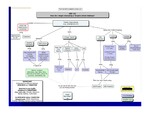
This TOP SECRET training guide, "DNI 101," provides a workflow for Digital Network Intelligence analysts on how to investigate a target's email address, detailing the specific tools, databases, and methodology used, and stressing the critical difference between initial open-source/classified research and the active "targeting" of raw SIGINT repositories like XKEYSCORE, PINWALE, and MARINA.
Programs: NKB · FOXTRAIL · FOREMAN · PINWALE · LIONHEART · XKEYSCORE · DISHFIRE · MARINA · MECWEB · MAINWAY · TRAFFICTHIEF · MAUI · ANCHORY · M3 · INTELLINK · HOMEBASE · PROTON · UTT · CADENCE · SPEEDBUMP · TUNINGFORK · MASTERSHAKE · BLACKPEARL · JACKSPARROW · ROADBED · STORYDUTY · LIONROAR · DOPHONE · UIS -
Fourth Party Opportunities [pdf]
This presentation document explains how NSA identifies, prioritizes, and exploits “fourth party” opportunities by passively or actively leveraging foreign computer network exploitation operations, including victim stealing and tool repurposing, to collect intelligence without initiating original intrusions.
Programs: VOYEUR · UIS · PINWALE · YNKE · TUNINGFORK · DIRTSHED · SEEKER · CLOUD · ABR · SILVERBOLT · DEADSEA · XKEYSCORE · BYZANTINERAPTOR · HAWALA · ZEBEDEE · DATAFLURRY · ECLECTICPLOT · HAPPYFOOT · BLUESMOKE · CROSSBONES2 · CYBERQUEST · VICDB · PLAIDDIANA · TRANSGRESSION -
FY 2013 Congressional Budget Justification, Volume I, National Intelligence Program Summary, February 2012 [pdf]
This document outlines the $52.6 billion “black budget,” detailing the structure, priorities, successes, and shortcomings of the 16 U.S. intelligence agencies. It reveals unprecedented insight into funding allocations, operations, and intelligence gaps—including the CIA’s dominant role, expanding cyber operations, and persistent challenges in areas such as North Korea and counterterrorism—while emphasizing the tension between secrecy and public accountability.
-
-
HTTP Activity vs User Activity [pdf]
This NSA training document from June 2009 explains the distinction between HTTP Activity (general web browsing data) and User Activity (communications metadata from specific protocols like webmail and chat) within the XKEYSCORE surveillance system, demonstrating through Iranian examples how analysts combine both search types to develop comprehensive intelligence on targets.
Programs: XKEYSCORE · MARINA · FOXTRAIL · DECODEORDAIN · YACHTSHOP · BRUTUS · WINDCHASER · NKB · UIS · STARPROC -
Introduction to XKS Application IDs and Fingerprints [pdf]
This August 2009 NSA training document introduces XKEYSCORE's Application IDs (AppIDs) and Fingerprints system, explaining how metadata tags are automatically applied to intercepted sessions to identify and categorize different types of Internet traffic, applications, and behaviors, evolving through four generations from simple keyword matching to sophisticated code-based metadata extraction.
-
PINWALE: Transnational DNI Training [pdf]
This presentation is a classified NSA training guide on PINWALE, a SIGINT database used for the storage, retrieval, and analysis of intercepted digital network intelligence (DNI) communications. It outlines system capabilities, query creation, search tools, and interfaces such as NEXUS, UIS, and AGILITY, explaining how analysts search, retrieve, and analyze both content and metadata — including FISA-partitioned data — within the Five Eyes intelligence framework.
-
User's Guide For PRISM Skype Collection - August 2012 [pdf]
An NSA analyst user guide for PRISM Skype collection, explaining how to task Skype selectors, locate collected content across PINWALE, NUCLEON and MARINA, interpret common collection artefacts, and troubleshoot issues with video synchronisation, timestamp discrepancies and incomplete file transfers — covering peer-to-peer, in/out and conference call collection modes from PRISM coverage that began in February 2011.
-
Using XKEYSCORE to Enable TAO [pdf]
A TOP SECRET training presentation from 2009, authored by a Booz Allen Hamilton contractor, teaching NSA analysts how to use XKeyscore to harvest the login credentials, router configurations, browser versions and server software details that the Tailored Access Operations hacking unit needs to break into foreign computer networks — with worked examples stealing Cisco router passwords, Iranian government webmail logins and jihadi web forum credentials directly from intercepted internet traffic.
-
X-KEYSCORE as a SIGDEV tool 2009 [pdf]
A 2009 TOP SECRET NSA presentation describing XKeyscore as a SIGINT development tool — explaining how it captures and temporarily stores the full content of internet traffic (the 95%+ that was previously dropped because it didn't match any target) across 125 sites worldwide, "slowing down the internet" so analysts can retroactively reconstruct a target's entire online session, discover new targets, and search the content of documents, web searches, emails and chats that contain no tasked selector.
Programs: XKEYSCORE · PINWALE · TRAFFICTHIEF · MARINA · AGILITY · PILBEAM · MAILORDER · CADENCE · NKB · PSC · SSO · UIS“XKEYSCORE: NSA’s Google for the World’s Private Communications” - The Intercept ↗ (2015-07-01) · “No Place to Hide” - Metropolitan Books ↗ (2014-05-13) · “FRA has access to controversial surveillance system” - SVT Nyheter ↗ (2013-12-11) · Marquis-Boire, Morgan · Greenwald, Glenn · Lee, Micah · Bergman, Sven · Dyfvermark, Joachim · Gallagher, Ryan · Laurin, Fredrik · Struwe, Filip -
XKEYSCORE Tech Strings in Documents (aka Tech Extractor) 2009 [pdf]
A December 2009 TOP SECRET XKeyscore training presentation on the Tech Extractor (Tech Strings in Documents) — an early context-aware scanning capability that tags keywords only when they appear inside email, chat and document bodies rather than anywhere in raw internet traffic, letting analysts find technically interesting documents by terms too generic for traditional content selection, with an example flagging a Pakistani document mentioning WiMAX and DVB satellite technology by scanning inside the file.
-
XKEYSCORE Tech Strings in Documents (aka Tech Extractor) 2010 [pdf]
An April 2010 TOP SECRET XKeyscore training presentation on the Tech Extractor — an expanded version of the December 2009 briefing — teaching analysts to find intelligence by tagging keywords inside email, chat and document bodies, with new detail on tasking rules (including that terms hit as substrings so "ricin" matches "pricing"), its non-retrospective operation, its limitations versus the 65+ context fingerprint language, and confirmation that the capability was operated jointly with GCHQ, whose Cheltenham analysts submitted tasking via an Excel template and wiki.