Tag: DFS 6 documents
Search documents matching “DFS” →Free-text subjects the curators added. Unlike the other axes these are not necessarily from the documents' own vocabulary, so they are the loosest thing to browse by (and the most forgiving).
Graphs
By Banner
By Classification
Refine (combine with another filter, via search)
Sort: Title
Documents
-
Cyber Paper Japan NSA DFS [pdf]
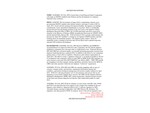
This January 2013 NSA memo from SUSLAJ (Special U.S. Liaison Activity Japan) details Japan’s effort to rapidly launch a SIGINT-enabled cyber defense initiative and a new 100-person “Cybercom” by April 2013. It describes tensions between reformist elements like CIRO (Cabinet Intelligence and Research Office) and more conservative ones like the DFS (Directorate for SIGINT) and MOD Internal Bureau, with struggles in policy, information sharing, and workforce training. The memo shows Japan seeking NSA’s technical help — including at the MALLARD FORNSAT site — while rushing to deliver malware signatures and sign new information-sharing agreements. The NSA viewed Japan as responsive but too focused on short-term results rather than long-term cyber workforce development.
Programs: MALLARD“The Untold Story of Japan's Secret Spy Agency” - The Intercept ↗ (2018-05-19) · “日本の諜報 スクープ 最高機密ファイル” - NHK ↗ (2018-05-19) · Gallagher, Ryan -
DFS and NSA partnership [pdf]
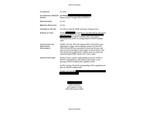
DFS the NSA Sister Organization. This document outlines a high-level visit by Japan’s Directorate for Signals Intelligence (DFS), described as NSA’s “sister organization,” to the NSA/CSS headquarters in early 2013. The purpose was to strengthen their decades-long partnership, focusing on SIGINT-enabled cyber capabilities, training, and mutual understanding of each agency’s role in cyber defense.
People: Alexander, Keith B.“The Untold Story of Japan's Secret Spy Agency” - The Intercept ↗ (2018-05-19) · “日本の諜報 スクープ 最高機密ファイル” - NHK ↗ (2018-05-19) · Gallagher, Ryan -
DFS SIGINT-enabled Cyber [pdf]
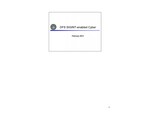
This February 2013 top-secret DFS presentation outlines how Japan’s Directorate for Signals Intelligence (DFS) developed a SIGINT-enabled cyber program with U.S. NSA support, launching operations in late 2012 using the MALLARD system to collect and analyze satellite-based internet sessions. It details the project’s buildup, early challenges with massive data volumes, reliance on U.S. technical assistance, and plans for expanded antennas, infrastructure, and long-term system upgrades.
Marking: TOP SECRETPrograms: MALLARD“The Untold Story of Japan's Secret Spy Agency” - The Intercept ↗ (2018-05-19) · “日本の諜報 スクープ 最高機密ファイル” - NHK ↗ (2018-05-19) · Gallagher, Ryan -
Japan official NSA visit, HF briefing [pdf]
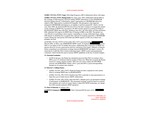
The document describes ongoing NSA efforts to renew high-frequency direction-finding (HFDF) collaboration with Japan’s Directorate for SIGINT (DFS) after Japan withdrew from the CROSSHAIR network in 2009. By 2012–2013, both sides were manually exchanging HFDF data, and the NSA sought to advance toward automated data sharing via its BORESIGHT system while reassuring Japan that it would not replace or override its existing technology.
“Japan Made Secret Deals With the NSA That Expanded Global Surveillance” - The Intercept ↗ (2017-04-24) · “アメリカに監視される日本 ~スノーデン“未公開ファイル”の衝撃” - NHK ↗ (2017-04-24) · Gallagher, Ryan · Ikegami, Akira -
Japan provided with XKEYSCORE [pdf]
This document outlines a request for approval to provide training to the Japanese Directorate for SIGINT (DFS) on using advanced SIGINT systems, including XKEYSCORE, to enhance Japan's cyber network defense capabilities. This training, scheduled for April 2013, aligns with U.S. strategic goals to bolster the cyber defense abilities of allied nations, highlighting ongoing NSA collaboration with Japan on surveillance and cybersecurity.
“Japan Made Secret Deals With the NSA That Expanded Global Surveillance” - The Intercept ↗ (2017-04-24) · “アメリカに監視される日本 ~スノーデン“未公開ファイル”の衝撃” - NHK ↗ (2017-04-24) · Gallagher, Ryan · Ikegami, Akira -
What are the Japanese like as SIGINTers SIDtoday [pdf]
This SIDtoday interview with the Chief of NSA's Special US Liaison Activity in Japan discusses NSA's reputation among Third Party intelligence partners (described as "very good across the board" with NSA seen as "the best in the field") and characterizes Japan's Directorate for SIGINT (DFS) as skilled but organizationally stove-piped and stuck in "Cold War" methods, treating SIGINT as their most sensitive special-access program.
People: Black, Bill“Japan Made Secret Deals With the NSA That Expanded Global Surveillance” - The Intercept ↗ (2017-04-24) · “アメリカに監視される日本 ~スノーデン“未公開ファイル”の衝撃” - NHK ↗ (2017-04-24) · Gallagher, Ryan · Ikegami, Akira