Tag: surveillance authorization 11 documents
Search documents matching “surveillance authorization” →Free-text subjects the curators added. Unlike the other axes these are not necessarily from the documents' own vocabulary, so they are the loosest thing to browse by (and the most forgiving).
Graphs
By Banner
By Classification
Refine (combine with another filter, via search)
Sort: Title
Documents
-
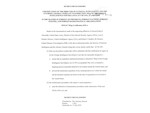
DNI, attorney general certify surveillance targets 'reasonably believed' to be outside U.S. [pdf]
In this document, the director of national intelligence and the attorney general certify that there are procedures in place to ensure that surveillance conducted under Section 702 of the FISA Amendments Act will be limited to targeting people "reasonably believed to be located outside the United States." They state that the foreign intelligence to be collected "concerns foreign powers" as defined by statute. The list of foreign powers is in Exhibit F.
-
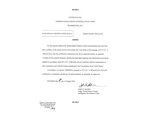
FISA judge's order authorizing surveillance of foreign governments and organizations [pdf]
With this order dated Aug. 19, 2010, John D. Bates, then-Chief Judge of the Foreign Intelligence Surveillance Court, approved an annual certification permitting the National Security Agency to conduct surveillance about 193 foreign governments, foreign factions, foreign-based political organizations and foreign entities such as the World Bank. Each year, a new certification must be approved by the court to permit such surveillance under Section 702 of the FISA Amendments Act.
Marking: SECRETPeople: Bates, John D. -
How to tell if a target is 'foreign' [pdf]
The document describes a human intelligence (HUMINT) report indicating that a specific intelligence target, identified by a Foreign Source ID, is located outside the U.S., including details such as email, telephone number, and mobile network type, with checks confirming no U.S. roaming over a 60-day period. It illustrates the use of HUMINT to corroborate foreign location data for surveillance purposes.
-
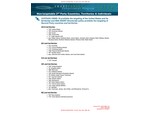
Legalities - GCHQ Databases eg Pilbeam, Salamanca, UDAQ etc [pdf]
This October 2007 GCHQ document outlines the legal authorization requirements for querying surveillance databases, revealing that GCHQ analysts can search their own databases (like PILBEAM, SALAMANCA, UDAQ) for metadata on anyone regardless of nationality without additional authorization, while NSA databases (like MARINA, MAINWAY, DISHFIRE) prohibit searches for Americans and other Five Eyes citizens but permit searches for UK persons.
-
List of foreign governments and organizations authorized for surveillance [pdf]
This exhibit lists the 193 foreign governments as well as foreign factions, political organizations and other entities that were part of a 2010 certification approved by the Foreign Intelligence Surveillance Court. These are the entities about which the NSA may conduct surveillance, for the purpose of gathering foreign intelligence. Each year a new certification must be approved by the court to permit such surveillance under Section 702 of the FISA Amendments Act.
-
Minimization Procedures Used By The National Security Agency In Connection With Acquisitions Of Foreign Intelligence, Information Pursuant To Section 702 Of The Foreign Intelligence Court Surveillance Act Of 1978 [pdf]
The NSA’s Section 702 minimization rules expose how the agency can collect, keep, and use Americans’ communications without warrants, despite claiming to target only foreigners. While the document sets out procedures for handling U.S. data, it includes broad loopholes—like keeping “inadvertently” collected domestic messages for years, sharing unfiltered data with the FBI, CIA, and even foreign governments, and giving NSA analysts wide discretion over who gets surveilled—all under secret FISA Court approval.
People: Holder, Eric H. Jr. -
NSA director's affidavit on foreign surveillance [pdf]
The affidavit was submitted in support of the 2010 certification concerning foreign governments, factions and other entities. In it, Alexander states that pursuant to the certification, NSA seeks to acquire foreign intelligence information concerning foreign powers. The list of foreign powers is in Exhibit F.
People: Alexander, Keith B. -
NSA document on targeting Five Eyes countries and territories [pdf]
This document states that the National Security Agency is prohibited from conducting foreign surveillance on the "Five Eyes" countries, which include U.S. allies Australia, Canada, New Zealand and the United Kingdom, or their territories.
-
NSA inspector general report on email and internet data collection under Stellar Wind, 24 March 2009 [Working Draft] [pdf]
This 2009 NSA Inspector General draft report details the origins and legal framework of the President’s Surveillance Program (PSP), launched after 9/11 to bypass FISA limits and authorize bulk interception of internet and telephony content and metadata, including communications with one end inside the U.S. It reveals how NSA, with White House backing, expanded surveillance authority to cover “collection gaps” that existing law didn’t allow, effectively legalizing large-scale warrantless spying under a secret presidential directive.
People: Bush, George W. · Hayden, Michael · Tenet, George · Gonzales, Alberto R. · Addington, David S. · Graham, Robert · Deitz, Robert L. · Shelby, Richard · Pelosi, Nancy · Cheney, Dick · Libby, I. Lewis · Lamberth, Royce · Inouye, Daniel · Levin, Daniel · Stevens, Theodore · Kollar-Kotelly, Colleen · Rockefeller, Jay · Alexander, Keith B. · Potenza, Vito -
Procedures Used By The National Security Agency For Targeting Non-United States Persons Reasonably Believed To Be Located Outside The United States To Acquire Foreign Intelligence Court Information Pursuant To Section 702 Of The Foreign Intelligence Surveillance Act Of 1978 [pdf]
The NSA’s 2009 Section 702 targeting procedures lay out how analysts decide who can be surveilled without a warrant, supposedly limiting spying to foreigners abroad. In reality, the rules give the agency wide latitude to presume people are foreign, rely on vague “totality of the circumstances” tests, and allow broad technical methods like IP filters and metadata checks. Oversight is mostly internal and after-the-fact, creating significant potential for U.S. communications to be swept up with little accountability.
People: Holder, Eric H. Jr. -
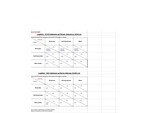
SIGINT Authority decision tree [pdf]
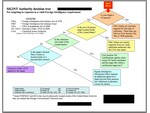
A one-page NSA training chart that walks an analyst from a targeting request to the legal authority that covers it, branching on whether the target is a US person, where the target is, where the collection site is, and whether the target is a Second Party citizen.