Tag: metadata 142 documents
Search documents matching “metadata” →Free-text subjects the curators added. Unlike the other axes these are not necessarily from the documents' own vocabulary, so they are the loosest thing to browse by (and the most forgiving).
Graphs
By document date (11 years)
By Banner
By Classification
Refine (combine with another filter, via search)
Sort: Title
Documents
-
FISA: Teaming with the FBI in the Global War on Terrorism SIDtoday [pdf]
The author describes being the first NSA employee integrated into the FBI unit responsible for the bureau’s data collected under the Foreign Intelligence Surveillance Act at the Digital Intercept Technology Unit at Quantico. The author is included in meetings with the “data providers.” Time-sensitive information from the FISA collection is sent to the NSA in a constant flow and provides up to 40 percent of the NSA’s counterterrorism reporting.
“NSA Secretly Helped Convict Defendants in U.S. Courts, Classified Documents Reveal” - The Intercept ↗ (2017-11-30) · The Intercept ↗ (2018-03-01) · Aaronson, Trevor -
FOSSWAY: Massive Analysis Attacks SIDtoday [pdf]
FOSSWAY is a Five Eyes-wide project that's "dedicated to the development of massive analytic attacks against global metadata supported by extensive automation." The goal of FOSSWAY is to help analysts focus on high-level tasks, like thinking about how their targets organize, rather than low-level tasks like data manipulation. There was meeting in September 2004 that had about 90 participants from all five intelligence agencies discussing a variety of topics related to FOSSWAY and how to move it forward.
Programs: FOSSWAYThe Intercept ↗ (2017-04-24) -
From ROADBED to EKB -- The Journey Continues SIDtoday [pdf]
"ROADBED," a collection of metadata on satellite intercepts by Five Eyes partners, will soon become a component of the Environmental Knowledge Base, which in turn will incorporate other types of intercepted data and metadata, and will be accessible via an easy-to-use, searchable web application.
The Intercept ↗ (2017-09-13) -
From the Sandbox to Mexico: Applying Wartime Tactical Techniques to Strategic Missions SIDtoday [pdf]
Systems developed for the "sandbox” (Iraq) such as pattern-of-life-analysis and phone geolocation are now used against drug criminals on the US-Mexico border.
People: Carrillo Fuentes, Vicente“Mission Creep: How the NSA’s Game-Changing Targeting System Built for Iraq and Afghanistan Ended Up on the Mexico Border” - The Intercept ↗ (2019-05-29) · “Norges hemmelige krig i Afghanistan” - NRK ↗ (2019-05-29) · The Intercept ↗ (2019-05-29) · Moltke, Henrik · Skille, Øyvind Bye · Døvik, Olav · Hansen, Ståle Ellingsgard · Fjørtoft, Martin -
GCHQ Analytic Cloud Challenges [pdf]
The 2012 GCHQ Analytic Cloud document outlines a sophisticated data processing infrastructure handling approximately 50 billion daily events across multiple sites, utilizing QFD databases and HADOOP clusters for various analytic capabilities targeting intelligence gathering and analysis. It describes architectural components, challenges in scaling and enabling analysts to cope with data complexity, and proposes future technology options including consolidation approaches and new cloud architectures to enhance capabilities.
Programs: EVOLVEDMUTANTBROTH · MUTANTBROTH · HARDASSOC · HRMAP · KARMAPOLICE · SOCIALANTHROPOID · AUTOASSOC · GEOFUSION · MVR · TERRAIN · SALAMANCA · BLACKHOLE · SAMUELPEPYS · BROKER · VAIL · GUIDINGLIGHT · FIRSTCONTACT · CLOUDYCOBRA · RUMOURMILL · EVERYASSOC · EVERYPOLICE · EVERYCREATURE · EVERYEAD · EVERYCIPHER · GREYFOX · SILVERFOX · GOLDENAXE · TRIBALCARNEM · PUBLICANEMONE · EPICFAIL · STERLINGMOTH · FOGHORN · LOOKINGGLASS · FIREENGINE · NGGEO · ALPHACENTAURI · CLOUDBASE · ACCUMULO · ASEM · SEM · HAKIM · STREAMING · HBASE · LAUREL · SKINNYCLOUD · HARDY · GCHQCORE -
Getting Leads: GEO Mining SIDtoday [pdf]
Description of an approach to sifting through large amounts of phone call metadata to find leads for new surveillance target called "GEO Mining." The author gives an example of searching for heroin-production labs in Afghanistan using GEO Mining, by filtering all phone calls in Afghanistan down to calls made near known heroin-processing labs. In this case, "The top 20 handsets were then tasked for collection, and at least one has produced reportable intelligence."
People: Brown, PaulThe Intercept ↗ (2017-04-24) -
Giving Answers, Keeping Secrets SIDtoday [pdf]
The technical details of how NSA exploits virtual private networks (VPNs) are "held closely and generally not available to field sites." VIVIDDREAM is a query tool that allows analysts who discover new VPNs to test whether or not NSA has the capability to exploit them, without having to share the secret exploits themselves with these analysts.
Programs: VIVIDDREAM -
GSM Temporary Selectors - Breakthroughs in Automated Identification SIDtoday [pdf]
It has always frustrated analysts when GSM cellular networks implement Temporary Mobile Subscriber Identities, which obscure a code, known as IMSI, that uniquely and persistently identifies the cellphone. The "ASSOCIATION" program has solved this problem by mapping TMSI to IMSI.
The Intercept ↗ (2018-03-01) -
High Powered Cordless Phones in the Af/Pak Border Area: Is UBL Talking? SIDtoday [pdf]
High Powered Cordless Phone networks include a base station and any number of phones, which operate similar to cellphones. The article author suspects Osama bin Laden might use one. HPCP networks are mapped in HOMEBASE.
Programs: HOMEBASEPeople: bin Laden, OsamaThe Intercept ↗ (2016-08-10) -
Hold the Spam, Please SIDtoday [pdf]
In 2005, the majority of emails sent across the world was spam, which was a major problem for the NSA. "Spam affects NSA by impeding our collection, processing and storage of DNI [digital network intelligence] traffic." The article briefly describes how analysts have tackled the problem to greatly reduce the amount of spam that shows up "in their daily searches."
Programs: SCISSORSThe Intercept ↗ (2017-09-13) -
How to tell if a target is 'foreign' [pdf]
The document describes a human intelligence (HUMINT) report indicating that a specific intelligence target, identified by a Foreign Source ID, is located outside the U.S., including details such as email, telephone number, and mobile network type, with checks confirming no U.S. roaming over a 60-day period. It illustrates the use of HUMINT to corroborate foreign location data for surveillance purposes.
-
Is It the End of the SIGINT World as We Have Come to Know It? [pdf]
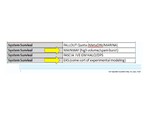
Two excerpts from a 2012 NSA presentation titled "Is It the End of the SIGINT World as We Have Come to Know It?" prepared by a member of the Large-Access Exploitation Group. The table excerpt lists MAINWAY among the systems at highest risk of being overwhelmed by the volume of data the agency was ingesting. The diagram excerpt shows MAINWAY feeding into the Graph-in-Memory (alongside WESTERNSTAR), illustrating how MAINWAY's continuous contact-chaining pushed its precomputed results into the in-memory graph database that analysts actually queried.
Programs: FALLOUT · METADNI · MARINA · MAINWAY · FASCIA · GMHALO · DPS · EKS · WESTERNSTAR · GRAPH-IN-MEMORY -
Learn About Cutting-Edge Analysis Tools SIDtoday [pdf]
New analysis tools developed by Tailored Access Operations help locate and visualize target devices.
The Intercept ↗ (2018-08-15) -
Letter to the Editor: Helping Your Leaders Make Decisions that Stick SIDtoday [pdf]
The writer applauds a recent SIDtoday article and encourages colleagues not to take figures of speech too literally.
Programs: CNE PortalThe Intercept ↗ (2017-09-13) -
Make Plans to Attend the 2006 SIGDEV Conference, 5-9 June SIDtoday [pdf]
The annual SIGINT Development conference is coming up. The theme this year is “Collaboration: Key to Net-Centric Discovery,” in order to “achieve information superiority for America and its allies.”
Programs: FOLLOWTHEPEOPLEPeople: Wertheimer, MichaelThe Intercept ↗ (2018-08-15) -
MHS Lends a Hand in the Aftermath of the London Bombings SIDtoday [pdf]
The NSA’s base at Menwith Hill in the U.K. supported the GCHQ in tracking phone, GSM, SMS, and high-powered cordless phone signals in the wake of the London bombings on July 7, 2005. This included putting nine U.K. cities under mass surveillance by monitoring satellite phones via “VOICESAIL.” NSA analysts also found a certain area in Pakistan with a high density of calls to the U.K. and were able to use intercepted communications from a subsequent attempted bombing to add potential terrorism-related cover terms for attacks to their database.
The Intercept ↗ (2018-03-01) -
MILKWHITE Enrichment Service (MES) Programme [pdf]
This March 2011 GCHQ document details the MILKWHITE program, which is enhancing domestic interception and data analysis capabilities. It outlines expanded funding for advanced analytics, bulk data storage, and service scaling to meet growing demand from multiple law enforcement and intelligence agencies, including SOCA, HMRC, MI5, and SIS, thereby broadening access to large volumes of internet-derived metadata for operational use.
-
Minimization Procedures Used By The National Security Agency In Connection With Acquisitions Of Foreign Intelligence, Information Pursuant To Section 702 Of The Foreign Intelligence Court Surveillance Act Of 1978 [pdf]
The NSA’s Section 702 minimization rules expose how the agency can collect, keep, and use Americans’ communications without warrants, despite claiming to target only foreigners. While the document sets out procedures for handling U.S. data, it includes broad loopholes—like keeping “inadvertently” collected domestic messages for years, sharing unfiltered data with the FBI, CIA, and even foreign governments, and giving NSA analysts wide discretion over who gets surveilled—all under secret FISA Court approval.
People: Holder, Eric H. Jr. -
Mr. Black Speaks at Intelligence Analysis Off-Site SIDtoday [pdf]
At an off-site gathering of analysts, NSA Deputy Director Bill Black made a remarkable admission: “More and more frequently, our targets are also our partners. We know them personally ... yet we must also continue to anticipate their actions.” This disclosure was classified “top secret.” Black also spoke to the NSA’s need to understand cyberspace and pointed out analysts’ ability to produce “meaningful intelligence without reading the content.”
Marking: TOP SECRETPrograms: IFAThe Intercept ↗ (2018-08-15) -
New 'Profile-Based' Target Discovery Tool Shows Promise SIDtoday [pdf]
A new metadata analysis tool is deployed in an attempt to find drug trafficking targets in southwest Asia. Instead, it stumbles on an Iran-based human smuggling ring. This, the article posits, represents “a promising and innovative means of identifying previously unknown SIGINT targets.”
People: Cummins, SteveThe Intercept ↗ (2018-08-15)