Tag: cybersecurity 11 documents
Search documents matching “cybersecurity” →Free-text subjects the curators added. Unlike the other axes these are not necessarily from the documents' own vocabulary, so they are the loosest thing to browse by (and the most forgiving).
Graphs
By Banner
By Classification
Refine (combine with another filter, via search)
Sort: Title
Documents
-
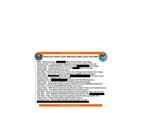
AND THEY SAID TO THE TITANS: « WATCH OUT OLYMPIANS IN THE HOUSE! » [pdf]
This Top Secret CSEC “Olympia” document details a Canadian intelligence program that analyzed and tracked the Brazilian Ministry of Mines and Energy’s telecommunications, mapping IPs, servers, proxies, and mobile devices while automating data collection and network analysis to develop actionable intelligence. It outlines tools, workflows, and contacts used for surveillance, though the presentation does not explain the specific purpose of the operation.
Programs: OLYMPIA · QUOVA · PROMETHEUS · PEITHO · SLINGSHOT · LEVITATE · STRATOS · EVILOLIVE · GCHQ Geofusion · ATLAS · HYPERION · ATHENA · DANAUS · TIDALSURGE · BLACKPEARL · MARINA · STARSEARCH · PEPPERBOX · TRITON · PACKAGEDGOODS · ARK · TOYGRIPPE · FRIARTUCK · MASTERSHAKE · COEUS · STALKER · MAINWAY · FASCIA · SEDB · OCTSKYWARD · FASTBAT · TWINSERPENT · EONBLUE · DISHFIRE · GNDB“Read a CSEC document that was first acquired by Edward Snowden” - The Globe and Mail ↗ (2013-11-30) · “Ministério de Minas e Energia está na mira de espiões americanos e canadenses” - O Globo ↗ (2013-10-06) · “No Place to Hide” - Metropolitan Books ↗ (2014-05-13) · Freeze, Colin · Bridi, Sônia · Greenwald, Glenn -
CASCADE - Joint Cyber Sensor Architecture [pdf]
This presentation outlines the Communications Security Establishment’s (CSE) plans to unify and expand its cyber sensor networks (ITS and SIGINT) to create a comprehensive, multi-layered national cyber defense system, enabling threat detection, intelligence collection, and defensive operations across Canadian and foreign networks. It emphasizes standardizing sensor deployments, integrating analytic capabilities, and preparing for “Effects” operations to mitigate cyber threats by 2015. The presentation is duplicated from page 33 onwards - three slides of the duplicated slides have internal CSE comments.
Programs: CASCADE · PHOTONICPRISM · EONBLUE · INDUCTION · THIRDEYE · CRUCIBLE · CHOKEPOINT · SUNWHEEL · CASSIOPEIA · SCNET · JAZZFLUTE · GAZEBO · SEEDSPHERE · TEXPRO · SSO -
CSEC Cyber Threat Capabilities [pdf]
This document details CSEC’s full-spectrum cyber operations architecture, integrating SIGINT and IT Security to conduct both defensive and offensive activities under the guise of “information superiority.” While early sections emphasize detection, anomaly analysis, and collaboration with Five Eyes partners, later portions reveal active measures including network infiltration (implant deployment), command-and-control tracking, traffic manipulation and redirection, DNS interference, and potential disruption or deception operations—illustrating CSEC’s capacity not only to defend Canadian networks but also to surveil, exploit, and influence foreign and domestic digital infrastructure.
Programs: EONBLUE · CYBERDMZ · SEEDSPHERE · PHOTONICPRISM · SPECIALSOURCE · SUPERDRAKE · DARKSPACE · QUANTUM · MANDATE · STREAMING SENTRY · SSO · TKB · COVENANT -
Cyber Paper Japan NSA DFS [pdf]
This January 2013 NSA memo from SUSLAJ (Special U.S. Liaison Activity Japan) details Japan’s effort to rapidly launch a SIGINT-enabled cyber defense initiative and a new 100-person “Cybercom” by April 2013. It describes tensions between reformist elements like CIRO (Cabinet Intelligence and Research Office) and more conservative ones like the DFS (Directorate for SIGINT) and MOD Internal Bureau, with struggles in policy, information sharing, and workforce training. The memo shows Japan seeking NSA’s technical help — including at the MALLARD FORNSAT site — while rushing to deliver malware signatures and sign new information-sharing agreements. The NSA viewed Japan as responsive but too focused on short-term results rather than long-term cyber workforce development.
Programs: MALLARD“The Untold Story of Japan's Secret Spy Agency” - The Intercept ↗ (2018-05-19) · “日本の諜報 スクープ 最高機密ファイル” - NHK ↗ (2018-05-19) · Gallagher, Ryan -
DGSE and ANSSI Delegation to NSA (April 2013), cyberattacks [pdf]
This Top Secret NSA visit précis details the April 12, 2013 meeting between senior French cyber officials Bernard Barbier (DGSE) and Patrick Pailloux (ANSSI) and NSA leadership to discuss and seek U.S. assistance in attributing May 2012 cyberattacks on the French Presidential network. The document outlines the visit agenda, background tensions over French media accusations of U.S. involvement, and NSA’s plan to emphasize cyber defense cooperation while carefully navigating potential diplomatic sensitivities.
-
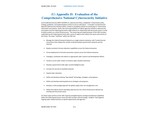
Final Cyberspace Policy Review: Appendices D and E [pdf]
Appendices D and E of a secret, REL FVEY Cyberspace Policy Review. Appendix D evaluates the Comprehensive National Cybersecurity Initiative initiatives and enablers and the status of each. Appendix E argues for an international cybersecurity policy framework, covering internet governance bodies, free speech, supply chains and deterrence.
Programs: EINSTEIN -
NSA Cyber Timeline (Some Key SSO Cyber Milestone Dates Since Fall 2005) [pdf]
A one-page NSA SSO timeline of cyber-related milestones from fall 2005 to late 2012: CNCI implementation, the Protect America Act and FISA Amendments Act certifications, TURMOIL and XKEYSCORE deployments, and the August 2012 Iranian DDoS attack on Saudi Aramco.
Programs: TURMOIL · SSO · BLUESNORT · DANCINGOASIS · MADCAPOCELOT · TURBULENCE · XKEYSCORE · WEALTHYCLUSTER -
Seminar: Threats to Computer Systems SIDtoday [pdf]
CIA senior adviser Brian Shaw will lead a seminar about “an invisible subculture” that “exists to take advantage of computer networks for nefarious purposes including vandalism, crime, or espionage.”
Marking: CONFIDENTIALPeople: Shaw, BrianThe Intercept ↗ (2018-03-01) -
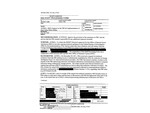
SID concur: SSO's Support to the FBI for Implementation of their Cyber FISA Orders (CATS 2012-704) [pdf]
A 2012 NSA staff processing form (CATS 2012-704) with a four-page SSO memo, concurred by the SIGINT Director on 27 March 2012. SSO would give the FBI technical help implementing FISC cyber orders (docket 11-91, which the FBI calls STYGIAN FLOW), using NSA collection and processing infrastructure (LITHIUM, ARTIFICE, TURMOIL), with the FBI responsible for the costs and for legal compliance.
People: Shea, Teresa H. -
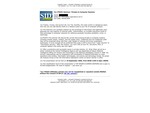
SINIO Seminar: NIPRNET Intrusions -- What's the Big Deal? SIDtoday [pdf]
A seminar will take place to discuss the methods hackers have used to attempt to attack NIPRNet (the Department of Defense's computer network) and what the NSA does to try to stop these intrusions.
The Intercept ↗ (2019-05-29) -
Why Have Names Changed in SEARCHLIGHT? SIDtoday [pdf]
SEARCHLIGHT, the NSA internal directory, is adding middle names to link to identification systems, specifically to help the PKI (Public Key Infrastructure) system work.
The Intercept ↗ (2016-05-16)