Tag: cellphone metadata 13 documents
Search documents matching “cellphone metadata” →Free-text subjects the curators added. Unlike the other axes these are not necessarily from the documents' own vocabulary, so they are the loosest thing to browse by (and the most forgiving).
Graphs
By Banner
By Classification
Refine (combine with another filter, via search)
Sort: Title
Documents
-
Graph theory in the operational environment – GCHQ [pdf]
This document details GCHQ’s research on identifying “closed loops” of communication, where targets use a small set of phones to communicate exclusively among themselves, often with cheap, disposable handsets like the Nokia 1100. It explains the methodology for analyzing anonymized metadata, constructing contact graphs, and extracting non-giant, non-tree components to discover operationally relevant closed loops for intelligence and counterterrorism purposes.
Programs: VOICESAILPeople: Rumsfeld, Donald -
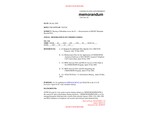
Metadata Sharing Memorandum (2005) [pdf]
This 2005 NSA memorandum outlines plans to expand and formalize intelligence community–wide sharing of SIGINT-derived metadata beyond NSA, centering on the CRISSCROSS/PROTON program while balancing legal, operational, and source-protection concerns. It proposes a federated query model to increase access without further duplicating sensitive data outside NSA.
-
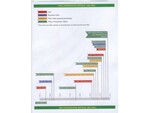
N.S.A. Timeline of Surveillance Law Developments [pdf]
This chart, apparently from an internal N.S.A. presentation, lists milestones in surveillance rules over nearly four decades. The July 2002 “Raw Take” sharing order, whose existence has not previously been disclosed, is just one of three rulings by the Foreign Intelligence Surveillance Court to make the list. The other two were 2004 and 2006 rulings allowing bulk collection of data about emails and phone calls.
-
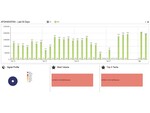
NSA BOUNDLESSINFORMANT Chart on Afghanistan [pdf]
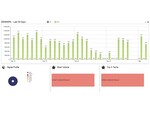
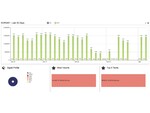
The Afghanistan BOUNDLESSINFORMANT chart covering Dec 10, 2012 to Jan 8, 2013. About 35.8 million cellphone metadata records was collected and shared with the NSA, primarily through DRTBOX systems. These records were gathered in Afghanistan as part of the Afghanistan SIGINT Coalition.
-
NSA BOUNDLESSINFORMANT Chart on Denmark [pdf]
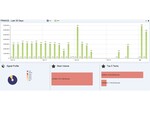
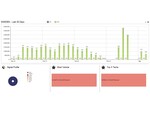
The Denmark BOUNDLESSINFORMANT chart covering Dec 10, 2012 to Jan 8, 2013 shows that Danish intelligence collected and shared about 22.9 million cellphone metadata records with the NSA through DRTBOX systems. These records were gathered in Afghanistan as part of the Afghanistan SIGINT Coalition, not mass surveillance inside Denmark.
“Mission Creep: How the NSA’s Game-Changing Targeting System Built for Iraq and Afghanistan Ended Up on the Mexico Border” - The Intercept ↗ (2019-05-29) · “Norges hemmelige krig i Afghanistan” - NRK ↗ (2019-05-29) · Moltke, Henrik · Skille, Øyvind Bye · Døvik, Olav · Hansen, Ståle Ellingsgard · Fjørtoft, Martin -
NSA BOUNDLESSINFORMANT Chart on France [pdf]
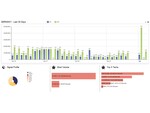
The France BOUNDLESSINFORMANT chart covering Dec 10, 2012 to Jan 8, 2013 shows that French intelligence collected and shared about 70.3 million cellphone metadata records with the NSA, primarily through DRTBOX systems. These records were gathered in Afghanistan as part of the Afghanistan SIGINT Coalition, not mass surveillance inside France.
“Comment la NSA espionne la France” - Le Monde ↗ (2013-10-21) · Follorou, Jacques · Greenwald, Glenn -
NSA BOUNDLESSINFORMANT Chart on Germany [pdf]
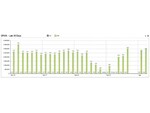
The Germany BOUNDLESSINFORMANT chart covering Dec 10, 2012 to Jan 8, 2013 shows that German intelligence collected and shared about 553 million cellphone metadata and internet records with the NSA, primarily through XKEYSCORE, LOPERS, and JUGGERNAUT systems.
-
NSA BOUNDLESSINFORMANT Chart on Netherlands [pdf]
The Netherlands BOUNDLESSINFORMANT chart covering Dec 10, 2012 to Jan 8, 2013 shows that Dutch intelligence collected and shared about 1.8 million cellphone metadata records with the NSA, primarily through CERF CALL systems. According to the Dutch government, the records were collected by the Dutch National SIGINT Organisation (NSO) for counterterrorism and military operations abroad, with Dutch phone numbers filtered out before sharing, and were not interception of calls in the Netherlands.
-
NSA BOUNDLESSINFORMANT Chart on Norway [pdf]
The Norway BOUNDLESSINFORMANT chart covering Dec 10, 2012 to Jan 8, 2013 shows that Norwegian intelligence collected and shared about 33.2 million cellphone metadata records with the NSA, primarily through DRTBOX systems. These records were gathered in Afghanistan as part of the Afghanistan SIGINT Coalition, not mass surveillance inside Norway.
-
NSA BOUNDLESSINFORMANT Chart on Spain [pdf]
The Spain BOUNDLESSINFORMANT chart covering Dec 10, 2012 to Jan 8, 2013 shows that Spanish intelligence collected and shared about 60 million cellphone metadata records with the NSA. These records were gathered in Afghanistan as part of the Afghanistan SIGINT Coalition, not mass surveillance inside Spain.
Programs: BOUNDLESSINFORMANT -
NSA BOUNDLESSINFORMANT Chart on Sweden [pdf]
The Sweden BOUNDLESSINFORMANT chart covering Dec 10, 2012 to Jan 8, 2013 shows that Swedish intelligence collected and shared about 33.7 million cellphone metadata records with the NSA. These records were gathered in Afghanistan as part of the Afghanistan SIGINT Coalition, not mass surveillance inside Sweden.
“Mission Creep: How the NSA’s Game-Changing Targeting System Built for Iraq and Afghanistan Ended Up on the Mexico Border” - The Intercept ↗ (2019-05-29) · “Norges hemmelige krig i Afghanistan” - NRK ↗ (2019-05-29) · Moltke, Henrik · Skille, Øyvind Bye · Døvik, Olav · Hansen, Ståle Ellingsgard · Fjørtoft, Martin -
NSA June 2012 SSO Weekly Brief Excerpt [pdf]
This NSA Special Source Operations (SSO) briefing from June 2012 describes SPINNERET, a surveillance program that became the second-largest source of phone calling records and "tips" feeding into SHELLTRUMPET, a system that obscures the origin of collected metadata before forwarding it to NSA's Real-Time Regional Gateway (RT-RG) in Texas. The document indicates SHELLTRUMPET "obfuscates the source designators" and filters metadata to only include call events within NSA-Texas's area of responsibility.
“Mission Creep: How the NSA’s Game-Changing Targeting System Built for Iraq and Afghanistan Ended Up on the Mexico Border” - The Intercept ↗ (2019-05-29) · “Norges hemmelige krig i Afghanistan” - NRK ↗ (2019-05-29) · Moltke, Henrik · Skille, Øyvind Bye · Døvik, Olav · Hansen, Ståle Ellingsgard · Fjørtoft, Martin -
Procedures Used By The National Security Agency For Targeting Non-United States Persons Reasonably Believed To Be Located Outside The United States To Acquire Foreign Intelligence Court Information Pursuant To Section 702 Of The Foreign Intelligence Surveillance Act Of 1978 [pdf]
The NSA’s 2009 Section 702 targeting procedures lay out how analysts decide who can be surveilled without a warrant, supposedly limiting spying to foreigners abroad. In reality, the rules give the agency wide latitude to presume people are foreign, rely on vague “totality of the circumstances” tests, and allow broad technical methods like IP filters and metadata checks. Oversight is mostly internal and after-the-fact, creating significant potential for U.S. communications to be swept up with little accountability.
People: Holder, Eric H. Jr.