Tag: buddy lists 8 documents
Search documents matching “buddy lists” →Free-text subjects the curators added. Unlike the other axes these are not necessarily from the documents' own vocabulary, so they are the loosest thing to browse by (and the most forgiving).
Refine (combine with another filter, via search)
Sort: Title
Documents
-
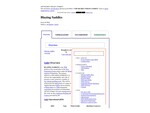
Blazing Saddles [pdf]
This document describes BLAZING SADDLES, a GCHQ program designed to massively scale the storage and analysis of bulk internet surveillance data through multiple specialized databases that track website visits, online identities, communications patterns, and geolocation queries across the global internet population.
Programs: BLAZINGSADDLES · BLACKHOLE · SOCIALANTHROPOID · AUTOASSOC · HRMAP · INFINITEMONKEYS · KARMAPOLICE · MARBLEDGECKO · MUTANTBROTH · MEMORYHOLE · SAMUELPEPYS · SOCIALANIMAL · HAUSTORIUM · GOLDENAXE · NGE -
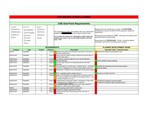
CNE End Point Requirements [pdf]
This NSA/GCHQ document outlines comprehensive requirements for an endpoint surveillance systems that enables analysts to systematically identify intelligence collection needs and discover appropriate tools for data extraction from compromised computers. The framework covers capabilities for remote data collection, cross-platform intelligence integration, query functions, tasking procedures, and visualization tools across implanted networks.
Programs: STARGATE · LOOKING GLASS · QUANTUM · GOLDENEYE · XKEYSCORE · MARINA · JTRIG · BROADOAK · UTT · GLOBALREACH · GLOBALSURGE · THUGGEE · EREPO · DANCINGBEAR · HAUSTORIUM · SHAREOWN · MUTANTBROTH · MOONRAKER · CARBONROD · RUFFLE · ROCKOPERA · QUINCEY · ECLIPSE · MUGSHOT · HIGHNOTE · UDAQ2 · EKB · TURBINE · ACNO · FLAMECARPET · FUMECUPBOARD · JACKPOT · SLIPSTREAM · B13B · PSC · QUINCY · DAREDEVIL · ROADBED -
Content Acquisition Optimization PowerPoint Slides [pdf]
An NSA presentation on content acquisition optimisation — describing how incidental bulk collection from Yahoo Webmessenger, email address books, buddy lists and webmail inboxes was generating massive unintended collection volumes.
-
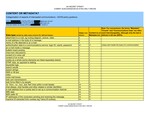
Content-Metadata Matrix [pdf]
GCHQ's internal taxonomy sorts intercepted data into "content" or "metadata" to determine what can be searched without individual warrants—email subject lines, full URLs, and buddy lists fall on opposite sides of the line, enabling analysts to mine massive troves of IP addresses, phone numbers, location data, and browsing history with just a few keystrokes and a brief justification.
-
Converged Analysis of Smartphone Devices [pdf]
This 2010 document outlines NSA methods for identifying, processing, and exploiting data from smartphones by targeting both telephony and digital network intelligence (DNI). It details how analysts use tools like XKEYSCORE and metadata extraction to collect geolocation, app data, call logs, unique identifiers, and user activity from popular mobile apps and services (e.g., Google Maps, Facebook, Flickr), emphasizing the intelligence potential of smartphones as rich surveillance targets.
People: Kuruc, Paula -
PINWALE: Transnational DNI Training [pdf]
This presentation is a classified NSA training guide on PINWALE, a SIGINT database used for the storage, retrieval, and analysis of intercepted digital network intelligence (DNI) communications. It outlines system capabilities, query creation, search tools, and interfaces such as NEXUS, UIS, and AGILITY, explaining how analysts search, retrieve, and analyze both content and metadata — including FISA-partitioned data — within the Five Eyes intelligence framework.
-
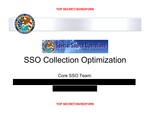
SSO Collection Optimization [pdf]
This is another presentation on problems with the National Security Agency's overcollection of address books and buddy lists and its efforts to weed out useless content. See also EFF_-_20131104-wapo-optimization_google
-
SSO Collection Optimization Overview [pdf]
This excerpt is from an article in the NSA's "Intellipedia," a classified system built with the same open-source software used by Wikipedia. Like the other documents, it describes the problem of high-volume, low-value data collection — and the NSA's response — with a focus on Internet contact lists.