Tag: Effects operations 7 documents
Search documents matching “Effects operations” →Free-text subjects the curators added. Unlike the other axes these are not necessarily from the documents' own vocabulary, so they are the loosest thing to browse by (and the most forgiving).
Graphs
By Banner
By Classification
Refine (combine with another filter, via search)
Sort: Title
Documents
-
Access: Vision 2013 [pdf]
This July 2010 GCHQ strategic document outlines the agency's vision for 2013 to create "the world's biggest SIGINT engine" with access to 800 10-gigabit connections (up from existing capacity), expanding overseas operations to 60% while reducing UK-based to 40%, and developing new capabilities including computer network exploitation (CNE), exfiltration, beaconry, geolocation, and collection of "Internet Pocket Litter" like cookies and browsing data. The strategy emphasizes "scale and pace," "balance," and "agility" while claiming to operate within legal frameworks of "necessity, proportionality and authorisation," and highlights partnerships with second and third parties to access "intractable and hard targets."
Marking: SECRET -
CASCADE - Joint Cyber Sensor Architecture [pdf]
This presentation outlines the Communications Security Establishment’s (CSE) plans to unify and expand its cyber sensor networks (ITS and SIGINT) to create a comprehensive, multi-layered national cyber defense system, enabling threat detection, intelligence collection, and defensive operations across Canadian and foreign networks. It emphasizes standardizing sensor deployments, integrating analytic capabilities, and preparing for “Effects” operations to mitigate cyber threats by 2015. The presentation is duplicated from page 33 onwards - three slides of the duplicated slides have internal CSE comments.
Programs: CASCADE · PHOTONICPRISM · EONBLUE · INDUCTION · THIRDEYE · CRUCIBLE · CHOKEPOINT · SUNWHEEL · CASSIOPEIA · SCNET · JAZZFLUTE · GAZEBO · SEEDSPHERE · TEXPRO · SSO -
GCHQ - DISRUPTION Operational Playbook [pdf]
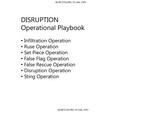
A JTRIG “Disruption Operational Playbook” outlines GCHQ’s online covert action toolkit to discredit people and companies, manipulate narratives, and execute false flag, sting, and infiltration operations across targets. It’s a blunt handbook for the four D’s—deny, disrupt, degrade, deceive—translating psychological warfare into clickable tactics on social platforms and forums.
Programs: JTRIG -
GCHQ Report on the Technical Capabilities of the Powerful Espionage Program TEMPORA, which Allows for Full Take. [pdf]
In May 2012, GCHQ introduced the TEMPORA internet buffer capability, enabling full take collection of internet communications. This innovation provides NSA and GCHQ analysts access to extensive amounts of data, enhancing their analytical capabilities significantly.
-
JTRIG Wiki Highlights – August 2009 [pdf]
This August 2009 JTRIG report outlines the advanced planning phase of Operation QUITO, a pioneering "effects" operation led by GCHQ’s TSI unit. The mission was designed to support the UK Foreign and Commonwealth Office (FCO) in achieving strategic goals regarding Argentina and the Falkland Islands.
-
Offsensive Session: the Boundaries and Against Hacktivism [pdf]
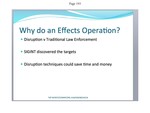
GCHQ slides on “effects” operations against hacktivists: disruption in place of traditional law enforcement, denial-of-service attacks on key communications outlets during Op WEALTH in summer 2011, and a disruption playbook of infiltration, ruse, set-piece, false-flag, false-rescue, disruption and sting operations.
-
Operational Legalities – GCHQ Powerpoint Presentation [pdf]
GCHQ’s “Operational Legalities” deck is an internal compliance playbook that translates the UK’s surveillance laws into day‑to‑day SIGINT procedure—drilling staff on authorisation, necessity, and proportionality, and walking through warrants, targeting justifications, database queries, dissemination, and oversight. Half slides and half speaker notes, it shows how analysts are trained to document, audit, and defend operations under ISA, RIPA, HRA, and WTA while navigating edge cases like location, nationality, second‑party constraints, and “indirect targeting.”