Publisher: The New York Times 10 documents
Search documents matching “The New York Times” →Who published each document. Mostly a news outlet, but sometimes a book. A partner outlet that reported the story without publishing the documents keeps its byline and its article, but is not a publisher here.
Showing the documents The New York Times itself published in 2014 - all years.
Refine (combine with another filter, via search)
Sort: Title
Documents
-
Ashcroft Memo on Intelligence Sharing Procedures [pdf]
In August 2002, citing a recent surveillance court ruling, then-Attorney General John Ashcroft issued new procedures that lowered safeguards on providing to foreign governments information about Americans that was deemed relevant intelligence about terrorism issues. Under procedures disclosed in a 1984 report on the Foreign Intelligence Surveillance Act, the attorney general had to approve any international dissemination; the new procedures have allowed the National Security Agency to share such information without Justice Department clearance.
People: Ashcroft, John -
Classification Guide for FISA, the Protect America Act and the FISA Amendments Act [pdf]
The Foreign Intelligence Surveillance Act regulates spying for national security purposes on domestic soil. This guide lays out secrecy restrictions for various aspects of those programs. Among other things, it mentions the Large Content FISA order, a term that has not previously been disclosed.
-
Converged Analysis of Smartphone Devices [pdf]
This 2010 document outlines NSA methods for identifying, processing, and exploiting data from smartphones by targeting both telephony and digital network intelligence (DNI). It details how analysts use tools like XKEYSCORE and metadata extraction to collect geolocation, app data, call logs, unique identifiers, and user activity from popular mobile apps and services (e.g., Google Maps, Facebook, Flickr), emphasizing the intelligence potential of smartphones as rich surveillance targets.
People: Kuruc, Paula -
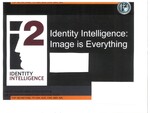
Identity Intelligence: Image Is Everything [pdf]
This document is a highly classified NSA/CSS briefing detailing Identity Intelligence (i2), a comprehensive methodology for exploiting unique fragments of information to track, identify, and exploit targets of interest. It outlines an expansive architecture for data collection that spans Biometric/Biologic, Biographic, and Contextual/Behavioral domains, essentially mapping every conceivable data point of an individual's physical existence and digital/social footprint.
-
India: Support to Terrorist Attacks in Mumbai [pdf]
A top secret NSA intelligence report on GCHQ's surveillance of Lashkar-e-Taiba technology chief Zarrar Shah before and during the November 2008 Mumbai attacks, documenting how analysis of his internet browsing and viewing habits revealed reconnaissance activity and operational planning against Mumbai targets including the Taj Hotel.
People: Shah, Zarrar“In 2008 Mumbai Attacks, Piles of Spy Data, but an Uncompleted Puzzle” - The New York Times ↗ (2014-12-21) · “In 2008 Mumbai Attacks, Piles of Spy Data, But an Uncompleted Puzzle” - ProPublica ↗ (2014-12-21) · “In 2008 Mumbai Attacks, Piles of Spy Data, but an Uncompleted Puzzle” - PBS ↗ (2014-12-21) · Glanz, James · Rotella, Sebastian · Sanger, David E. · Jennings, Tom · Peevey, Anna Belle · Nieling, Michael -
Mobile Theme Briefing (May 28, 2010) [pdf]
This 2010 GCHQ briefing document outlines the “Mobile Applications Project,” which aims to expand intelligence capabilities to exploit the growing shift from fixed to mobile internet usage. It details objectives for targeting mobile apps and roaming network traffic (GRX), enabling converged analysis of voice, text, command-and-control, and geolocation data across multiple mobile platforms such as iPhone, Symbian, Android, and Windows Mobile. See also: EFF_-_20140128-guard-leaky_phone_apps_0 (includes other slides from the same slideset)
Programs: Mobile Applications Project -
N.S.A. Memo Expands Access to FISA Information [pdf]
In 2006, the National Security Agency sought to expand access to Foreign Intelligence Surveillance Act information — previously limited to its headquarters in Fort Meade, Md. — to its code-breakers in Georgia, Texas and Hawaii. Part of the deliberations focused on a problem that raised the possibility that the agency had violated rules the surveillance court established for handling the information.
-
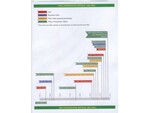
N.S.A. Timeline of Surveillance Law Developments [pdf]
This chart, apparently from an internal N.S.A. presentation, lists milestones in surveillance rules over nearly four decades. The July 2002 “Raw Take” sharing order, whose existence has not previously been disclosed, is just one of three rulings by the Foreign Intelligence Surveillance Court to make the list. The other two were 2004 and 2006 rulings allowing bulk collection of data about emails and phone calls.
-
Slides Describe Mission Involving Huawei [pdf]
This document details an NSA-led strategic initiative to target Huawei due to its dominance in global telecommunications infrastructure. The operation (codenamed "Shotgiant") aims to exploit Huawei hardware to maintain access to target communications while investigating the company’s potential role in facilitating People’s Republic of China (PRC) signals intelligence and supply chain subversion.
-
STELLARWIND Classification Guide [pdf]
Stellarwind was the code name for the Bush administration’s surveillance and data collection programs that operated from 2001 to 2007 outside rules set by the Foreign Intelligence Surveillance Act. This guide lays out secrecy restrictions for various aspects of the program. It discusses the “Large Content” FISA order as part of the “sequence of transition events” from the warrantless wiretapping program to the Protect America Act.