Document year: 2010 78 documents
Search documents matching “2010” →When each document was written, from its own dateline. Undated documents don't appear here.
Sort: Title
Documents
-
SARC RT-RG Implementation And Progress [pdf]
A briefing from NSA/CSS Texas detailing the implementation status of the RT-RG signals intelligence capability at the Texas Cryptologic Center, focused on its operational use against Mexican drug cartel targets and border security missions as of August 2010.
“Mission Creep: How the NSA’s Game-Changing Targeting System Built for Iraq and Afghanistan Ended Up on the Mexico Border” - The Intercept ↗ (2019-05-29) · “Norges hemmelige krig i Afghanistan” - NRK ↗ (2019-05-29) · Moltke, Henrik · Skille, Øyvind Bye · Døvik, Olav · Hansen, Ståle Ellingsgard · Fjørtoft, Martin -
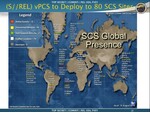
SCS sites [pdf]
A TOP SECRET map from an SCS SIGDEV briefing, dated 13 August 2010, showing the global presence of the Special Collection Service — the joint CIA/NSA embassy-based interception unit — at some 80 sites worldwide, published (briefly unredacted) by Der Spiegel alongside its Merkel/Berlin embassy reporting, naming the specific cities where covert intercept posts operated, including Berlin, Frankfurt, Moscow, Beijing, Tehran and dozens more.
Programs: VPCS -
SEBACIUM - GCWiki [pdf]
This GCWiki document outlines SEBACIUM, a suite of tools developed for monitoring and exploiting peer-to-peer (P2P) networks, particularly eMule and BitTorrent, to track and target users sharing or downloading specific content, such as extremist material, for intelligence and operational purposes. It also details various tools within the system, including DIRTY RAT for tracking file-sharing activities and PLAGUE RAT for altering search results in P2P networks.
-
-
SIGINT Partnership Agrees to Greater Sharing on Afghanistan, CT, Piracy, and CND SIDtoday [pdf]
This SIDtoday document, covering the 2010 SIGINT Seniors Europe (SSEUR) Principals Conference in Berlin, outlines an agreement to enhance intelligence sharing on Afghanistan, counterterrorism, piracy, and computer-network defense. The conference focused on improving SIGINT support for military operations, counter-IED efforts, and expanding collaboration on global piracy issues, while emphasizing the sharing of critical intelligence such as Terrorist Identities Intelligence (T12) and supporting key leader engagement (KLE) and governance operations in Afghanistan.
People: Uhrlau, Ernst -
SIGINTers Use Human Language Technology to Great Advantage, Isolate Conversation about Threat to US Official SIDtoday [pdf]
In 2010, the Special Collection Service in Mexico City began using Human Language Technology (HLT) to streamline voice collection and analysis, significantly improving efficiency. By rapidly filtering through large volumes of audio data, HLT helped isolate critical intelligence, such as identifying a conversation related to a bomb threat targeting a U.S. Embassy official, all within minutes instead of hours.
Programs: HLT -
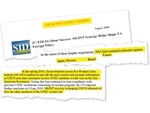
Silent Success: SIGINT Synergy Helps Shape US Foreign Policy SIDtoday [pdf]
August 2010 internal NSA newsletter recounts how the agency used signals intelligence to support U.S. diplomacy during negotiations over the June 2010 UN Security Council resolution imposing sanctions on Iran over its nuclear program. NSA described intercepting the communications of fellow UNSC members — including France, Japan, Mexico, and Brazil — to inform the U.S. Mission to the UN (USUN) how each country would vote, with one U.S. official praising SIGINT for revealing other diplomats’ true positions and "red lines" and giving Washington an upper hand; the resolution passed 12–2 (Brazil and Turkey against) with Lebanon abstaining.
“Spies of the digital age” - Época ↗ (2013-07-27) · “No Place to Hide” - Metropolitan Books ↗ (2014-05-13) · Souza, Leonardo · Gomide, Raphael · Greenwald, Glenn -
Slides Describe Mission Involving Huawei [pdf]
This document details an NSA-led strategic initiative to target Huawei due to its dominance in global telecommunications infrastructure. The operation (codenamed "Shotgiant") aims to exploit Huawei hardware to maintain access to target communications while investigating the company’s potential role in facilitating People’s Republic of China (PRC) signals intelligence and supply chain subversion.
-
Stealthy Techniques Can Crack Some of SIGINT's Hardest Targets SIDtoday [pdf]
A SIDToday article from June 2010 describing TAO's supply chain interdiction operations — where shipments of network devices are covertly intercepted, implanted with beacon implants at a secret load station, and repackaged for delivery — illustrated by a specific operation against the Syrian Telecommunications Establishment whose implanted backbone devices unexpectedly provided access to Syria's previously unexploited GSM network, enabling automatic exfiltration of call detail records and voice content.
“The Digital Arms Race: NSA Preps America for Future Battle” - Der Spiegel ↗ (2015-01-17) · “No Place to Hide” - Metropolitan Books ↗ (2014-05-13) · Appelbaum, Jacob · Gibson, Aaron · Guarnieri, Claudio · Müller-Maguhn, Andy · Poitras, Laura · Rosenbach, Marcel · Ryge, Leif · Schmundt, Hilmar · Sontheimer, Michael · Greenwald, Glenn -
Supporting Internet Operations - Special Source Access [pdf]
In this document GCHQ outlines its plans for expanding internet operations, focusing on increasing access to 10G bearers and enhancing its intercept and egress capabilities by 2011. The agency highlighted that “25 percent of all internet traffic” transits the U.K. through approximately 1,600 different 10-gigabit cables, and it noted that it could “survey the majority of the 1,600” to “select the most valuable to switch into our processing systems.”
-
TRANSGRESSION Overview for Pod58 [pdf]
The TRANSGRESSION overview describes an NSA capability focused on discovering, decrypting, and exploiting foreign computer network exploitation activity to support fourth-party collection, TAO cyber operations, and network defense missions across NSA and FVEY partners.
Programs: TRANSGRESSION · MAKERSMARK · BYZANTINEHADES · VOYEUR · WALKERBLACK · WALKERRED · CROWNROYAL · CROWNPRINCE · SHEPHERD · ZEBEDEE · MAVERICK CHURCH · POPROCKS · GHOSTRECON · NIGHTTRAIN · SHADOWDRAGON · RECORDER · PLAIDDIANA · INCAADAM · TWEEZERS · SNOWGLOBE · WIDOWKEY · SUPERDRAKE · XKEYSCORE · POLARSTARKEY · TUNINGFORK · SCISSORS · PINWALE · CLOUD · BYZANTINEFOOTHOLD · ADJUTANTVENTURE · RAPTORROLEX · RAPTORJOY · RAPTORSAD · BYZANTINERAPTOR -
User-agents: Why and How and How to [pdf]
A TOP SECRET NSA training presentation from 2010 teaching analysts how to use browser user-agent strings — the identifying information your web browser automatically sends to every website you visit — to track surveillance targets across the internet, link their known email activity to their anonymous web browsing, and identify opportunities for hacking their computers based on their operating system and software versions.
-
Voice Fax User Group Minutes December 2010 [pdf]
This GCHQ document is a NSA/GCHQ meeting record from December 2010 detailing the deployment of voice analytics, including speech activity detection, speaker identification, and language identification, integrated with tools like Google Earth to map locations of target communications. It outlines ongoing and planned speaker ID operations against specific targets, including militant leaders and foreign officials, demonstrating the operational use of voice recognition for intelligence collection and geolocation.
-
What’s the worst that could happen? [pdf]
This GCHQ document from March 2010 presents a checklist of factors analysts should consider before going ahead with an operation to infiltrate a communications network, by physical or other means.
-
Wireless LAN / CNE Tool Training Course and Evaluation [pdf]
This document is a slide deck introducing a "Close Access" NSA training course to "familiarize, educate, and certify students in the operational usage" of various computer network exploitation tools.
-
Work is progressing on Menwith Hill Station’s new operations building SIDtoday [pdf]
This NSA SIDtoday article from January 2010 describes construction progress on Project PHOENIX, a massive 95,000 square-foot state-of-the-art operations building at Menwith Hill Station in Yorkshire, England, featuring NSA's first "Tier III" equipment room with redundant power and cooling for critical mission systems, a 200-seat auditorium, and 10 new classrooms. The $40 million facility was expected to be completed by early 2011 with staff moving in by mid-2012, requiring 740 tons of steel, 4,200 cubic meters of concrete, and over 6,000 vehicle movements through the construction gate.
Programs: PHOENIX -
Writing XKS Fingerprints [pdf]
This internal NSA training manual serves as a technical guide for analysts using the X-KEYSCORE (XKS) system. It provides a comprehensive breakdown of how to write, name, and test "fingerprints"—the specific code signatures used to identify, tag, and categorize various types of internet traffic across the agency's global collection points. The manual transitions from basic naming conventions to advanced Boolean logic and context-sensitive scanning, illustrating how the NSA automates the discovery of high-value targets, such as those using specific encryption tools or those involved in weapons procurement.
-
XKEYSCORE Tech Strings in Documents (aka Tech Extractor) 2010 [pdf]
An April 2010 TOP SECRET XKeyscore training presentation on the Tech Extractor — an expanded version of the December 2009 briefing — teaching analysts to find intelligence by tagging keywords inside email, chat and document bodies, with new detail on tasking rules (including that terms hit as substrings so "ricin" matches "pricing"), its non-retrospective operation, its limitations versus the 65+ context fingerprint language, and confirmation that the capability was operated jointly with GCHQ, whose Cheltenham analysts submitted tasking via an Excel template and wiki.