Agency: NSA National Security Agency (US) 2699 documents
Search documents matching “NSA” →The agency that WROTE each document.
Graphs
By document date (13 years)
By published date (9 years)
By Banner
By Classification
Refine (combine with another filter, via search)
Sort: Title
Documents
-
Introduction to the Korean Issue Management Team SIDtoday [pdf]
The Korean Issue Management Team identifies North Korean SIGINT gaps, prioritizes them, and challenges the enterprise to respond with solutions.
People: Fleisch, FranThe Intercept ↗ (2016-05-16) -
Introduction to WLAN / 802.11 Active CNE Operations [pdf]
This NSA powerpoint introduces computer network exploitation (CNE) criteria and assesment as well as active CNE operations. It also introduces the FOXACID program, which is a program to deliver content based exploits to web browsers.
-
Introduction to XKS Application IDs and Fingerprints [pdf]
This August 2009 NSA training document introduces XKEYSCORE's Application IDs (AppIDs) and Fingerprints system, explaining how metadata tags are automatically applied to intercepted sessions to identify and categorize different types of Internet traffic, applications, and behaviors, evolving through four generations from simple keyword matching to sophisticated code-based metadata extraction.
-
Invitation to the Language Keystone Award Ceremony SIDtoday [pdf]
There will be a ceremony for winners of the Language Keystone Award.
Marking: CONFIDENTIALThe Intercept ↗ (2018-03-01) -
Invitation to the Language Keystone Award Ceremony SIDtoday [pdf]
Winners of the individual awards for technical and operational productivity by language analysts will be presented.
Marking: CONFIDENTIALThe Intercept ↗ (2018-03-01) -
IR.21 – A Technology Warning Mechanism [pdf]
This 2010 TOP SECRET NSA briefing defines the IR.21 roaming document as a critical tool for "horizon scanning" and "forecasting" global telecommunications shifts. The document outlines how the NSA uses these technical files to proactively identify emerging 3G and 4G technologies, pinpointing vulnerabilities for exploitation before new systems are even fully deployed.
-
Iran Day - Aiming for High-Hanging Iranian 'Fruit' SIDtoday [pdf]
A one-day conference on Iran, identified as one of the NSA’s four missions “warranting a specific Mission Manager,” touched on Iran’s view of itself as the leader of Shia Islam, its nuclear proliferation, and its support to terrorism.
The Intercept ↗ (2018-08-15) -
Iran – Current Topics, Interaction with GCHQ [pdf]
This NOFORN top secret April 2013 NSA document, shows how Iran significantly improved its offensive cyber capabilities by learning from cyberattacks against it, such as the April 2012 attack on its own oil industry, subsequently launching its own destructive attacks against Saudi Aramco and U.S. financial institutions.
-
Iraq -- Beyond the Headlines SIDtoday [pdf]
An NSA technical director recalls her deployment, the experience of the landmark January 2005 election, and the impact of signals intelligence in securing the country so that the Iraqi people can “regain control.” She writes: “It no longer matters whether we were right or wrong to go into the country, we are there and they need and, more importantly, want our help.”
People: Rober, DonnaThe Intercept ↗ (2018-03-01) -
Iraq Survey Group Vacancy SIDtoday [pdf]
A 90-day posting to the Iraq Survey Group in Baghdad requires knowledge of Iraqi weapons of mass destruction.
People: Berlin, CharlesThe Intercept ↗ (2016-12-07) -
Iraq TDY in Photos SIDtoday [pdf]
SIGINT staffers traveled to Iraq to meet with deployed NSA personnel and customers there.
Marking: SECRETThe Intercept ↗ (2016-12-07) -
Iraq Terrorism Development Center Opens SIDtoday [pdf]
After SID “reopened the front” on Iraq, a dedicated group of 40 analysts was formed to perform target discovery against known or potential terrorists and former regime targets in Iraq.
Programs: IQTERRDEVPeople: Quirk, RichardThe Intercept ↗ (2016-08-10) -
Iraqis Vote for First Permanent Parliament -- A Report from Baghdad SIDtoday [pdf]
A report from the first Iraqi parliamentary election, which — in addition to extensive, U.S.-backed logistics and security support — received 24/7 signals intelligence coverage from a dedicated NSA team.
People: Hussein, SaddamThe Intercept ↗ (2018-08-15) -
Is It the End of the SIGINT World as We Have Come to Know It? [pdf]
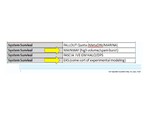
Two excerpts from a 2012 NSA presentation titled "Is It the End of the SIGINT World as We Have Come to Know It?" prepared by a member of the Large-Access Exploitation Group. The table excerpt lists MAINWAY among the systems at highest risk of being overwhelmed by the volume of data the agency was ingesting. The diagram excerpt shows MAINWAY feeding into the Graph-in-Memory (alongside WESTERNSTAR), illustrating how MAINWAY's continuous contact-chaining pushed its precomputed results into the in-memory graph database that analysts actually queried.
Programs: FALLOUT · METADNI · MARINA · MAINWAY · FASCIA · GMHALO · DPS · EKS · WESTERNSTAR · GRAPH-IN-MEMORY -
Is there "fifth party" collection? [pdf]
This NSA internal Q&A forum discussion reveals "fifth party collection"—where the NSA passively intercepts data from one intelligence service (South Korea) that has compromised another service's (North Korea) computer network exploitation operations, creating a three-layer chain where NSA exploits Actor One's access to Actor Two's CNE activities against shared targets. The thread provides concrete examples including NSA leveraging South Korean implants on North Korean officials' computers (who themselves were conducting CNE operations) and stealing zero-day exploits from unidentified foreign intelligence services by passively monitoring their successful attacks.
-
Is There a Sustainable Ops Tempo in S2? How Can Analysts Deal with the Flood of Collection? SIDtoday [pdf]
The NSA's Deputy Director for Analysis and Production discusses the unsustainable operational tempo caused by overwhelming data collection volumes, advocating for "Analytic Modernization" that would shift from treating SIGINT as "radioactive" NSA-only material to sharing raw intelligence with other agencies for collaborative exploitation.
Programs: A-SPACE -
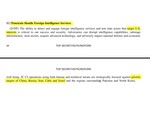
Israel targets the U.S. government for invasive electronic surveillance [pdf]
Israel targets the U.S. government for invasive electronic surveillance, and does so more aggressively and threateningly than almost any other country in the world. Indeed, so concerted and aggressive are Israeli efforts against the U.S. that some key U.S. government documents — including the top secret 2013 intelligence budget — list Israel among the U.S.’s most threatening cyber-adversaries and as a “hostile” foreign intelligence service.
-
Israel's Post-Sharon Policy Prospects: Part 1 -- the Palestinians SIDtoday [pdf]
An NSA staffer assesses two changes that could affect Israeli-Palestinian relations: Ehud Olmert’s ascendance to prime minister following Prime Minister Ariel Sharon’s debilitating stroke; and Hamas’s victory in the Palestinian elections. Regarding Israel and Hamas, the staffer writes that “negotiations between sworn enemies often begin with zero-sum game positions that then moderate over time.”
The Intercept ↗ (2018-08-15) -
Israel's Post-Sharon Policy Prospects: Part 2 -- Iran SIDtoday [pdf]
Given the developments in Iran’s nuclear program in spring 2004, “rumors abound in international political circles” that Israel will attempt to destroy Iranian nuclear facilities unilaterally, as it did with an Iraqi reactor in 1981. A SIGINT national intelligence officer deems this possibility unlikely, because of the risks from Iran’s strengthened defense capabilities and the political implications of such an action.
The Intercept ↗ (2018-08-15) -
Israel-Hizballah Crisis -- Perspectives from an Acting SLO Tel Aviv (conclusion) SIDtoday [pdf]
The conflict between Israel and Hizballah was stressful for the SIGINT Liaison Officer, who had to review "literally hundreds of reports" on the situation while balancing normal job problems (nonfunctional e-mail account) and allaying his family's and his own fears for his safety while living in a city that was potentially a target for airstrikes.
People: Yadlin, AmosThe Intercept ↗ (2019-05-29)