Tag: speech processing 9 documents
Search documents matching “speech processing” →Free-text subjects the curators added. Unlike the other axes these are not necessarily from the documents' own vocabulary, so they are the loosest thing to browse by (and the most forgiving).
Graphs
By Banner
By Classification
Refine (combine with another filter, via search)
Sort: Title
Documents
-
Alert: Voice Masking Is Discovered in SIGINT SIDtoday [pdf]
This March 2007 post from the internal NSA newsletter SIDToday draws attention to voice-masking technology used by subjects of surveillance to frustrate the agency’s voice-recognition efforts.
-
Click ... Click ... Click ... What's the Number? SIDtoday [pdf]
NSA staff working on the BABBLEQUEST project can listen on phone lines and, by analyzing acoustic signals, determine what numbers a given telephone is dialing, whether from a digital or old-fashioned rotary phone.
People: Cusmariu, AdolfThe Intercept ↗ (2019-05-29) -
For Media Mining, the Future Is Now! SIDtoday [pdf]
A number of new "media mining" tools allow analysts to search intercepted content in near-real time, no matter if text, audio or visual. This includes retroactive word-search in intercepted communications.
People: Picone, Joseph -
GCHQ Visit to NSA on Voice Analytics Systems [pdf]
This document is a GCHQ report detailing a late-November (2007?) visit to NSA’s R64 division focused on collaboration in language identification (LID) and speaker identification (SID) systems, including sharing models and research insights. It also describes NSA tools like Hotzone and Voice RT for real-time voice analysis, and mentions an upcoming visit from the CLEAR consortium to address challenges in speech intelligibility and audio recovery for intercepted communications.
-
NSA Georgia Opens New Audio-Forensics Lab SIDtoday [pdf]
The document discusses the launch of a new audio-forensics lab at NSAG (National Security Agency Georgia) designed to enhance the processing and analysis of intercepted voice communications. The lab, funded through the Senior Language Technology Authority (SLTA), will focus on resolving language processing challenges for language analysts by improving the intelligibility and quality of foreign-language voice intercepts.
People: Mercer, Marti Hix -
SIRDCC Speech Technology WG assessment of current STT technology [pdf]
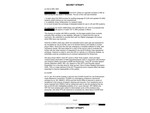
This secret document from the SIRDCC Speech Technology Working Group provides a technical assessment of Speech-to-Text (STT) capabilities for the Security Service (MI5) and GCHQ. The report acknowledges that while automated transcription of intercepted speech remains highly challenging, the technology offers immediate "force multiplier" benefits for specific tasks like identifying spoken telephone numbers or keywords. The Working Group recommends continued investment in bespoke training and a transition toward a common system—specifically the BBN Byblos engine—to facilitate the sharing of classified linguistic models between UK and US agencies.
Programs: BYBLOS -
Voice Fax User Group Minutes December 2010 [pdf]
This GCHQ document is a NSA/GCHQ meeting record from December 2010 detailing the deployment of voice analytics, including speech activity detection, speaker identification, and language identification, integrated with tools like Google Earth to map locations of target communications. It outlines ongoing and planned speaker ID operations against specific targets, including militant leaders and foreign officials, demonstrating the operational use of voice recognition for intelligence collection and geolocation.
-
Voice Fax User Group Minutes March 2009 [pdf]
The document is a TOP SECRET GCHQ meeting record from March 2009 detailing updates to B14/MCS voice analytics systems, including new language identification (LID) models for Pashto, Dari, Brahui, and Baluchi languages and a first-pass speaker ID (SID) system for General Kiyani of Pakistan. It also highlights operational successes, such as improved reporting on Iraq's Vice President Adil ’Abd-al-Mahdi, which enhanced GCHQ’s reputation with NSA and reduced unnecessary workload for linguists.
-
VoiceMatch: A New Offering at NCS SIDtoday [pdf]
A new four-hour course will teach analysts how use "powerful" new voice-matching technology from MIT/Lincoln Laboratories.