Tag: network traffic 5 documents
Search documents matching “network traffic” →Free-text subjects the curators added. Unlike the other axes these are not necessarily from the documents' own vocabulary, so they are the loosest thing to browse by (and the most forgiving).
Graphs
By Banner
By Classification
Refine (combine with another filter, via search)
Sort: Title
Documents
-
FASHIONCLEFT - Interface Control Document (15 June 2009) [pdf]
This 2009 NSA Interface Control Document provides comprehensive technical specifications for FASHIONCLEFT, the protocol that acts as a covert shipping system enabling TAO malware implants to send stolen network data back to NSA collection servers with minimal computer processing requirements—using multiple encryption layers (RSA-1024 and RC6-128) to disguise the traffic as it travels across the internet while allowing NSA's Common Data Receptor to reassemble and authenticate the original intercepted packets. The document details how implants make modified copies of captured network traffic (changing destination addresses to point toward NSA instead of legitimate recipients), apply various levels of encryption or scrambling ("munging") depending on how powerful the infected computer is, attach metadata instructions explaining how to reconstruct the original packets, and use pattern-matching algorithms to ensure NSA systems can identify which stolen packets belong to which collection operation.
Programs: FASHIONCLEFT · FLAXENPRECEPT · SHELLGREY · SURPASSPIN · SEAGULLFARO · ROOTKNOT · FIGBUILD · OPTICPINCH · VINYLSEAT · OLYMPUS · UNITEDRAKE · HOGTECH · SWEEPFORWARD · CONVEY · PINWALE · TREBLECLEF · FOGYNULL · FUNNELAPS · FLASHHANDLE -
SIGINT Mission Strategic Plan FY2008-2013 [pdf]
This five-year mission plan for the National Security Agency shows how the agency’s leaders view its mission and culture.
-
SSO Collection Optimization [pdf]
The documents reveal that the NSA, in collaboration with GCHQ, accessed private internal networks of Google and Yahoo by intercepting data in transit between their data centers, without breaking into user accounts or servers. This involved analyzing proprietary formats and protocols, such as Google’s Gaia authentication system, using specialized tools to extract intelligence while operating primarily under foreign jurisdiction with fewer legal restrictions.
-
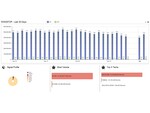
WINDSTOP - Last 30 Days [pdf]
The WINDSTOP report shows massive NSA collection activity over a 30-day period, with daily DNI (Digital Network Intelligence) and DNR (Dialed Number Recognition) records reaching up to 600 million per day. Most data volume came from DS-300 and DS-200B collection points, processed primarily through XKEYSCORE and TURMOIL, and included a mix of signal types such as PCS, INMAR, MCIP, VSAT, and PSTN. The chart follows the same structure as BOUNDLESSINFORMANT, the NSA’s global SIGINT visualization tool, using bar and pie charts to track and categorize collection volume by signal type, SIGAD, and processing system.
-
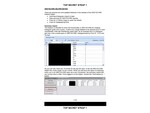
XKEYSCORE Helper Notes [pdf]
This GCHQ document describes new features in the XKEYSCORE Palantir helper tool, including summary/histogram import capabilities that reduce large datasets by aggregating connection data rather than creating individual events for each entry, and data sourcing features that track which XKEYSCORE queries imported specific data into Palantir. The document provides step-by-step screenshots showing how analysts can histogram network traffic by source IP, destination IP, and ports, then import aggregated results showing metadata like total session sizes and connection counts.
Programs: XKEYSCORE