Tag: identity intelligence 4 documents
Search documents matching “identity intelligence” →Free-text subjects the curators added. Unlike the other axes these are not necessarily from the documents' own vocabulary, so they are the loosest thing to browse by (and the most forgiving).
Graphs
By Banner
By Classification
Refine (combine with another filter, via search)
Sort: Title
Documents
-
Come to SID's Identity Intelligence (I2) Day Conference and See Your Target in a Whole New Light! SIDtoday [pdf]
This SIDtoday article promotes NSA's Identity Intelligence (I2) Day Conference, highlighting the importance of using SIGINT tools and techniques to track individuals across time and space. It emphasizes the growing role of biometrics, biographic data, and digital footprints in identifying and targeting foreign persons of interest, with insights from key speakers and case studies.
-
Identity Intelligence: Image Is Everything [pdf]
This document is a highly classified NSA/CSS briefing detailing Identity Intelligence (i2), a comprehensive methodology for exploiting unique fragments of information to track, identify, and exploit targets of interest. It outlines an expansive architecture for data collection that spans Biometric/Biologic, Biographic, and Contextual/Behavioral domains, essentially mapping every conceivable data point of an individual's physical existence and digital/social footprint.
-
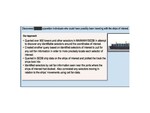
Location Cookies [pdf]
These slides contain excerpts from an April 2013 National Security Agency presentation detailing signal surveillance techniques and successes. They reveal that the NSA and its British counterpart, Government Communications Headquarters (GCHQ), use a Google-specific tracking cookie to pinpoint targets for hacking.
-
Voice Biometrics Capability Proven During Recent Technology Demonstration SIDtoday [pdf]
The Coordinate Operational Resources for Voice Exploitation Technology (CORVET) project, managed by the Expeditionary SIGINT Services Office (ESSO), demonstrated a promising capability for voice biometrics that could be used in security operations to identify individuals based on voice characteristics. Similar to the long-established method of fingerprinting, CORVET aims to create a database of voice models that could be used for identification in various contexts, such as detention and force-protection scenarios.