Tag: foreignness determination 3 documents
Search documents matching “foreignness determination” →Free-text subjects the curators added. Unlike the other axes these are not necessarily from the documents' own vocabulary, so they are the loosest thing to browse by (and the most forgiving).
Graphs
By Banner
By Classification
Refine (combine with another filter, via search)
Sort: Title
Documents
-
Discovery SIGINT Targeting Scenarios and Compliance [pdf]
This document is a top-secret NSA guidance manual detailing SIGINT targeting scenarios, compliance procedures, and legal guidance for querying foreign actors, malware, and potentially U.S.-linked systems, including considerations for minimizing incidental collection of U.S. persons’ communications. It outlines specific rules, approvals, and exceptions for using SIGINT tools, foreign intelligence tasks, and cases involving ambiguous or dual-use selectors like WikiLeaks, The Pirate Bay, and foreign actors operating through U.S. infrastructure.
-
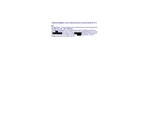
How to tell if a target is 'foreign' [pdf]
The document describes a human intelligence (HUMINT) report indicating that a specific intelligence target, identified by a Foreign Source ID, is located outside the U.S., including details such as email, telephone number, and mobile network type, with checks confirming no U.S. roaming over a 60-day period. It illustrates the use of HUMINT to corroborate foreign location data for surveillance purposes.
-
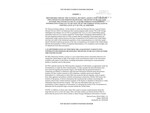
Procedures Used By The National Security Agency For Targeting Non-United States Persons Reasonably Believed To Be Located Outside The United States To Acquire Foreign Intelligence Court Information Pursuant To Section 702 Of The Foreign Intelligence Surveillance Act Of 1978 [pdf]
The NSA’s 2009 Section 702 targeting procedures lay out how analysts decide who can be surveilled without a warrant, supposedly limiting spying to foreigners abroad. In reality, the rules give the agency wide latitude to presume people are foreign, rely on vague “totality of the circumstances” tests, and allow broad technical methods like IP filters and metadata checks. Oversight is mostly internal and after-the-fact, creating significant potential for U.S. communications to be swept up with little accountability.
People: Holder, Eric H. Jr.