Tag: MSISDN 13 documents
Search documents matching “MSISDN” →Free-text subjects the curators added. Unlike the other axes these are not necessarily from the documents' own vocabulary, so they are the loosest thing to browse by (and the most forgiving).
Graphs
By Banner
By Classification
Refine (combine with another filter, via search)
Sort: Title
Documents
-
Analyzing Mobile/Cellular DNI in XKEYSCORE, May 2009 [pdf]
The XKEYSCORE document explains how the agency analyzes mobile/cellular device internet usage by collecting and processing both converged DNI/DNR data within cellular networks and traditional internet traffic, using various tools and indicators to identify mobile users even when their device type isn't immediately evident. The document demonstrates how the system can track mobile internet activity across applications like Yahoo Mail and identifies devices through various technical "hints" including MSISDN codes, browser fingerprints, and user agent strings.
-
AURORAGOLD Working Aid [pdf]
This document is a technical reference guide for analysts that categorizes the specific data fields extracted from mobile network documents (IR.21s) and commercial databases. It serves as a manual for translating telecommunications infrastructure data—such as encryption types, network layer protocols, and hardware versions—into actionable intelligence for target development and cyber exploitation.
Programs: AURORAGOLD -
AURORAGOLD Working Group [pdf]
The "AURORAGOLD Working Group" briefing is a highly classified SIGINT development presentation from June 2012 that outlines the NSA's progress in mapping the global mobile landscape (GSM/UMTS/LTE). It focuses on the project's "value proposition": providing an exhaustive database of network identifiers and technical configurations—often obtained by intercepting internal company documents—to support tactical military operations and long-term surveillance forecasting.
Programs: AURORAGOLD · UTT · XKEYSCORE · CADENCE · JUBILEECORONA · RONIN · NKB · GLOBALTIPPER · PINWALE -
FASCIA: The NSA's huge trove of location records [pdf]
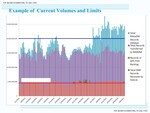
FASCIA is the National Security Agency's enormous database containing trillions of metadata records, many with device locations, that are collected from a variety of sources. This document shows the volume and types of device-location data collected by the agency.
“NSA tracking cellphone locations worldwide, Snowden documents show” - The Washington Post ↗ (2013-12-04) · “No Place to Hide” - Metropolitan Books ↗ (2014-05-13) · Gellman, Barton · Soltani, Ashkan · Greenwald, Glenn -
In-Flight GSM [pdf]
This NSA presentation outlines how the agency is reacting to the growth of mobile phone services on board commercial aircraft.
-
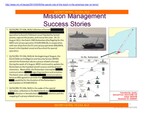
Mission Management Success Stories [pdf]
This document details a joint intelligence operation between the NSA and the Dutch Defense Intelligence and Security Service (MIVD) targeting Somali piracy. This document outlines how the NSA provided the Dutch flagship HMS Rotterdam with specialized intercept capabilities during Operation OCEAN SHIELD in 2012. This collaboration directly facilitated a successful special operation on 13 August 2012, which resulted in the rescue of a hijacked Pakistani vessel's crew and the capture of several pirates.
-
PHANTOM PARROT [pdf]
This document discusses PHANTOM PARROT, a GTAC tool used for querying mobile phone data collected from individuals stopped at UK ports as part of the ITT Op WILDWAY initiative. The tool allows intelligence analysts to access phonebook, SMS, and call log data from these stops, which can be used for counter-terrorism efforts. Data is obtained under the Terrorism Act 2000, and the tool is part of a broader intelligence-gathering effort, eventually to be integrated into the LUCKY STRIKE project.
Programs: PHANTOM PARROT · WILDWAY · RANNOCH MOOR · LUCKY STRIKE · LOOKING GLASS · DISHFIRE · CORINTH · MOONRAKER · RUSSETT -
Sharing Communications Metadata Across the U.S. Intelligence Community - ICREACH [pdf]
ICREACH is a "one-stop shopping" tool and federated query architecture that allows thousands of analysts across 23 U.S. agencies to search billions of communications metadata records. It consolidates telephony and digital network intelligence (DNI) from various sources—including NSA holdings, Second Party (Five Eyes) partners, and other IC databases like the CIA/FBI's PROTON—into a single, searchable interface. At its launch, the system increased shared metadata records from 50 billion to over 850 billion.
“How the NSA Built Its Own Secret Google” - The Intercept ↗ (2014-08-25) · “No Place to Hide” - Metropolitan Books ↗ (2014-05-13) · Gallagher, Ryan · Greenwald, Glenn -
-
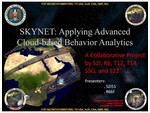
SKYNET: Applying Advanced Cloud-based Behavior Analytics [pdf]
A classified NSA SIGINT Development presentation detailing SKYNET, a cloud-based machine learning system that analyzes bulk Pakistani call data records to identify suspected couriers and terrorists through automated travel pattern analysis, behavioral profiling, and social network mapping — with the goal of supporting targeting operations against groups including the Haqqani Network.
Programs: SKYNET · DEMONSPIT · TMAC · FASTSCOPE · TUSKATTIRE · GMHALO · GMPLACE · BULLDOZER · MDR2 · CINEPLEX · JEMA · FASCIA · CLOUD · DPS · SEDB · SMARTTRACKER · SORTINGLEAD · ASSOCIATION · BANYAN · RT-RG · SNOWHAZE · MASTERSHAKE · MAINWAY -
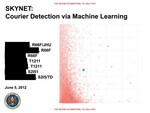
SKYNET: Courier Detection via Machine Learning [pdf]
A June 2012 NSA research presentation detailing the machine learning methodology behind SKYNET's courier detection system, which applies a Random Forest classifier to 55 million Pakistani phone records to identify individuals exhibiting courier-like behavioral patterns — with one of the highest-scoring results being Ahmed Zaidan, Al Jazeera journalist flagged as a suspected al-Qaeda courier.
People: Zaidan, Ahmad Muaffaq -
Turkey at the G20 pre-meeting in London September 2-5 2009 [pdf]
A GCHQ page on the G20 pre-meeting of finance ministers in London on 2-5 September 2009, listing Turkish attitudes of interest and targets including Finance Minister Mehmet Simsek, with Treasury and Central Bank of Turkey officials given as possibles.
“Turkey Is 'Partner and Target' for the NSA” - Der Spiegel ↗ (2014-08-31) · “How the NSA Helped Turkey Kill Kurdish Rebels” - The Intercept ↗ (2014-08-31) · Poitras, Laura · Rosenbach, Marcel · Sontheimer, Michael · Stark, Holger -
XKEYSCORE Tech Strings in Documents (aka Tech Extractor) 2010 [pdf]
An April 2010 TOP SECRET XKeyscore training presentation on the Tech Extractor — an expanded version of the December 2009 briefing — teaching analysts to find intelligence by tagging keywords inside email, chat and document bodies, with new detail on tasking rules (including that terms hit as substrings so "ricin" matches "pricing"), its non-retrospective operation, its limitations versus the 65+ context fingerprint language, and confirmation that the capability was operated jointly with GCHQ, whose Cheltenham analysts submitted tasking via an Excel template and wiki.