Publisher: The Washington Post 13 documents
Search documents matching “The Washington Post” →Who published each document. Mostly a news outlet, but sometimes a book. A partner outlet that reported the story without publishing the documents keeps its byline and its article, but is not a publisher here.
Showing the documents The Washington Post itself published in 2014 - all years.
Refine (combine with another filter, via search)
Sort: Title
Documents
-
2013 Black Budget - SSO Project Description [pdf]
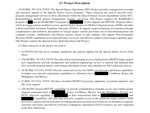
This excerpt from the 2013 Congressional Budget Justification for the National Intelligence Program details the administrative and logistical backbone of the Special Source Operations (SSO). The document outlines how the SSO manages high-priority access programs, specifically MYSTIC, RAMPART-I, and RAMPART-X. It confirms that MYSTIC utilizes "partner-enabled" accesses to intercept communications from both cellular (GSM) and traditional landline (PSTN) networks. The budget highlights a strategic push to exploit Next-Generation Wireless (NGW) technologies and identifies the Caribbean, Mexico, Kenya, and the Philippines as primary regions for sustained, comprehensive metadata and content collection.
“NSA surveillance program reaches ‘into the past’ to retrieve, replay phone calls” - The Washington Post ↗ (2014-03-18) · “The NSA Is Recording Every Cell Phone Call in the Bahamas” - The Intercept ↗ (2014-05-19) · Gellman, Barton · Soltani, Ashkan · Devereaux, Ryan · Greenwald, Glenn · Poitras, Laura -
Classification guide for NSA/CSS Quantum Computing Research (10-25) [pdf]
The NSA/CSS Quantum Computing Research Classification Guide (10-25) outlines how information related to the NSA’s quantum computing research should be classified, distinguishing between unclassified academic work and classified cryptanalytic programs. It defines classification levels for research activities, breakthroughs, algorithms, collaborations, and materials, with the goal of protecting U.S. cryptographic systems while advancing the agency’s offensive capabilities in quantum cryptanalysis.
-
DNI, attorney general certify surveillance targets 'reasonably believed' to be outside U.S. [pdf]
In this document, the director of national intelligence and the attorney general certify that there are procedures in place to ensure that surveillance conducted under Section 702 of the FISA Amendments Act will be limited to targeting people "reasonably believed to be located outside the United States." They state that the foreign intelligence to be collected "concerns foreign powers" as defined by statute. The list of foreign powers is in Exhibit F.
-
FISA Amendments Act of 2008 Section 702 summary document [pdf]
This document summarizes the way the law works and describes the three types of certifications used to permit the surveillance, as well as targeting and minimization procedures. The three certification are for foreign governments, counterterrorism and WMD/proliferation.
-
FISA judge's order authorizing surveillance of foreign governments and organizations [pdf]
With this order dated Aug. 19, 2010, John D. Bates, then-Chief Judge of the Foreign Intelligence Surveillance Court, approved an annual certification permitting the National Security Agency to conduct surveillance about 193 foreign governments, foreign factions, foreign-based political organizations and foreign entities such as the World Bank. Each year, a new certification must be approved by the court to permit such surveillance under Section 702 of the FISA Amendments Act.
Marking: SECRETPeople: Bates, John D. -
List of foreign governments and organizations authorized for surveillance [pdf]
This exhibit lists the 193 foreign governments as well as foreign factions, political organizations and other entities that were part of a 2010 certification approved by the Foreign Intelligence Surveillance Court. These are the entities about which the NSA may conduct surveillance, for the purpose of gathering foreign intelligence. Each year a new certification must be approved by the court to permit such surveillance under Section 702 of the FISA Amendments Act.
-
NSA director's affidavit on foreign surveillance [pdf]
The affidavit was submitted in support of the 2010 certification concerning foreign governments, factions and other entities. In it, Alexander states that pursuant to the certification, NSA seeks to acquire foreign intelligence information concerning foreign powers. The list of foreign powers is in Exhibit F.
People: Alexander, Keith B. -
NSA document on targeting Five Eyes countries and territories [pdf]
This document states that the National Security Agency is prohibited from conducting foreign surveillance on the "Five Eyes" countries, which include U.S. allies Australia, Canada, New Zealand and the United Kingdom, or their territories.
-
NSA target package [pdf]
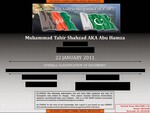
This 2011 target package focuses on Muhammad Tahir Shahzad (alias Abu Hamza), a Pakistan-based bomb builder and Al-Qaeda facilitator. The document was produced by the Counter IED Analysis Integration Cell (CAIC) at the NSA. Notably, the document credits the tracking of Shahzad’s 60+ digital selectors with the eventual capture of high-value targets, including himself and Bali bombing suspect Umar Patek. The accompanying Washington Post investigation uses this specific case to highlight the massive scale of "incidental collection." While Shahzad was a valid foreign target under Section 702 of the FISA Amendments Act (FAA), the investigation revealed that for every legitimate target like him, the NSA intercepted nine "non-targeted" users—many of whom were Americans—capturing deeply personal photos, medical records, and private correspondence.
-
Research & Technology – Penetrating Hard Targets [pdf]
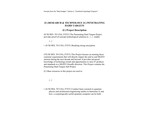
The NSA’s “Penetrating Hard Targets” program aims at developing a cryptologically useful quantum computer capable of breaking strong encryption systems, including those protecting global financial and government communications. Conducted under the U.S. intelligence “black budget,” the program focuses on quantum physics research, engineering studies, and experimental milestones such as achieving dynamical decoupling and quantum control on semiconductor qubits, which are foundational for scaling to larger systems. A related initiative, “Owning the Net,” explores quantum communication technologies to develop new Quantum Key Distribution (QKD) attacks and assess the security of emerging encryption methods.
-
SIGINT Authority decision tree [pdf]
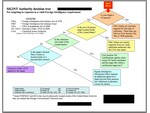
A one-page NSA training chart that walks an analyst from a targeting request to the legal authority that covers it, branching on whether the target is a US person, where the target is, where the collection site is, and whether the target is a Second Party citizen.
-
SSO - MYSTIC [pdf]
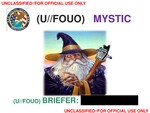
This collection of SSO slides details the NSA's MYSTIC program, a massive signals intelligence (SIGINT) operation capable of recording and archiving 100% of a country's mobile phone calls. The slides reveal the program's reach across several nations, using colorful codenames for specific collection sites.
Programs: MYSTIC · SCALAWAG · ACIDWASH · OILYRAG · VENATOR · RANCIDRINSE · LOLLYGAG · EVENINGEASEL · DUSKPALLET · BASECOAT · PERMANENTPRESS · ETCHINGSPIN“NSA surveillance program reaches ‘into the past’ to retrieve, replay phone calls” - The Washington Post ↗ (2014-03-18) · “The NSA Is Recording Every Cell Phone Call in the Bahamas” - The Intercept ↗ (2014-05-19) · Gellman, Barton · Soltani, Ashkan · Devereaux, Ryan · Greenwald, Glenn · Poitras, Laura -
Tasking of SCALAWAG [pdf]
An NSA Special Source Operations memo describing bandwidth and latency problems caused by the SCALAWAG bulk voice collection program, and introducing the RETRO Tool — a capability allowing analysts to reach back up to 30 days into a buffer of recorded phone calls from an entire country to retrieve audio that was never individually targeted.
Programs: SCALAWAG · DOUBLEARROW · UTT · OCTAVE · NUCLEON · RETROSPECTIVE · RETROTOOL · RETRO · FASCIA · SSO