Journalist: Marquis-Boire, Morgan 50 documents
Search documents matching “Marquis-Boire, Morgan” →Journalists bylined on the stories that published these documents. Contributors credited without a byline are searchable but not listed here.
Refine (combine with another filter, via search)
Sort: Title
Documents
-
Advanced HTTP Activity Analysis [pdf]
This NSA training document from 2009 teaches intelligence analysts how to analyze HTTP internet traffic and exploit it using the XKEYSCORE surveillance system to monitor and identify internet users globally.
“XKEYSCORE: NSA’s Google for the World’s Private Communications” - The Intercept ↗ (2015-07-01) · “No Place to Hide” - Metropolitan Books ↗ (2014-05-13) · Marquis-Boire, Morgan · Greenwald, Glenn · Lee, Micah -
Analyzing Mobile/Cellular DNI in XKEYSCORE, May 2009 [pdf]
The XKEYSCORE document explains how the agency analyzes mobile/cellular device internet usage by collecting and processing both converged DNI/DNR data within cellular networks and traditional internet traffic, using various tools and indicators to identify mobile users even when their device type isn't immediately evident. The document demonstrates how the system can track mobile internet activity across applications like Yahoo Mail and identifies devices through various technical "hints" including MSISDN codes, browser fingerprints, and user agent strings.
-
Atomic SIGINT Data Format (ASDF) Configuration Read Me [pdf]
This document is a technical configuration guide for setting up XKEYSCORE surveillance systems to generate and forward metadata in the Atomic SIGINT Data Format (ASDF) to various data repositories including MARINA, which tracks users' browser activity and online behavior.
Marking: SECRET -
CADENCE Read Me [pdf]
This NSA engineering manual details how to configure XKEYSCORE—the agency's sprawling surveillance system—to integrate with CADENCE, an automated keyword scanning tool that filters intercepted communications and routes intelligence based on search terms submitted by analysts.
-
CNE Analysis in XKEYSCORE [pdf]
This document is an NSA training presentation from October 2009 demonstrating how XKEYSCORE integrates with Computer Network Exploitation (CNE) operations, allowing analysts to search and analyze data extracted from compromised computers including keystrokes, browser history, registry files, documents, emails, and directory structures collected through implants like UNITEDRAKE and OLYMPUS.
Programs: XKEYSCORE · OLYMPUS · UNITEDRAKE · PINWALE · TUNINGFORK · TURBOCHASER · MARINA · JOLLYROGER · TREASUREMAP · TURBINE · PRESSUREWAVE · MAD · TUCKER · EXPANDINGPULLY · UNIX · SEARCHLIGHT · KEYLOGGER · PILBEAM · FOXACID · WAYTIDE · SHADOWQUEST · SEAGULLFARO · DARKHELMET · LUTEUSICARUS · FOGGYBOTTOM · GREENCHAOS · RADIUS · NKB · VALIDATOR -
Communications System - How To Guide [pdf]
A TOP SECRET and sensitive compartmented information (SCI) how-to document for the NSA’s XKEYSCORE “Comms” backbone, laying out ports, peer/allow rules, bandwidth pools, and proxy classifications that stitch clusters to central control—a scalable architecture for moving surveillance data with security markings baked in. It also walks through firewall exceptions, HTTPS port-sharing, and a MAILORDER file pipeline, exposing the nuts‑and‑bolts of how collection flows across sites, proxies, and viewers.
-
DEEPDIVE Readme [pdf]
This document is a confidential technical guide that provides step-by-step procedures for configuring an XKEYSCORE server to function as a DEEPDIVE server. DEEPDIVE enhances XKEYSCORE by adding a front-end filter and a rolling buffer of all unfiltered data, creating a federated query system that can scan all collection sites with a single query.
-
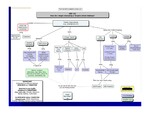
DNI101 [pdf]
This TOP SECRET training guide, "DNI 101," provides a workflow for Digital Network Intelligence analysts on how to investigate a target's email address, detailing the specific tools, databases, and methodology used, and stressing the critical difference between initial open-source/classified research and the active "targeting" of raw SIGINT repositories like XKEYSCORE, PINWALE, and MARINA.
Programs: NKB · FOXTRAIL · FOREMAN · PINWALE · LIONHEART · XKEYSCORE · DISHFIRE · MARINA · MECWEB · MAINWAY · TRAFFICTHIEF · MAUI · ANCHORY · M3 · INTELLINK · HOMEBASE · PROTON · UTT · CADENCE · SPEEDBUMP · TUNINGFORK · MASTERSHAKE · BLACKPEARL · JACKSPARROW · ROADBED · STORYDUTY · LIONROAR · DOPHONE · UIS -
Email Address vs User Activity [pdf]
This 2009 NSA training presentation explains how to use the XKEYSCORE system to search raw SIGINT, detailing the differences between the "Email Address" query, which finds email addresses in full content, and the more flexible "User Activity" query, which can search for selectors like cookies, usernames, and phone numbers.
“XKEYSCORE: NSA’s Google for the World’s Private Communications” - The Intercept ↗ (2015-07-01) · “No Place to Hide” - Metropolitan Books ↗ (2014-05-13) · Marquis-Boire, Morgan · Greenwald, Glenn · Lee, Micah -
Finding and Querying Document Metadata [pdf]
This 2009 NSA training guide, created by Booz Allen Hamilton, explains how analysts can use the XKEYSCORE system to track targets by searching for "non-traditional selectors" embedded within documents, such as author names, company information, or even the hash values of company logos.
Programs: XKEYSCORE · TUNINGFORK · PINWALE · FOXACID · FOXBASE · CARBOY · CARDAMON · UNITEDRAKE · CADENCE -
Forwarding Selected MAILORDER Files Read Me [pdf]
An UNCLASSIFIED//FOR OFFICIAL USE ONLY XKEYSCORE administrator guide explaining how to configure an XKS cluster to forward selected intercepted sessions via MAILORDER, including category throttling limits, output directory configuration and the process setup required to switch all Digital Network Intelligence filtering and selection to the XKEYSCORE collection system.
-
Free File Uploaders [pdf]
This 2009 NSA training presentation for the XKEYSCORE system details how analysts can monitor Free File Uploader (FFU) websites like Zshare and RapidShare, which are difficult to track due to a lack of strong selectors. The guide introduces the "Web File Transfer" plug-in, a specialized tool designed to extract key metadata like original filenames and download/delete links from FFU web traffic.
-
Full Log vs HTTP [pdf]
This 2009 NSA training presentation explains the difference between using the "Full Log" and "HTTP Activity" queries in the XKEYSCORE surveillance system, showing analysts how to use both in tandem to gain a complete picture of a target's online activities, including identifying the use of anonymizing proxies.
-
Guide to Using Contexts in XKS Fingerprints [pdf]
This technical guide explains how NSA analysts use "contexts" within XKEYSCORE fingerprints to create highly targeted surveillance queries by restricting searches to specific scopes (e.g., web searches, document bodies, geographic locations), enabling precision targeting such as finding "all people in Kabul performing web searches on Jihad" while avoiding the overwhelming noise of broader keyword searches.
-
How to configure category throttling in XKEYSCORE [pdf]
An NSA technical guide explains how to configure "category throttling" in XKEYSCORE—a feature that automatically stops forwarding intercepted communications once analyst-defined collection targets hit predetermined data volume or session count limits, allowing the surveillance system to continue processing but prevent overflow from high-volume targets.
-
HTTP Activity vs User Activity [pdf]
This NSA training document from June 2009 explains the distinction between HTTP Activity (general web browsing data) and User Activity (communications metadata from specific protocols like webmail and chat) within the XKEYSCORE surveillance system, demonstrating through Iranian examples how analysts combine both search types to develop comprehensive intelligence on targets.
Programs: XKEYSCORE · MARINA · FOXTRAIL · DECODEORDAIN · YACHTSHOP · BRUTUS · WINDCHASER · NKB · UIS · STARPROC -
Introduction to Context Sensitive Scanning with X-KEYSCORE Fingerprints [pdf]
This May 2010 NSA training document introduces XKEYSCORE's context-sensitive scanning capabilities using "fingerprints"—customizable detection rules that allow analysts to surgically target specific types of Internet traffic without needing prior knowledge of email addresses or other strong selectors, using over 70 unique contexts to identify patterns in communications and behaviors.
-
Introduction to XKS Application IDs and Fingerprints [pdf]
This August 2009 NSA training document introduces XKEYSCORE's Application IDs (AppIDs) and Fingerprints system, explaining how metadata tags are automatically applied to intercepted sessions to identify and categorize different types of Internet traffic, applications, and behaviors, evolving through four generations from simple keyword matching to sophisticated code-based metadata extraction.
-
Kaspersky User-Agent Strings [pdf]
This September 2008 NSA technical report reveals that the agency discovered Kaspersky antivirus software's user-agent strings contain encoded serial numbers and can function as unique machine identifiers, allowing tracking of individual computers running the Russian security software across intercepted network traffic collected through the YACHTSHOP surveillance program.
-
NDIST — GCHQ’s Developing Cyber Defence Mission [pdf]
GCHQ’s NDIST sets out a developing cyber defence mission to reduce vulnerability and harm while enabling prosperity, centered on building a global-level picture of strategic threats and sharing intelligence with allies. The team anchors this work in massive telemetry, claiming roughly 100 million malware events collected per day to drive situational awareness.