Tag: overseas collection 4 documents
Search documents matching “overseas collection” →Free-text subjects the curators added. Unlike the other axes these are not necessarily from the documents' own vocabulary, so they are the loosest thing to browse by (and the most forgiving).
Refine (combine with another filter, via search)
Sort: Title
Documents
-
FORNSAT technologies [pdf]
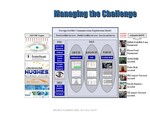
This document outlines a Foreign Satellite Communication Exploitation Model targeting satellite systems such as Intelsat, Iridium, Hughes, ND SatCom, and Inmarsat, using both fixed and mobile satellite services. It describes specific collection and geolocation systems—SEADIVER, ZODIACARRAY, and CANYONDUST—that capture and process voice, fax, data, and terminal location information across global coverage areas.
Programs: SHAREDVISION · DARKQUEST · EKB · GLOBALVIEW · TRYST · ZODIACARRAY · CANYONDUST · IRIDIUM · SEADIVER -
Guidelines for the classification of NSA SIGINT details (1945-1967) [pdf]
This document is an NSA classification guide that defines how and why historical SIGINT material from 1945–1967 remains classified, in many cases for 75 years. It systematically explains which intelligence activities, targets, partnerships, and technical methods must stay protected because they still reveal sensitive sources, methods, and diplomatic equities.
-
Sensitive Targeting Authorisation [pdf]
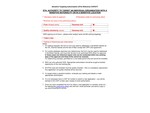
A GCHQ internal form template for Sensitive Targeting Authorisation (STA), used to obtain approval for surveillance targeting of individuals or organisations with sensitive nationalities or in sensitive locations, covering both real-time tasking and historical database datamining, with separate authorisation tracks for overseas targets and UK-based targets.
-
SSO Collection Optimization [pdf]
The documents reveal that the NSA, in collaboration with GCHQ, accessed private internal networks of Google and Yahoo by intercepting data in transit between their data centers, without breaking into user accounts or servers. This involved analyzing proprietary formats and protocols, such as Google’s Gaia authentication system, using specialized tools to extract intelligence while operating primarily under foreign jurisdiction with fewer legal restrictions.