Tag: mobile communications 7 documents
Search documents matching “mobile communications” →Free-text subjects the curators added. Unlike the other axes these are not necessarily from the documents' own vocabulary, so they are the loosest thing to browse by (and the most forgiving).
Graphs
By Banner
By Classification
Refine (combine with another filter, via search)
Sort: Title
Documents
-
A Success Story, In Which the MSOC Takes On a Pakistani GSM Network SIDtoday [pdf]
In March 2006, analysts working at the Misawa Security Operations Center discovered two Pakistani GSM cell phone infrastructure links and began sustained collection. In the following months they discovered and began spying on a total of 14 links. These GSM links "enable development and reporting on al-Qaeda senior leadership, which primarily uses GSM and C2C (computer-to-computer) modes of communication."
The Intercept ↗ (2019-05-29) -
Content Extraction Enhancements For Target Analytics: SMS Text Messages: A Goldmine to Exploit (9 June 2011) [pdf]
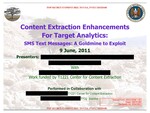
The document describes the NSA’s Dishfire program, which collects hundreds of millions of global SMS messages daily, and the PREFER system, which extracts detailed metadata—including contacts, geolocation, travel, and financial information—from these messages for analytic purposes. It highlights the scale, operational processes, and types of data exploited to support intelligence and target analysis.
-
FORNSAT technologies [pdf]
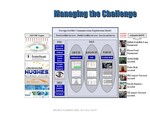
This document outlines a Foreign Satellite Communication Exploitation Model targeting satellite systems such as Intelsat, Iridium, Hughes, ND SatCom, and Inmarsat, using both fixed and mobile satellite services. It describes specific collection and geolocation systems—SEADIVER, ZODIACARRAY, and CANYONDUST—that capture and process voice, fax, data, and terminal location information across global coverage areas.
Programs: SHAREDVISION · DARKQUEST · EKB · GLOBALVIEW · TRYST · ZODIACARRAY · CANYONDUST · IRIDIUM · SEADIVER -
NSA Telegraph: SIGDEV Efforts in Support of the United Nations Framework for Climate Change Conference, Bali, Indonesia [pdf]
This NSA document from Joint Defence Facility Pine Gap reveals that the agency conducted surveillance operations during the 2007 UN Climate Change Conference in Bali, monitoring communications of Indonesian security forces, locating satellite uplinks including video feeds from the conference facility, and compromising the mobile phone number of Bali's Chief of Police. The operation, conducted in coordination with Australia's Defence Signals Directorate (DSD), was framed as a "self-initiated network development effort" to prepare for potential "emergency" collection, but effectively demonstrates intelligence agencies spying on a major international environmental and diplomatic gathering attended by 10,000 participants from 190 countries.
Programs: RAINFALL -
OP HIGHLAND FLING - Event Log [pdf]
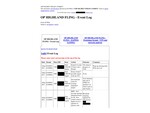
A TOP SECRET operational event log from GCHQ's GCWiki documenting a January 2011 operation targeting Gemalto employees in France, Poland and elsewhere, using MUTANT BROTH cookie analysis, Facebook credentials, LinkedIn profiles and Computer Network Exploitation to identify and implant targets as part of the operation to steal SIM card encryption keys.
-
Tailored Access Operations 2007 [pdf]
This NSA document describes the Tailored Access Operations (TAO) division, which conducts sophisticated cyber operations to penetrate and maintain persistent access to target networks globally through both remote exploits and physical interdiction methods. The presentation outlines TAO's organizational structure, mission capabilities across telecommunications and data networks, development of hardware/software implants for devices ranging from servers to SCADA systems, collaboration with HUMINT partners for physical access operations, and specialized divisions focused on exploiting telephony systems, computer networks, and developing tools for computer network attack and exploitation.
-
Yemen backhaul comms collected (Jan 2011) [pdf]
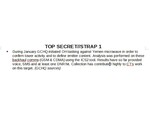
This brief GCHQ document from January 2011 describes intelligence collection operations against Yemen's microwave telecommunications infrastructure, where overhead (OH) tasking confirmed tower activity and analyzed GSM and CDMA backhaul communications using the ICS2 tool, yielding voice intercepts, SMS messages, and at least one dial number recognition (DNR) hit that significantly contributed to counterterrorism work.