Tag: internet cafes 17 documents
Search documents matching “internet cafes” →Free-text subjects the curators added. Unlike the other axes these are not necessarily from the documents' own vocabulary, so they are the loosest thing to browse by (and the most forgiving).
Graphs
By Banner
By Classification
Refine (combine with another filter, via search)
Sort: Title
Documents
-
Breakthrough: Previously 'Unfindable' Internet Cafes in Iraq Can Now Be Located SIDtoday [pdf]
After intercepting the customer database of an ISP, NSA in Mosul was able to locate a number of "previously un-locatable" internet cafes and capture at least four "terrorists".
The Intercept ↗ (2019-05-29) -
Ghosthunter and the geolocating of internet cafes [pdf]
This document announces an NSA “R Spotlight” webcast introducing GHOSTHUNTER, a multi-agency geolocation program designed to locate Time Division Multiple Access (TDMA) VSAT Internet access points, particularly internet cafés across the Middle East and North Africa in support of U.S. military operations. By mid-2009, GHOSTHUNTER had successfully geolocated over 5,000 VSAT terminals across Middle East demonstrating its operational effectiveness and integration with broader intelligence efforts.
Programs: GHOSTHUNTER -
MHS System Locates High Interest Internet Cafes, Some Used by Al-Qa'ida in Iraq SIDtoday [pdf]
Menwith Hill Station has had success in locating Iraqi Internet cafes used by terrorist targets using tools developed under the GHOSTHUNTER project. In an August 2006 mission, Menwith Hill was able to quickly confirm the sites where associates of the top Al Qaeda in Iraq leader were using computers. More recently multiple tips have led Menwith Hill to geolocate network sites and connect with high resolution imagery to identify exact locations.
The Intercept ↗ (2019-05-29) -
'4th Party Collection': Taking Advantage of Non-Partner Computer Network Exploitation Activity SIDtoday [pdf]
This January 2008 SIDtoday article from Menwith Hill Station describes "4th Party Collection"—an NSA technique exploiting non-Five Eyes nations' computer network operations by passively intercepting their stolen data—with the example of NSA monitoring Kurdistan Democratic Party's deployment of Perfect Keylogger commercial spyware against targets in Iran and Iraq, including people with links to the Kurdistan Regional Government and Iraqi Ministry of Foreign Affairs computers, capturing keystrokes, passwords, chat logs, and documents that traditional signals intelligence would never collect. The operation reveals KDP intelligence services systematically compromised internet cafés and Iraqi Ministry of Foreign Affairs computers, with exfiltrated data routing to email addresses in Erbil registered to terminals associated with Kurdish intelligence, which NSA then intercepts and repurposes for its own intelligence production.
-
CNE End Point Requirements [pdf]
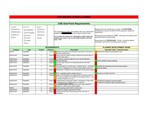
This NSA/GCHQ document outlines comprehensive requirements for an endpoint surveillance systems that enables analysts to systematically identify intelligence collection needs and discover appropriate tools for data extraction from compromised computers. The framework covers capabilities for remote data collection, cross-platform intelligence integration, query functions, tasking procedures, and visualization tools across implanted networks.
Programs: STARGATE · LOOKING GLASS · QUANTUM · GOLDENEYE · XKEYSCORE · MARINA · JTRIG · BROADOAK · UTT · GLOBALREACH · GLOBALSURGE · THUGGEE · EREPO · DANCINGBEAR · HAUSTORIUM · SHAREOWN · MUTANTBROTH · MOONRAKER · CARBONROD · RUFFLE · ROCKOPERA · QUINCEY · ECLIPSE · MUGSHOT · HIGHNOTE · UDAQ2 · EKB · TURBINE · ACNO · FLAMECARPET · FUMECUPBOARD · JACKPOT · SLIPSTREAM · B13B · PSC · QUINCY · DAREDEVIL · ROADBED -
Expeditionary Access Operations: NSA’s Close Access Network Exploitation Program [pdf]
The document describes NSA/TAO’s Expeditionary Access Operations (EAO, S3283), a deployable arm that conducts human-enabled Close Access Network Exploitation (CNE) worldwide—using techniques from physical implants and gifted/compromised laptops to wireless injection tools (e.g., BLINDDATE, NITESTAND) and Wi-Fi geolocation—to support tactical customers like SOCOM, DIA, and task forces in Afghanistan, Iraq, and elsewhere. It details organization, tools, operational theaters (Bagram, Kabul, Kandahar, Stuttgart, Texas, etc.), specific operations (IRONPERSISTENCE, CLIMBINGSHIRT), and plans to formalize partnerships with USCYBERCOM and expand expeditionary CANO capabilities.
Programs: NITESTAND · HAPPY HOUR · BADDECISION · MASTERSHAKE · IRONPERSISTENCE · CLIMBINGSHIRT · BLINDDATE -
Getting Close to the Adversary – Forward-based Defense with QFIRE (June 3, 2011) [pdf]
This document describes the QFIRE project which is designed to give the NSA a global, low-latency platform for “forward-based defense”, enabling real-time detection and manipulation of Internet traffic close to its source. By co-locating passive sensors (TURMOIL), decision logic (TURBINE), and injection capabilities, QFIRE can rapidly reset connections, redirect targets for exploitation, inject malicious payloads, and even seize control of botnets. It operates as part of the broader QUANTUMTHEORY architecture, leveraging both cooperative and non-cooperative infrastructure worldwide to enable CNE/CND/CNA effects with minimal delay.
Programs: QFIRE · QUANTUMTHEORY · TURBULENCE · TURMOIL · TURBINE · TUTELAGE · QUANTUM · QUANTUMSKY · QUANTUMINSERT · QUANTUMBOT · QUANTUMCOPPER · STRAIGHTBIZARRE · BLINDDATE · TUMULT · ISLANDTRANSPORT · SURPLUSHANGAR · MIDDLEMAN · SCSnet · WEALTHYCLUSTER · SSO -
GHOSTHUNTER Tasking Process [pdf]
The document outlines the GHOSTHUNTER (GH) tasking process at Menwith Hill Station, describing how geolocation requests for VSAT terminals and internet-connected targets are managed through coordination with the NSA’s Network Analysis Centre (NAC) and other sites. It details priority levels, task submission procedures, use of locational data from MASTERSHAKE, integration with imagery, and how results are shared with GCHQ and other authorized parties.
-
June Analytic Showcase Scheduled SIDtoday [pdf]
Staff will present two papers on new techniques. One enables the NSA to spy on traffic from Iraqi internet cafes to identify unique users and "support SIGINT-enabled surveillance and rendition operations," while the other, THERAPYCHEATER, helps analysts pick new targets for surveillance by looking at activity patterns in the draft folders of web accounts.
People: Mercurio, JoeThe Intercept ↗ (2017-09-13) -
MASTERSHAKE: Locating Terrorists at Internet Cafés SIDtoday [pdf]
In the hunt for terrorists in Iraq, the "MASTERSHAKE" system uses detailed information on geolocation of modems installed in internet cafes, including the identification of a particular seat in some locations. The system has been used in more than 80 operations resulting in many arrests.
People: Quirk, RichardThe Intercept ↗ (2017-09-13) -
New Technique Geolocates Targets Active at Yemeni Cafes SIDtoday [pdf]
A 2010 NSA document from Menwith Hill Station details a new geolocation technique used in Yemen that combines HUMINT café surveys with SIGINT data — including RADIUS logs, passive collection tools, and TAO access — to track targets frequenting internet cafés linked to Al Qaeda. The method, integrating systems like MORK, WINDCHASER, MARINA, and SPARKLEPONY, enabled analysts to identify and monitor dozens of cafés and correlate user activity with high-priority targets.
Programs: GHOSTHUNTER · MORK · RADIUS · WINDCHASER · MARINA · XKEYSCORE · SPARKLEPONY · GHOSTWOLF · TELIR -
Op MULLENIZE and beyond - Staining machines 10/10/12 [pdf]
This 2012 report from the NSA's British counterpart, the GCHQ, describes a method of "staining" electronic traffic to distinguish otherwise anonymous users. It is used to unmask Tor users and devices on networks in which many computers share the same Internet address. The method relies on planting code in a web browser to change the "user agent," which is the way the browser identifies itself on the web. In a two month period, the report says, GCHQ managed to implant about 200 computers with uniquely identifying stains.
-
Quick Deployment Keeps CT Collection Flowing SIDtoday [pdf]
In September 2004, satellite terminals for internet cafes in Iraq switched to a new communications hub in the UAE, cutting off NSA monitoring of internet in the cafes. Within 40 days, Signals Intelligence Directorate teams outfitted a Special Collection Service site in Ankara, Turkey, to intercept signals from the new hub, immediately resulting in a “successful raid in Kirkuk.”
The Intercept ↗ (2018-03-01) -
RT10 Initiative Overview [pdf]
Overview document for RT10, "Real-time, distributed architecture for mobile (tactical) and fixed (national) operational environments"
Programs: RT10 · COBRA FOCUS · GREENDRAGON · GOLDMINER · JUGGERNAUT · MATTERHORN · OBELISK · SORTINGHAT · INFOVIS · SHARPFOCUS2 · TOGA · SORTINGLEAD · GLOBALREACH · VOICERT · QUADRASPECTRE · RENOIR · ANALYSTSNOTEBOOK · OCTAVE · HLT · DRT · GEOT · InnoVisions -
SIGINT Leads to Capture of al-Qa'ida Terrorist SIDtoday [pdf]
The CIA passed on kudos to SID for a key role in capture of Al Qaeda operative Umar Baziyani in Iraq. SIGINT elements helped geolocate the terrorist, who was using internet cafes in Baghdad.
Programs: KEYSCOREThe Intercept ↗ (2017-04-24) -
Targeting Terrorist Internet Traffic SIDtoday [pdf]
Project DISTANTFISH targets terrorist internet traffic by providing a database of known terrorist login names, email addresses, etc., as well as information on user-generated computer sessions, for example, in an internet cafe.
The Intercept ↗ (2016-12-07) -
'Top 5' SIDtoday Articles of July SIDtoday [pdf]
The most read article in July was about about Israel-Hizballah-Lebanon hostilities and what caused them..
The Intercept ↗ (2019-05-29)