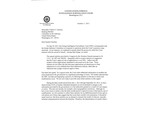
Letter to HPSCI Chairman Rogers and Ranking Member Ruppersberger
Open PDFDocument date: 2012-05-04
Type: FOIA
Pages: 15
Classification: TOP SECRET SI
Dissemination: ORCON, NOFORN
Letter to HPSCI Chairman Rogers and Permanent Member Ruppersberger on collection programs under FAA.
My notes
TOP SECRET//SI//ORCON/NOFORN
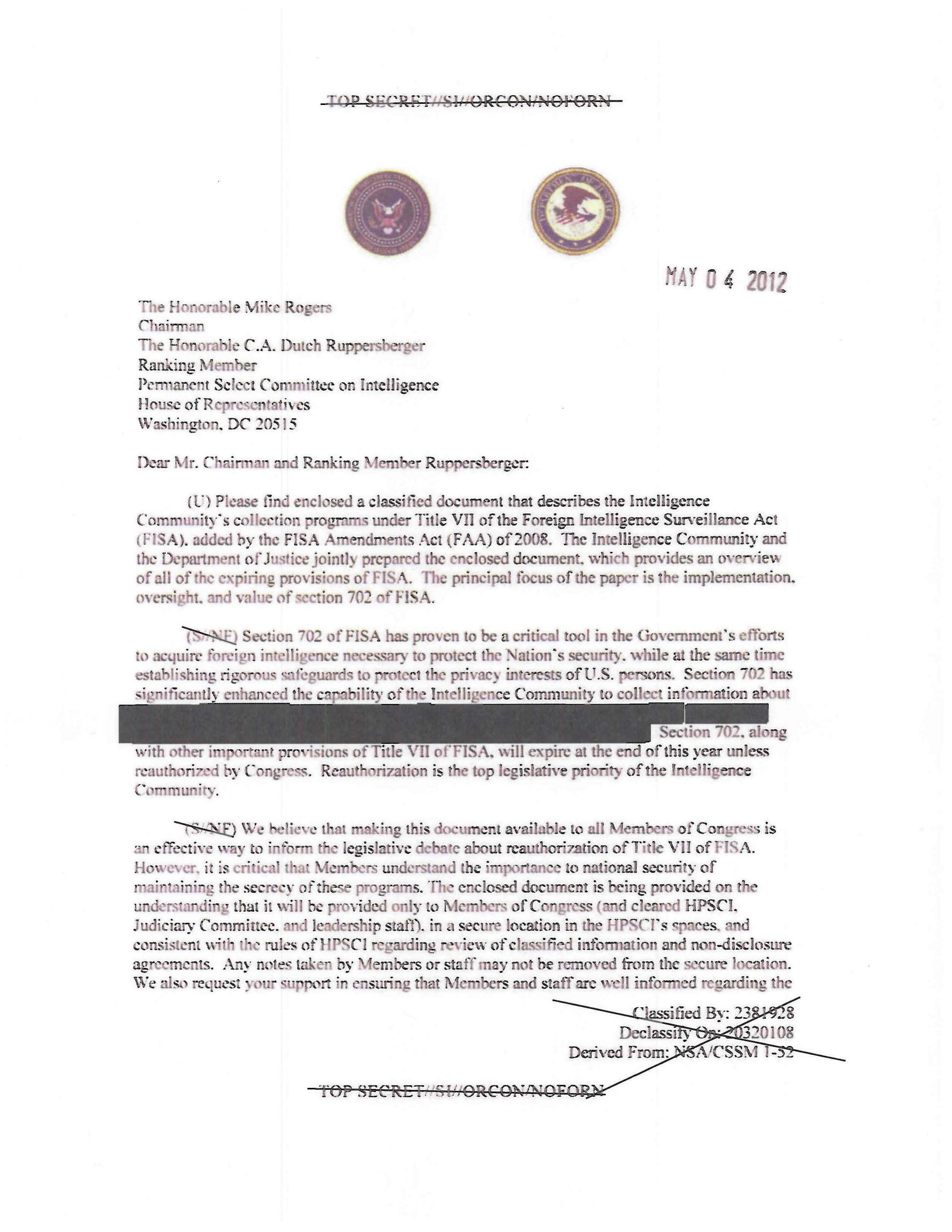
MAY 04 2012
The Honorable Mike Rogers
Chairman
The Honorable C.A. Dutch Ruppersberger
Ranking Member
Permanent Select Committee on Intelligence
House of Representatives
Washington, DC 20515
Dear Mr. Chairman and Ranking Member Ruppersberger:
(U) Please find enclosed a classified document that describes the Intelligence Community's collection programs under Title VII of the Foreign Intelligence Surveillance Act (FISA). added by the FISA Amendments Act (FAA) of 2008. The Intelligence Community and the Department of Justice jointly prepared the enclosed document, which provides an overview of all of the expiring provisions of FISA. The principal focus of the paper is the implementation, oversight, and value of section 702 of FISA.
(S/NF) Section 702 of FISA has proven to be a critical tool in the Government's efforts to acquire foreign intelligence necessary to protect the Nation's security. while at the same time establishing rigorous safeguards to protect the privacy interests of U.S. persons. Section 702 has significantly enhanced the capability of the Intelligence Community to collect information about [REDACTED] Section 702, along with other important provisions of Title VII of FISA, will expire at the end of this year unless reauthorized by Congress. Reauthorization is the top legislative priority of the Intelligence Community.
(S/NF) We believe that making this document available to all Members of Congress is an effective way to inform the legislative debate about reauthorization of Title VII of FISA. However, it is critical that Members understand the importance to national security of maintaining the secrecy of these programs. The enclosed document is being provided on the understanding that it will be provided only to Members of Congress (and cleared HPSCI, Judiciary Committee. and leadership staff), in a secure location in the HPSCI's spaces, and consistent with the rules of HPSC1 regarding review of classified information and non-disclosure agreements. Any notes taken by Members or staff may not be removed from the secure location. We also request your support in ensuring that Members and staff are well informed regarding the
Classified By: 2381928
Declassify On: 20320108
Derived From: NSA/CSSM 1-32
TOP SECRET//SI//ORCON/NOFORN
TOP SECRET//SI//ORCON/NOFORN
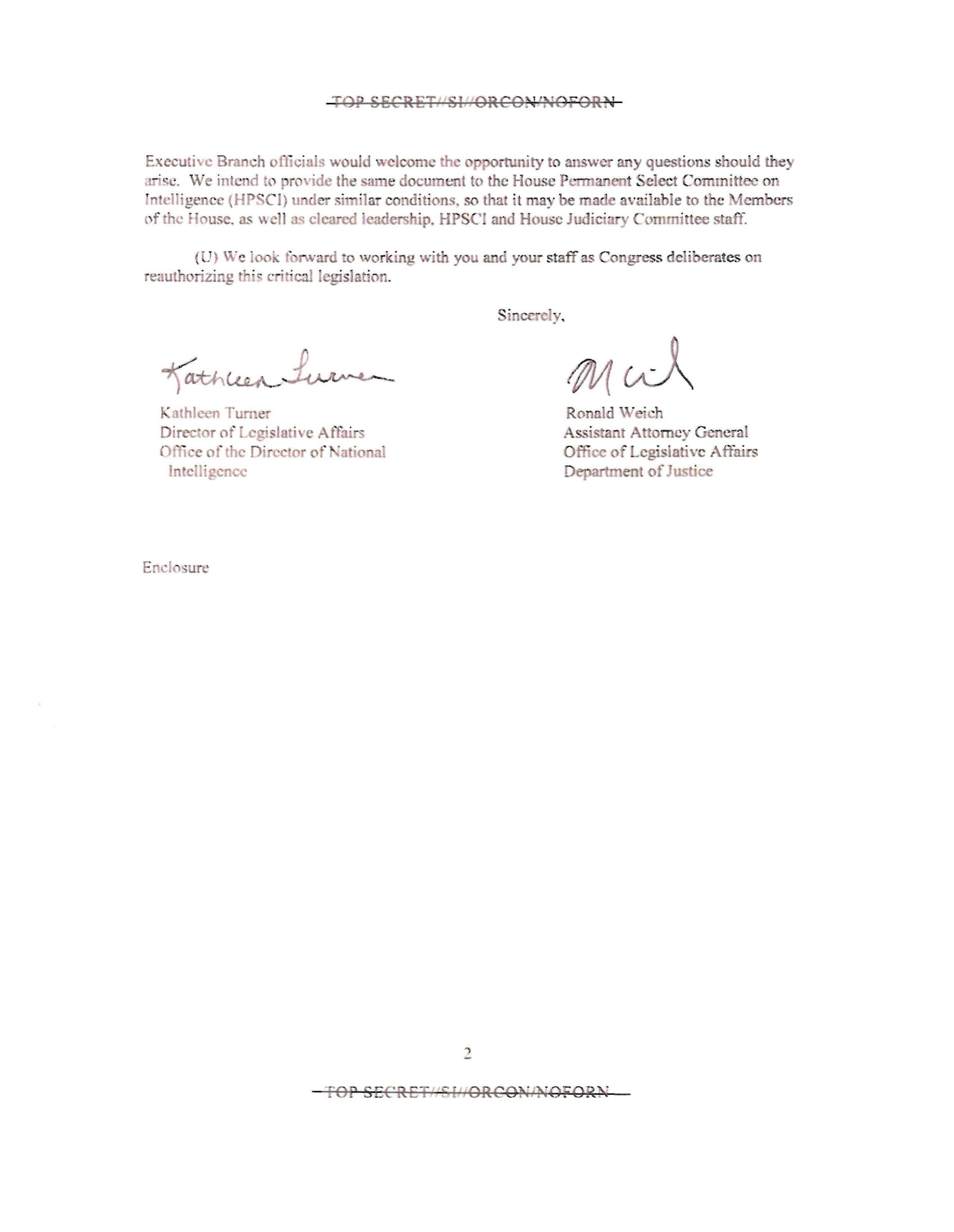
Executive Branch officials would welcome the opportunity to answer any questions should they arise. We intend to provide the same document to the House Permanent Select Cominittee on Intelligence (HPSCI) under similar conditions, so that it may be made available to the Members of the House, as well as cleared leadership, HPSCI and House Judiciary Committee staff.
(U) We look forward to working with you and your staff as Congress deliberates on reauthorizing this critical legislation.
Sincerely,
Kathleen Turner
Director of Legislative Affairs
Office of the Director of National
Intelligence
Ronald Weich
Assistant Attorney General
Office of Legislative Affairs
Department of Justice
Enclosure
2
TOP SECRET//SI//ORCON/NOFORN
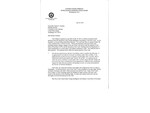
TOP SECRET//SI//ORCON/NOFORN
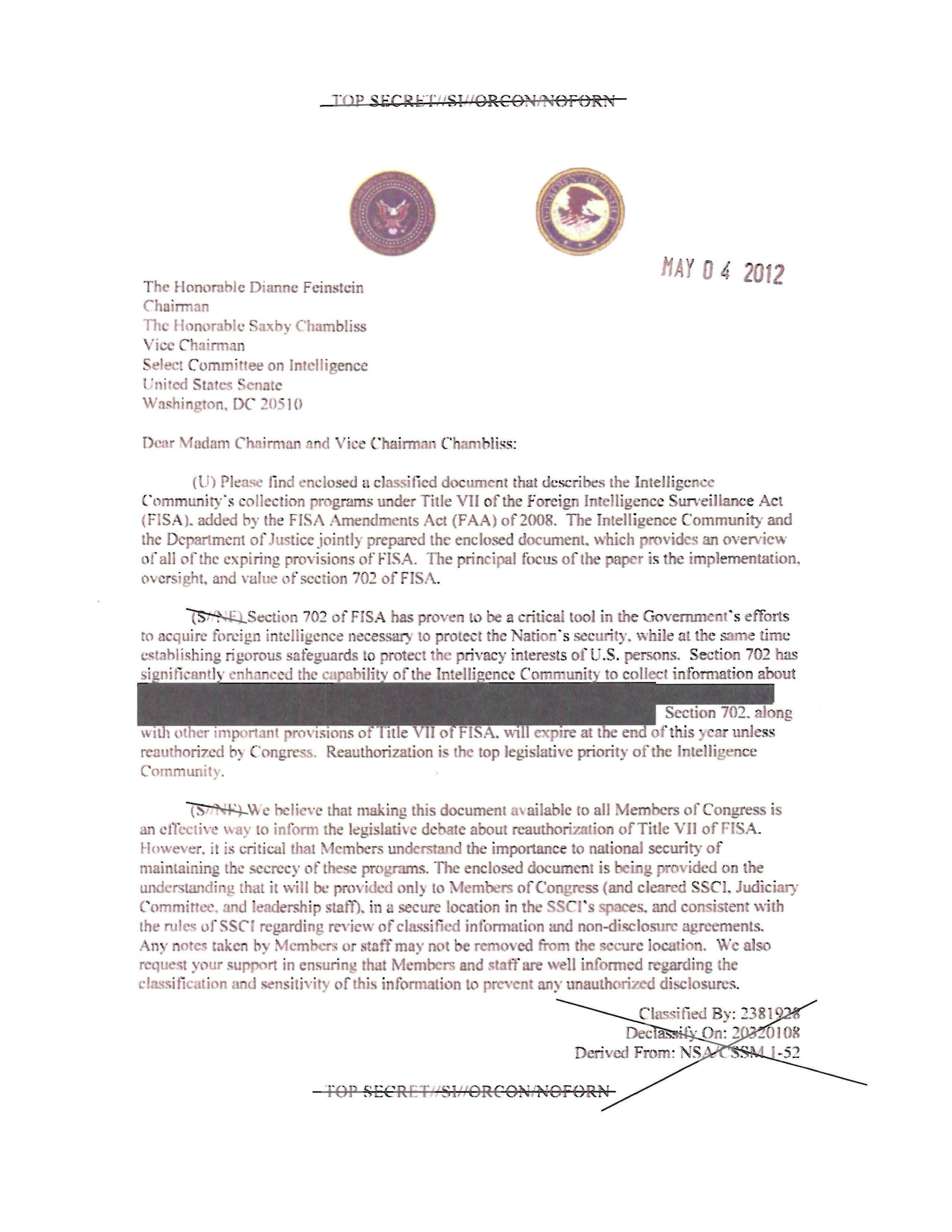
MAY 04 2012
The Honorable Dianne Feinstein
Chairman
The Honorable Saxby Chambliss
Vice Chairman
Select Committee on Intelligence
United States Senate
Washington, DC 20510
Dear Madam Chairman and Vice Chairman Chambliss:
(U) Please find enclosed a classified document that describes the Intelligence Community's collection programs under Title VII of the Foreign Intelligence Surveillance Act (FISA), added by the FISA Amendments Act (FAA) of 2008. The Intelligence Community and the Department of Justice jointly prepared the enclosed document, which provides an overview of all of the expiring provisions of FISA. The principal focus of the paper is the implementation, oversight, and value of section 702 of FISA.
(S/NE) Section 702 of FISA has proven to be a critical tool in the Government's efforts to acquire foreign intelligence necessary to protect the Nation's security, while at the same time establishing rigorous safeguards to protect the privacy interests of U.S. persons. Section 702 has significantly enhanced the capability of the Intelligence Community to collect information about [REDACTED] Section 702, along with other important provisions of Title VII of FISA, will expire at the end of this year unless reauthorized by Congress. Reauthorization is the top legislative priority of the Intelligence Community.
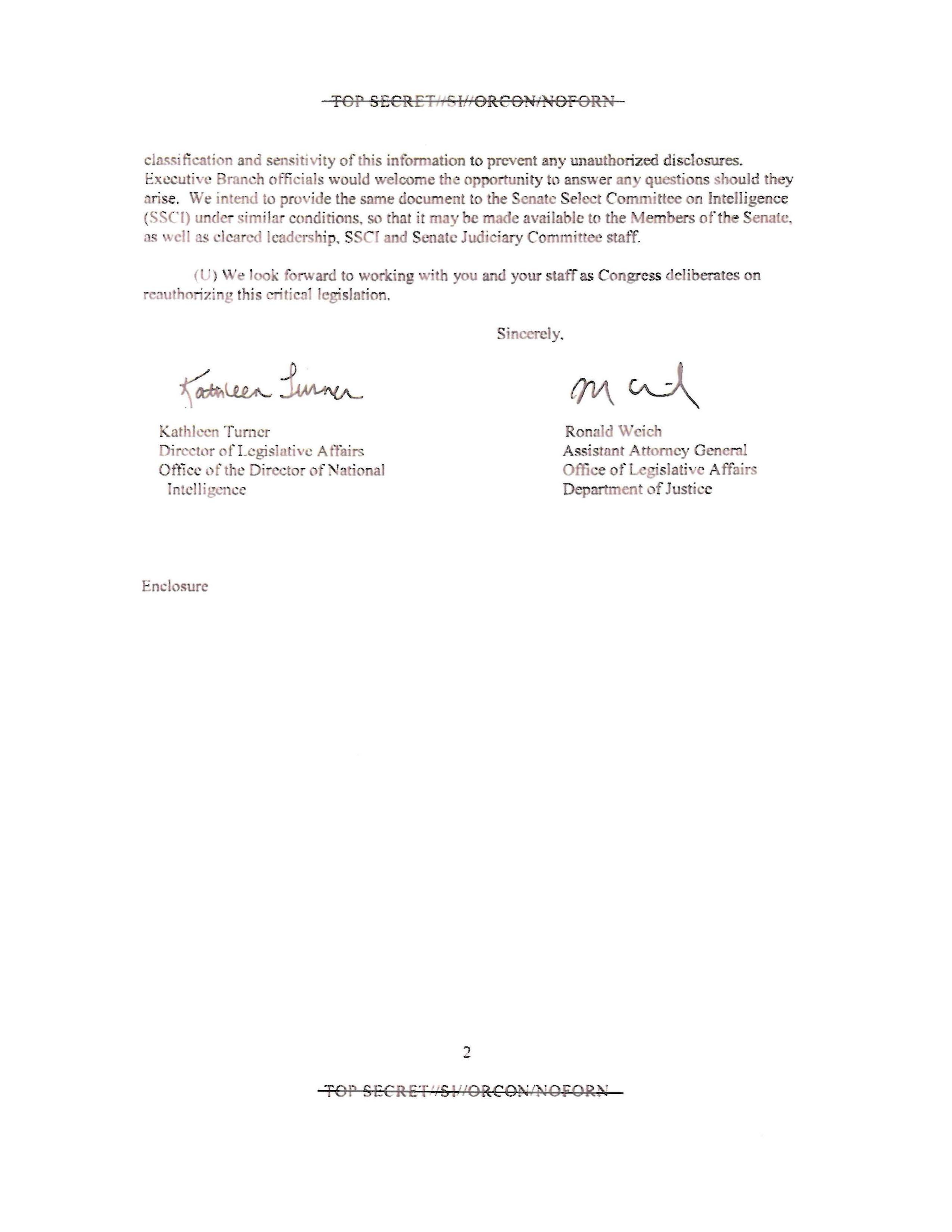
(S/NF) We believe that making this document available to all Members of Congress is an effective way to inform the legislative debate about reauthorization of Title VII of FISA. However, it is critical that Members understand the importance to national security of maintaining the secrecy of these programs. The enclosed document is being provided on the understanding that it will be provided only to Members of Congress (and cleared SSCI, Judiciary Committee, and leadership staff), in a secure location in the SSCI's spaces, and consistent with the rules of SSCI regarding review of classified information and non-disclosure agreements. Any notes taken by Members or staff may not be removed from the secure location. We also request your support in ensuring that Members and staff are well informed regarding the classification and sensitivity of this information to prevent any unauthorized disclosures.
Classified By: 2381928
Declassify On: 20320108
Derived From: NSA/CSSM 1-52
TOP SECRET//SI//ORCON/NOFORN
TOP SECRET//SI//ORCON/NOFORN
classification and sensitivity of this information to prevent any unauthorized disclosures. Executive Branch officials would welcome the opportunity to answer any questions should they arise. We intend to provide the same document to the Senate Select Committee on Intelligence (SSCI) under similar conditions, so that it may be made available to the Members of the Senate, as well as cleared leadership, SSCI and Senate Judiciary Committee staff.
(U) We look forward to working with you and your staff as Congress deliberates on reauthorizing this critical legislation.
Sincerely.
Kathleen Turner
Director of Legislative Affairs
Office of the Director of National
Intelligence
Ronald Weich
Assistant Attorney General
Office of Legislative Affairs
Department of Justice
Enclosure
2
TOP SECRET//SI//ORCON/NOFORN
TOP SECRET//SI//ORCON/NOFORN
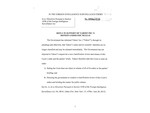
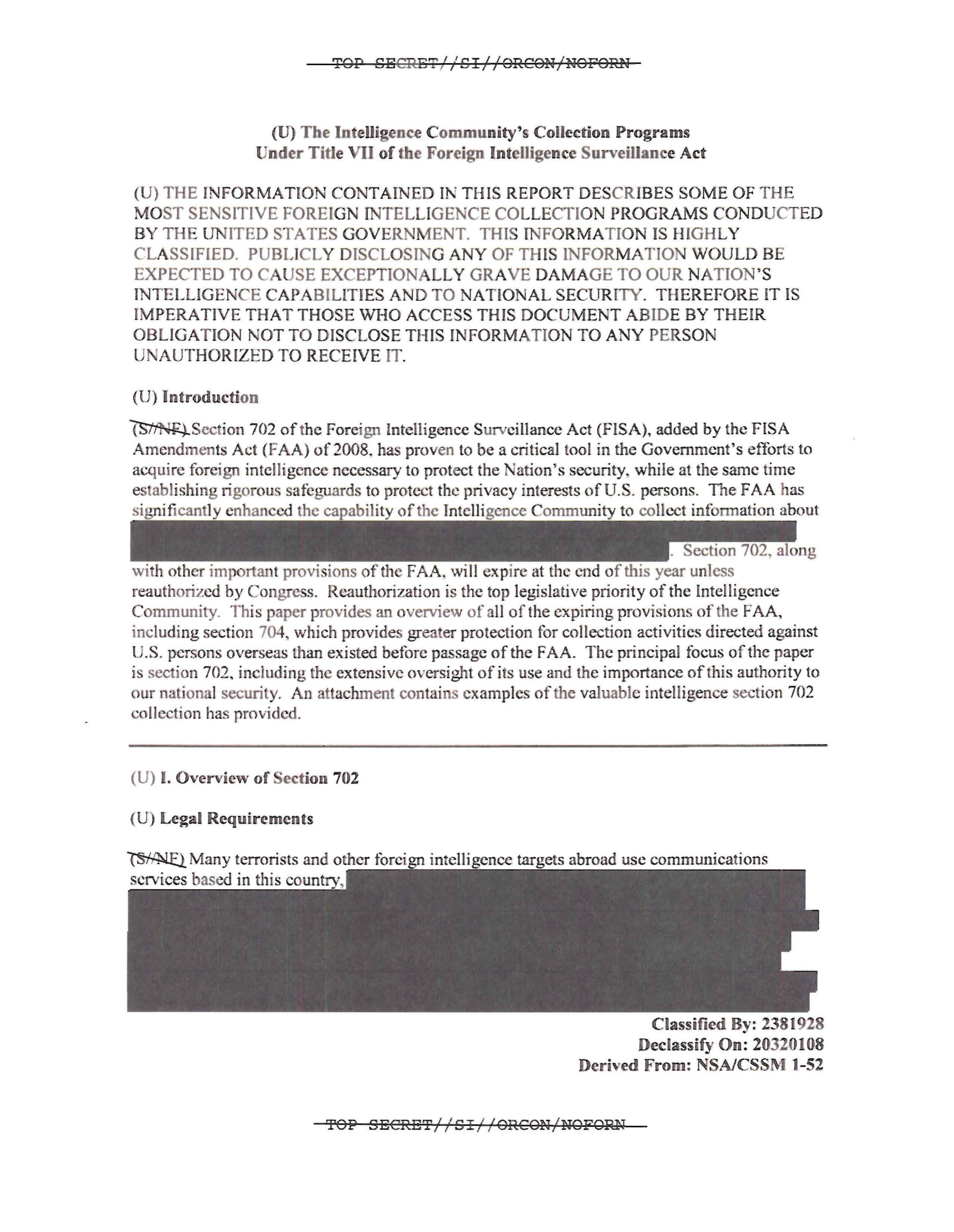
(U) The Intelligence Community's Collection Programs
Under Title VII of the Foreign Intelligence Surveillance Act
(U) THE INFORMATION CONTAINED IN THIS REPORT DESCRIBES SOME OF THE MOST SENSITIVE FOREIGN INTELLIGENCE COLLECTION PROGRAMS CONDUCTED BY THE UNITED STATES GOVERNMENT. THIS INFORMATION IS HIGHLY CLASSIFIED. PUBLICLY DISCLOSING ANY OF THIS INFORMATION WOULD BE EXPECTED TO CAUSE EXCEPTIONALLY GRAVE DAMAGE TO OUR NATION'S INTELLIGENCE CAPABILITIES AND TO NATIONAL SECURITY. THEREFORE IT IS IMPERATIVE THAT THOSE WHO ACCESS THIS DOCUMENT ABIDE BY THEIR OBLIGATION NOT TO DISCLOSE THIS INFORMATION TO ANY PERSON UNAUTHORIZED TO RECEIVE IT.
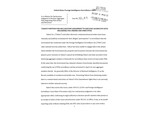
(U) Introduction
(S/NE) Section 702 of the Foreign Intelligence Surveillance Act (FISA), added by the FISA Amendments Act (FAA) of 2008, has proven to be a critical tool in the Government's efforts to acquire foreign intelligence necessary to protect the Nation's security, while at the same time establishing rigorous safeguards to protect the privacy interests of U.S. persons. The FAA has significantly enhanced the capability of the Intelligence Community to collect information about [REDACTED] Section 702, along with other important provisions of the FAA, will expire at the end of this year unless reauthorized by Congress. Reauthorization is the top legislative priority of the Intelligence Community. This paper provides an overview of all of the expiring provisions of the FAA, including section 704, which provides greater protection for collection activities directed against U.S. persons overseas than existed before passage of the FAA. The principal focus of the paper is section 702, including the extensive oversight of its use and the importance of this authority to our national security. An attachment contains examples of the valuable intelligence section 702 collection has provided.
(U) I. Overview of Section 702
(U) Legal Requirements
(S/ANE) Many terrorists and other foreign intelligence targets abroad use communications services based in this country. [REDACTED]
Classified By: 2381928
Declassify On: 20320108
Derived From: NSA/CSSM 1-52
TOP SECRET//SI//ORCON/NOFORN
TOP SECRET//SI//ORCON/NOFORN
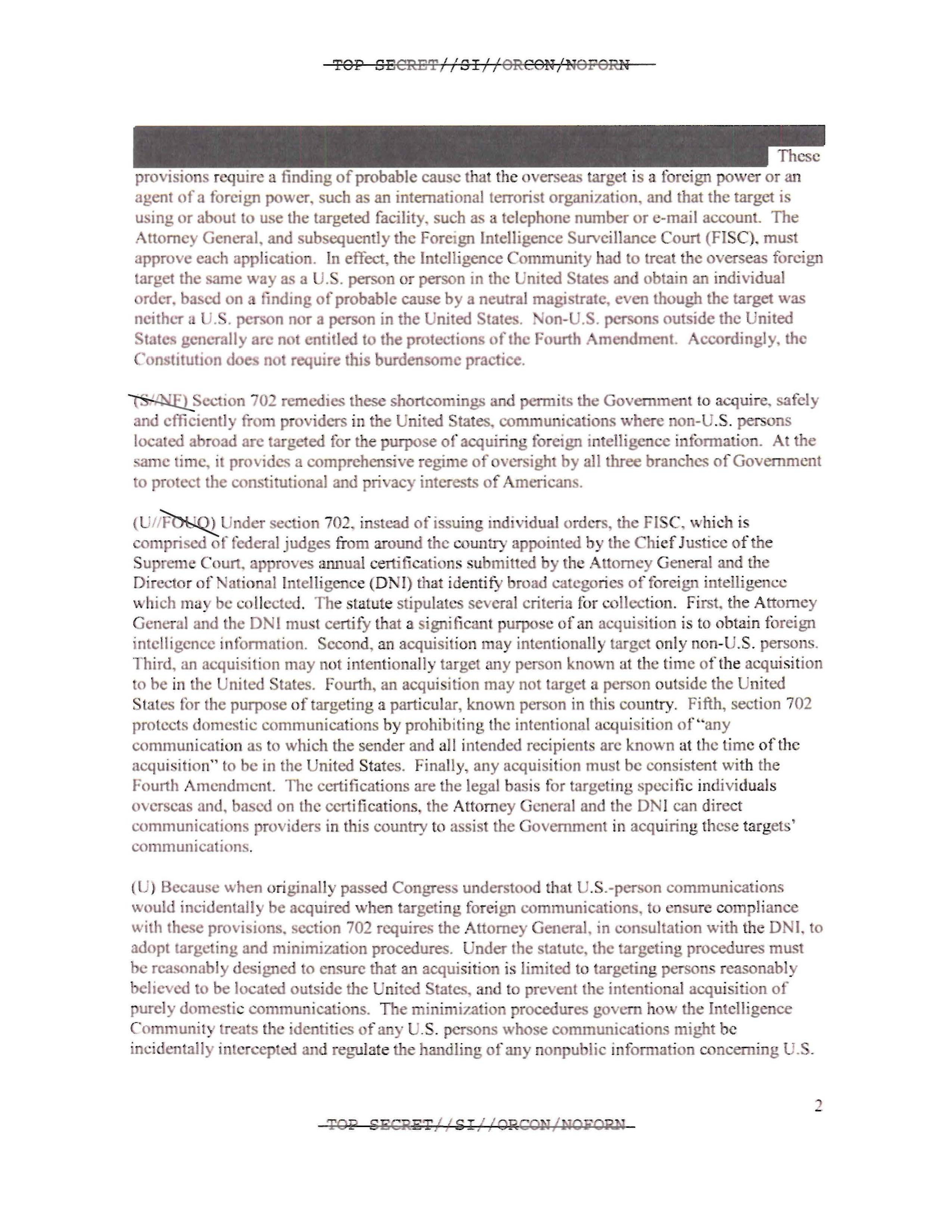
These provisions require a finding of probable cause that the overseas target is a foreign power or an agent of a foreign power, such as an international terrorist organization, and that the target is using or about to use the targeted facility, such as a telephone number or e-mail account. The Attorney General, and subsequently the Foreign Intelligence Surveillance Court (FISC), must approve each application. In effect, the Intelligence Community had to treat the overseas foreign target the same way as a U.S. person or person in the United States and obtain an individual order, based on a finding of probable cause by a neutral magistrate, even though the target was neither a U.S. person nor a person in the United States. Non-U.S. persons outside the United States generally are not entitled to the protections of the Fourth Amendment. Accordingly, the Constitution does not require this burdensome practice.
(S/NF) Section 702 remedies these shortcomings and permits the Government to acquire, safely and efficiently from providers in the United States, communications where non-U.S. persons located abroad are targeted for the purpose of acquiring foreign intelligence information. At the same time, it provides a comprehensive regime of oversight by all three branches of Government to protect the constitutional and privacy interests of Americans.
(U//FOUO) Under section 702, instead of issuing individual orders, the FISC, which is comprised of federal judges from around the country appointed by the Chief Justice of the Supreme Court, approves annual certifications submitted by the Attorney General and the Director of National Intelligence (DNI) that identify broad categories of foreign intelligence which may be collected. The statute stipulates several criteria for collection. First, the Attorney General and the DNI must certify that a significant purpose of an acquisition is to obtain foreign intelligence information. Second, an acquisition may intentionally target only non-U.S. persons. Third, an acquisition may not intentionally target any person known at the time of the acquisition to be in the United States. Fourth, an acquisition may not target a person outside the United States for the purpose of targeting a particular, known person in this country. Fifth, section 702 protects domestic communications by prohibiting the intentional acquisition of "any communication as to which the sender and all intended recipients are known at the time of the acquisition" to be in the United States. Finally, any acquisition must be consistent with the Fourth Amendment. The certifications are the legal basis for targeting specific individuals overseas and, based on the certifications, the Attorney General and the DNI can direct communications providers in this country to assist the Government in acquiring these targets' communications.
(U) Because when originally passed Congress understood that U.S.-person communications would incidentally be acquired when targeting foreign communications, to ensure compliance with these provisions, section 702 requires the Attorney General, in consultation with the DNI, to adopt targeting and minimization procedures. Under the statute, the targeting procedures must be reasonably designed to ensure that an acquisition is limited to targeting persons reasonably believed to be located outside the United States, and to prevent the intentional acquisition of purely domestic communications. The minimization procedures govern how the Intelligence Community treats the identities of any U.S. persons whose communications might be incidentally intercepted and regulate the handling of any nonpublic information concerning U.S.
TOP SECRET//SI//ORCON/NOFORN
2
TOP SECRET//SI//ORCON/NOFORN
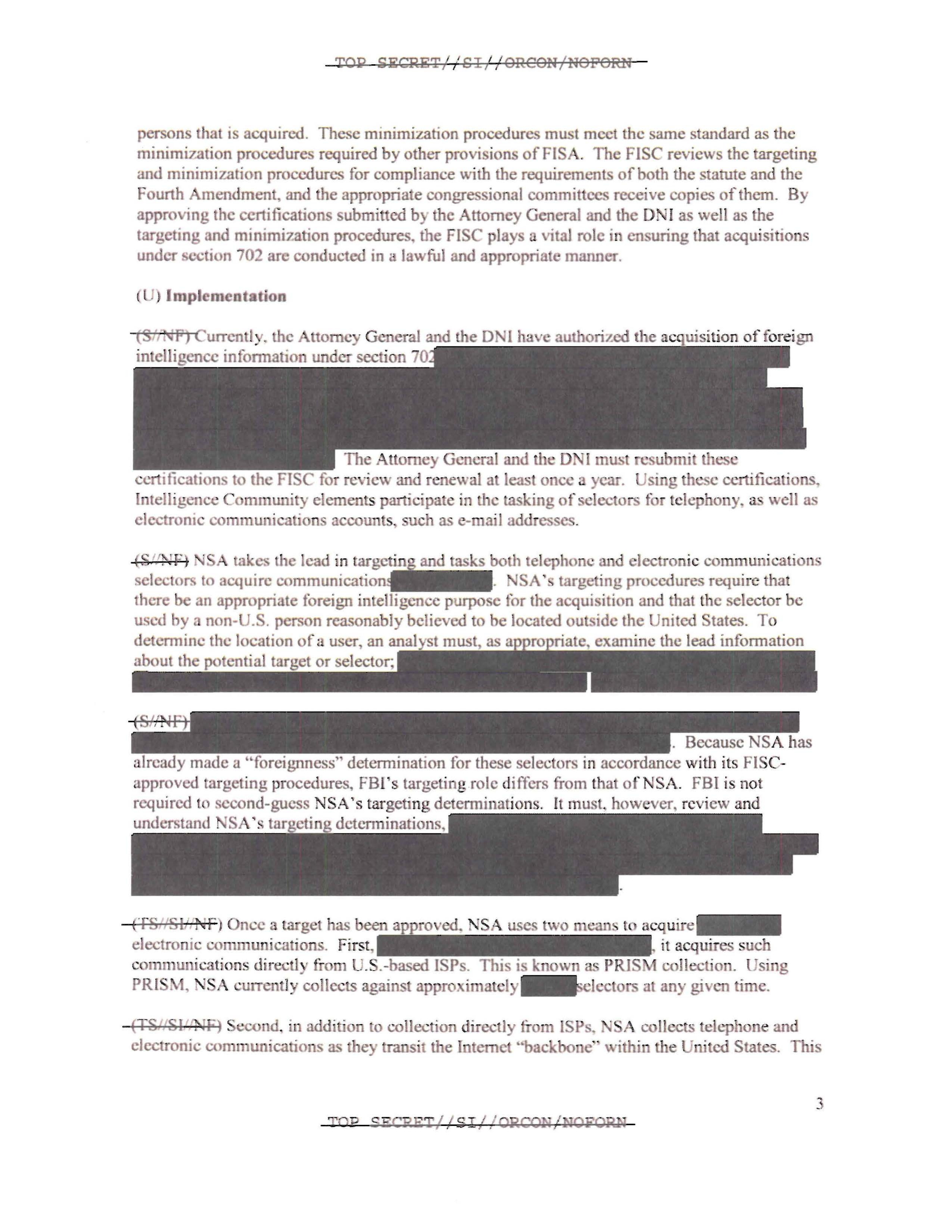
persons that is acquired. These minimization procedures must meet the same standard as the minimization procedures required by other provisions of FISA. The FISC reviews the targeting and minimization procedures for compliance with the requirements of both the statute and the Fourth Amendment, and the appropriate congressional committees receive copies of them. By approving the certifications submitted by the Attorney General and the DNI as well as the targeting and minimization procedures, the FISC plays a vital role in ensuring that acquisitions under section 702 are conducted in a lawful and appropriate manner.
(U) Implementation
(S//NF) Currently, the Attorney General and the DNI have authorized the acquisition of foreign intelligence information under section 702 [REDACTED]
[REDACTED] The Attorney General and the DNI must resubmit these certifications to the FISC for review and renewal at least once a year. Using these certifications, Intelligence Community elements participate in the tasking of selectors for telephony, as well as electronic communications accounts, such as e-mail addresses.
(S//NF) NSA takes the lead in targeting and tasks both telephone and electronic communications selectors to acquire communications [REDACTED] NSA's targeting procedures require that there be an appropriate foreign intelligence purpose for the acquisition and that the selector be used by a non-U.S. person reasonably believed to be located outside the United States. To determine the location of a user, an analyst must, as appropriate, examine the lead information about the potential target or selector; [REDACTED]
(S//NF) [REDACTED] Because NSA has already made a "foreignness" determination for these selectors in accordance with its FISC-approved targeting procedures, FBI's targeting role differs from that of NSA. FBI is not required to second-guess NSA's targeting determinations. It must, however, review and understand NSA's targeting determinations, [REDACTED]
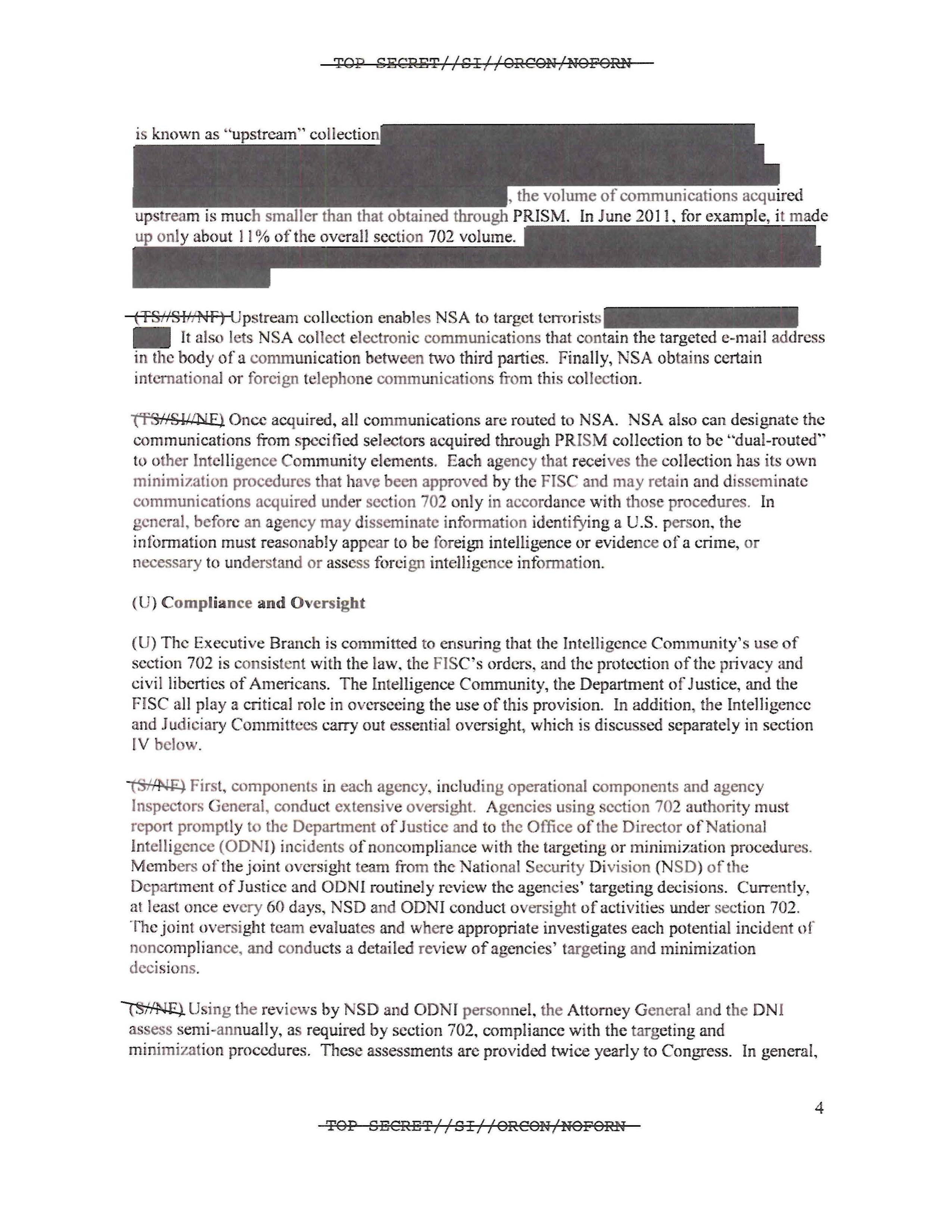
(TS//SI//NF) Once a target has been approved, NSA uses two means to acquire [REDACTED] electronic communications. First, [REDACTED] it acquires such communications directly from U.S.-based ISPs. This is known as PRISM collection. Using PRISM, NSA currently collects against approximately [REDACTED] selectors at any given time.
(TS//SI//NF) Second, in addition to collection directly from ISPs, NSA collects telephone and electronic communications as they transit the Internet "backbone" within the United States. This
TOP SECRET//SI//ORCON/NOFORN
3
TOP SECRET//SI//ORCON/NOFORN
is known as "upstream" collection [REDACTED] the volume of communications acquired upstream is much smaller than that obtained through PRISM. In June 2011, for example, it made up only about 11% of the overall section 702 volume.
(TS//SI//NF) Upstream collection enables NSA to target terrorists [REDACTED] It also lets NSA collect electronic communications that contain the targeted e-mail address in the body of a communication between two third parties. Finally, NSA obtains certain international or foreign telephone communications from this collection.
(TS//SI//NF) Once acquired, all communications are routed to NSA. NSA also can designate the communications from specified selectors acquired through PRISM collection to be "dual-routed" to other Intelligence Community elements. Each agency that receives the collection has its own minimization procedures that have been approved by the FISC and may retain and disseminate communications acquired under section 702 only in accordance with those procedures. In general, before an agency may disseminate information identifying a U.S. person, the information must reasonably appear to be foreign intelligence or evidence of a crime, or necessary to understand or assess foreign intelligence information.
(U) Compliance and Oversight
(U) The Executive Branch is committed to ensuring that the Intelligence Community's use of section 702 is consistent with the law, the FISC's orders, and the protection of the privacy and civil liberties of Americans. The Intelligence Community, the Department of Justice, and the FISC all play a critical role in overseeing the use of this provision. In addition, the Intelligence and Judiciary Committees carry out essential oversight, which is discussed separately in section IV below.
(S//NF) First, components in each agency, including operational components and agency Inspectors General, conduct extensive oversight. Agencies using section 702 authority must report promptly to the Department of Justice and to the Office of the Director of National Intelligence (ODNI) incidents of noncompliance with the targeting or minimization procedures. Members of the joint oversight team from the National Security Division (NSD) of the Department of Justice and ODNI routinely review the agencies' targeting decisions. Currently, at least once every 60 days, NSD and ODNI conduct oversight of activities under section 702. The joint oversight team evaluates and where appropriate investigates each potential incident of noncompliance, and conducts a detailed review of agencies' targeting and minimization decisions.
(S//NF) Using the reviews by NSD and ODNI personnel, the Attorney General and the DNI assess semi-annually, as required by section 702, compliance with the targeting and minimization procedures. These assessments are provided twice yearly to Congress. In general,
TOP SECRET//SI//ORCON/NOFORN
4
TOP SECRET//SI//ORCON/NOFORN
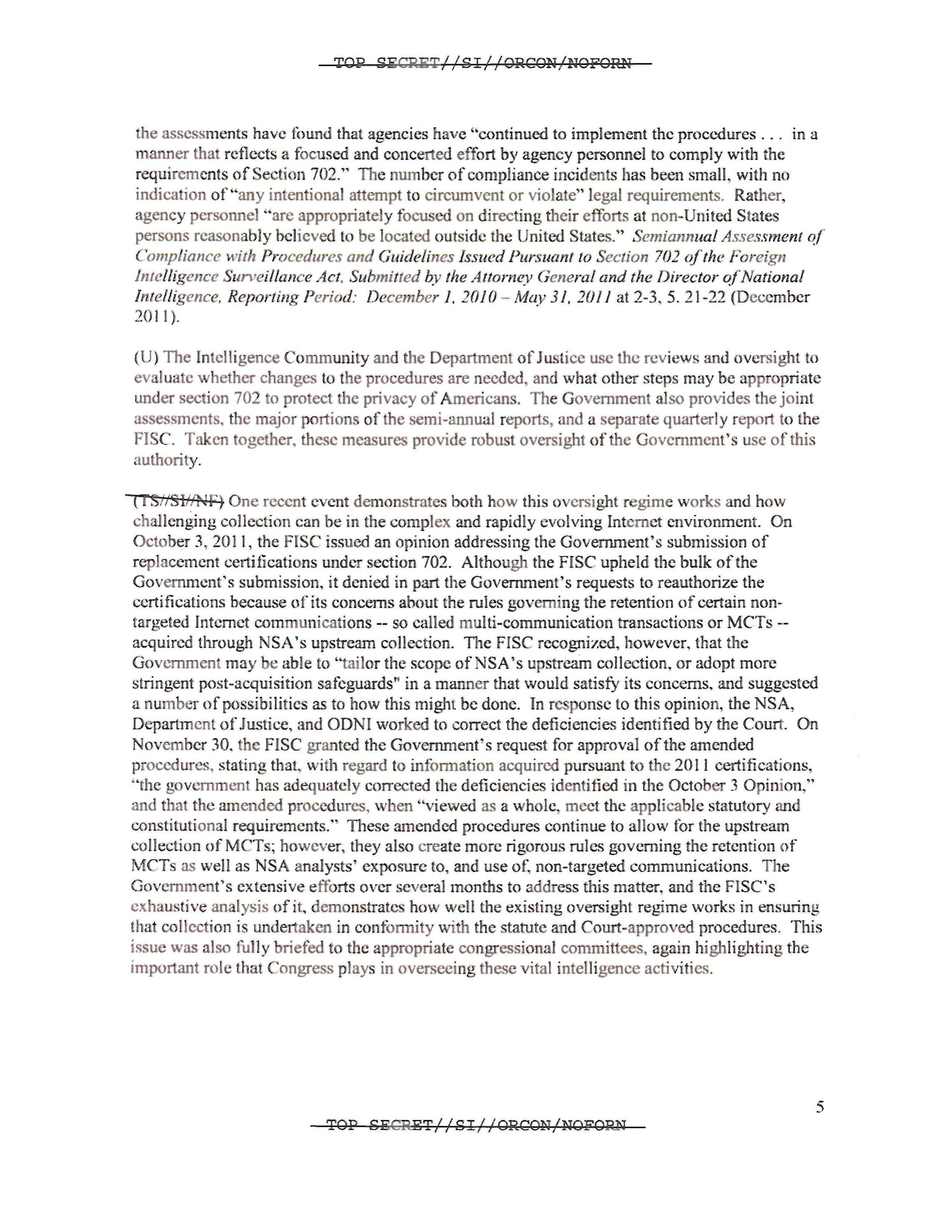
the assessments have found that agencies have "continued to implement the procedures... in a manner that reflects a focused and concerted effort by agency personnel to comply with the requirements of Section 702." The number of compliance incidents has been small, with no indication of "any intentional attempt to circumvent or violate" legal requirements. Rather, agency personnel "are appropriately focused on directing their efforts at non-United States persons reasonably believed to be located outside the United States." Semiannual Assessment of Compliance with Procedures and Guidelines Issued Pursuant to Section 702 of the Foreign Intelligence Surveillance Act, Submitted by the Attorney General and the Director of National Intelligence, Reporting Period: December 1, 2010 - May 31, 2011 at 2-3, 5. 21-22 (December 2011).
(U) The Intelligence Community and the Department of Justice use the reviews and oversight to evaluate whether changes to the procedures are needed, and what other steps may be appropriate under section 702 to protect the privacy of Americans. The Government also provides the joint assessments, the major portions of the semi-annual reports, and a separate quarterly report to the FISC. Taken together, these measures provide robust oversight of the Government's use of this authority.
(TS//SI//NF) One recent event demonstrates both how this oversight regime works and how challenging collection can be in the complex and rapidly evolving Internet environment. On October 3, 2011, the FISC issued an opinion addressing the Government's submission of replacement certifications under section 702. Although the FISC upheld the bulk of the Government's submission, it denied in part the Government's requests to reauthorize the certifications because of its concerns about the rules governing the retention of certain non-targeted Internet communications—so called multi-communication transactions or MCTs— acquired through NSA's upstream collection. The FISC recognized, however, that the Government may be able to "tailor the scope of NSA's upstream collection, or adopt more stringent post-acquisition safeguards" in a manner that would satisfy its concerns, and suggested a number of possibilities as to how this might be done. In response to this opinion, the NSA, Department of Justice, and ODNI worked to correct the deficiencies identified by the Court. On November 30, the FISC granted the Government's request for approval of the amended procedures, stating that, with regard to information acquired pursuant to the 2011 certifications, "the government has adequately corrected the deficiencies identified in the October 3 Opinion," and that the amended procedures, when "viewed as a whole, meet the applicable statutory and constitutional requirements." These amended procedures continue to allow for the upstream collection of MCTs; however, they also create more rigorous rules governing the retention of MCTs as well as NSA analysts' exposure to, and use of, non-targeted communications. The Government's extensive efforts over several months to address this matter, and the FISC's exhaustive analysis of it, demonstrates how well the existing oversight regime works in ensuring that collection is undertaken in conformity with the statute and Court-approved procedures. This issue was also fully briefed to the appropriate congressional committees, again highlighting the important role that Congress plays in overseeing these vital intelligence activities.
TOP SECRET//SI//ORCON/NOFORN
5
TOP SECRET//SI//ORCON/NOFORN
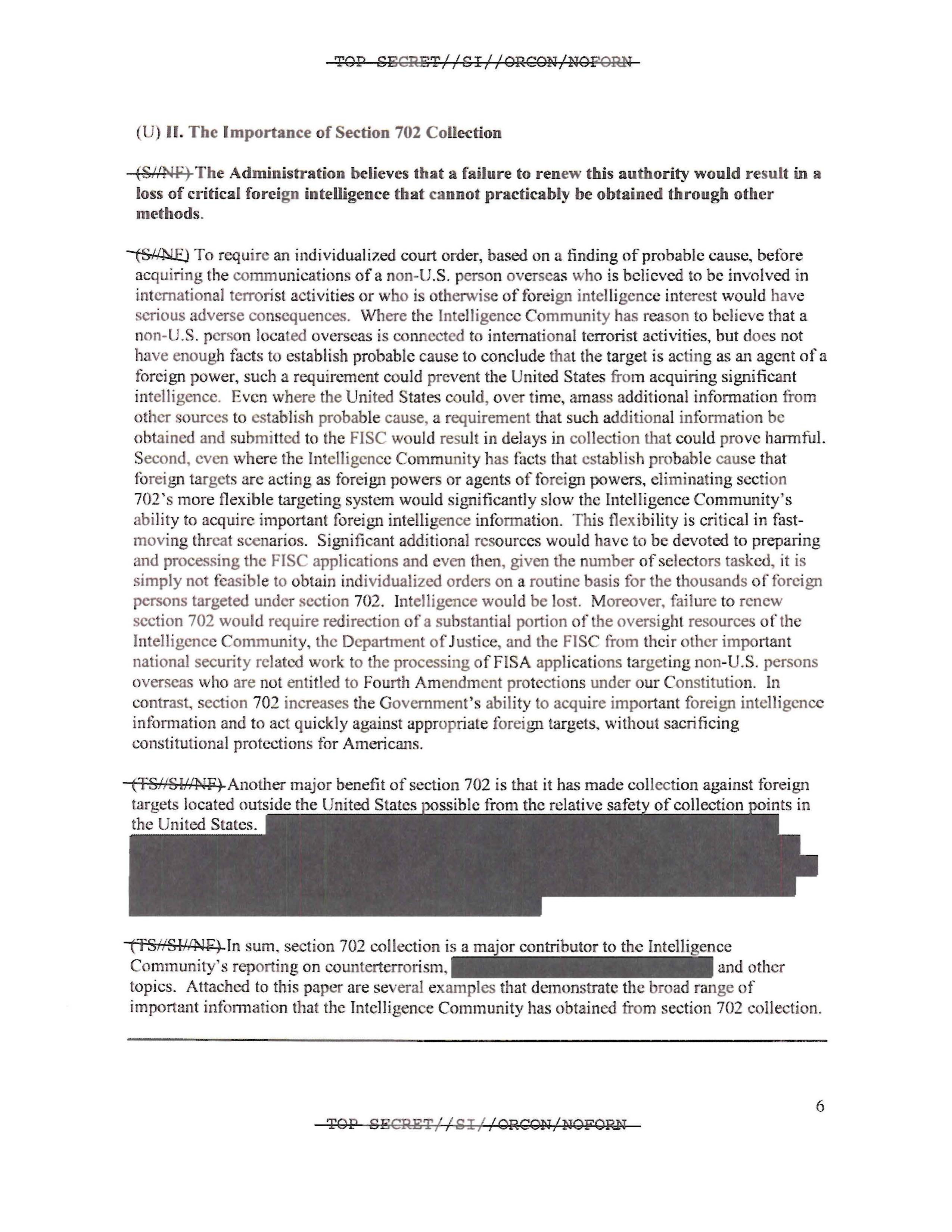
(U) II. The Importance of Section 702 Collection
(S//NF) The Administration believes that a failure to renew this authority would result in a loss of critical foreign intelligence that cannot practicably be obtained through other methods.
(S//NF) To require an individualized court order, based on a finding of probable cause, before acquiring the communications of a non-U.S. person overseas who is believed to be involved in international terrorist activities or who is otherwise of foreign intelligence interest would have serious adverse consequences. Where the Intelligence Community has reason to believe that a non-U.S. person located overseas is connected to international terrorist activities, but does not have enough facts to establish probable cause to conclude that the target is acting as an agent of a foreign power, such a requirement could prevent the United States from acquiring significant intelligence. Even where the United States could, over time, amass additional information from other sources to establish probable cause, a requirement that such additional information be obtained and submitted to the FISC would result in delays in collection that could prove harmful. Second, even where the Intelligence Community has facts that establish probable cause that foreign targets are acting as foreign powers or agents of foreign powers, eliminating section 702's more flexible targeting system would significantly slow the Intelligence Community's ability to acquire important foreign intelligence information. This flexibility is critical in fast-moving threat scenarios. Significant additional resources would have to be devoted to preparing and processing the FISC applications and even then, given the number of selectors tasked, it is simply not feasible to obtain individualized orders on a routine basis for the thousands of foreign persons targeted under section 702. Intelligence would be lost. Moreover, failure to renew section 702 would require redirection of a substantial portion of the oversight resources of the Intelligence Community, the Department of Justice, and the FISC from their other important national security related work to the processing of FISA applications targeting non-U.S. persons overseas who are not entitled to Fourth Amendment protections under our Constitution. In contrast, section 702 increases the Government's ability to acquire important foreign intelligence information and to act quickly against appropriate foreign targets, without sacrificing constitutional protections for Americans.
(TS//SI//NF) Another major benefit of section 702 is that it has made collection against foreign targets located outside the United States possible from the relative safety of collection points in the United States. [REDACTED]
(TS//SI//NF) In sum, section 702 collection is a major contributor to the Intelligence Community's reporting on counterterrorism, [REDACTED] and other topics. Attached to this paper are several examples that demonstrate the broad range of important information that the Intelligence Community has obtained from section 702 collection.
TOP SECRET//SI//ORCON/NOFORN
6
TOP SECRET//SI//ORCON/NOFORN
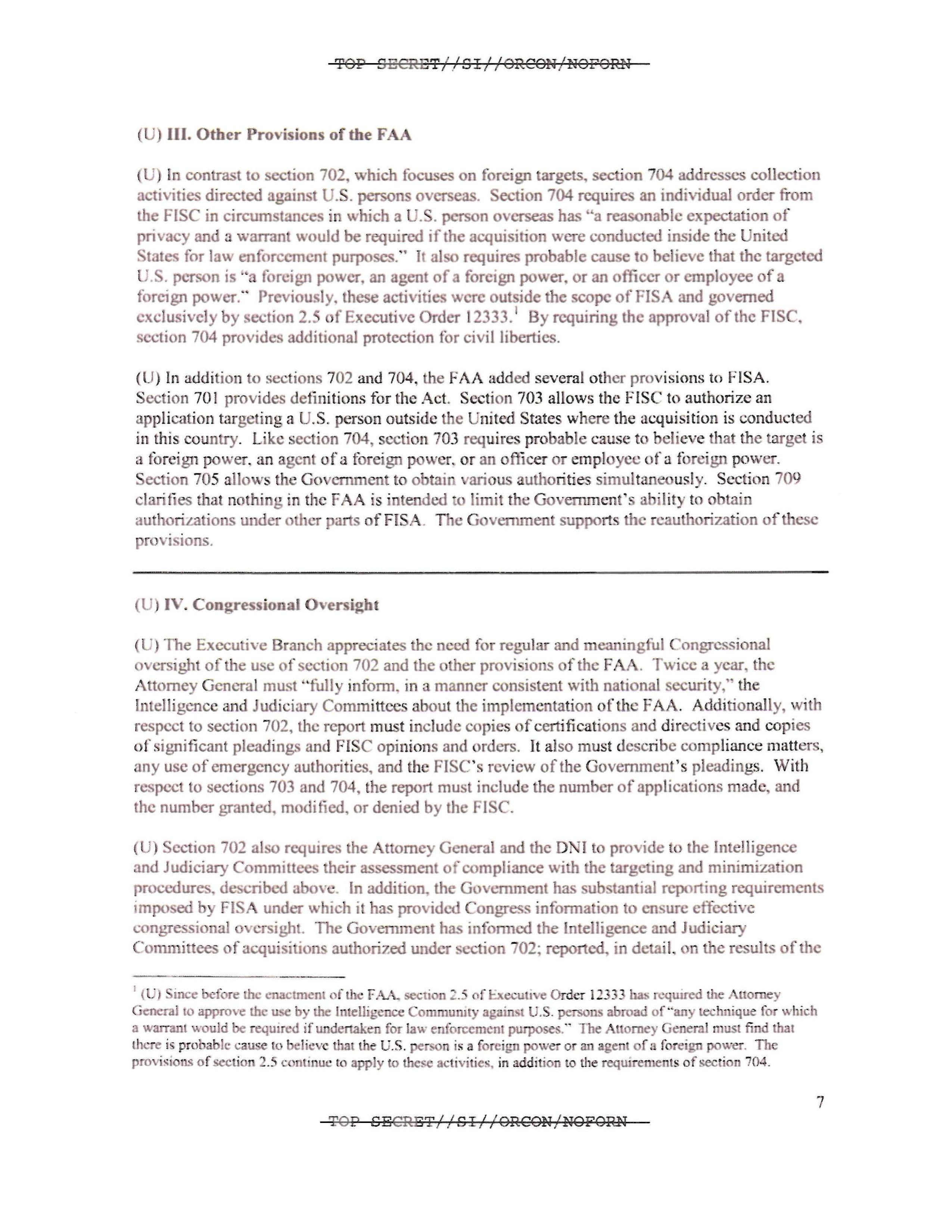
(U) III. Other Provisions of the FAA
(U) In contrast to section 702, which focuses on foreign targets, section 704 addresses collection activities directed against U.S. persons overseas. Section 704 requires an individual order from the FISC in circumstances in which a U.S. person overseas has "a reasonable expectation of privacy and a warrant would be required if the acquisition were conducted inside the United States for law enforcement purposes." It also requires probable cause to believe that the targeted U.S. person is "a foreign power, an agent of a foreign power, or an officer or employee of a foreign power." Previously, these activities were outside the scope of FISA and governed exclusively by section 2.5 of Executive Order 12333. By requiring the approval of the FISC, section 704 provides additional protection for civil liberties.
(U) In addition to sections 702 and 704, the FAA added several other provisions to FISA. Section 701 provides definitions for the Act. Section 703 allows the FISC to authorize an application targeting a U.S. person outside the United States where the acquisition is conducted in this country. Like section 704, section 703 requires probable cause to believe that the target is a foreign power, an agent of a foreign power, or an officer or employee of a foreign power. Section 705 allows the Government to obtain various authorities simultaneously. Section 709 clarifies that nothing in the FAA is intended to limit the Government's ability to obtain authorizations under other parts of FISA. The Government supports the reauthorization of these provisions.
(U) IV. Congressional Oversight
(U) The Executive Branch appreciates the need for regular and meaningful Congressional oversight of the use of section 702 and the other provisions of the FAA. Twice a year, the Attorney General must "fully inform, in a manner consistent with national security," the Intelligence and Judiciary Committees about the implementation of the FAA. Additionally, with respect to section 702, the report must include copies of certifications and directives and copies of significant pleadings and FISC opinions and orders. It also must describe compliance matters, any use of emergency authorities, and the FISC's review of the Government's pleadings. With respect to sections 703 and 704, the report must include the number of applications made, and the number granted, modified, or denied by the FISC.
(U) Section 702 also requires the Attorney General and the DNI to provide to the Intelligence and Judiciary Committees their assessment of compliance with the targeting and minimization procedures, described above. In addition, the Government has substantial reporting requirements imposed by FISA under which it has provided Congress information to ensure effective congressional oversight. The Government has informed the Intelligence and Judiciary Committees of acquisitions authorized under section 702; reported, in detail, on the results of the
(U) Since before the enactment of the FAA, section 2.5 of Executive Order 12333 has required the Attorney General to approve the use by the Intelligence Community against U.S. persons abroad of "any technique for which a warrant would be required if undertaken for law enforcement purposes." The Attorney General must find that there is probable cause to believe that the U.S. person is a foreign power or an agent of a foreign power. The provisions of section 2.5 continue to apply to these activities, in addition to the requirements of section 704.
TOP SECRET//SI//ORCON/NOFORN
7
TOP SECRET//SI//ORCON/NOFORN
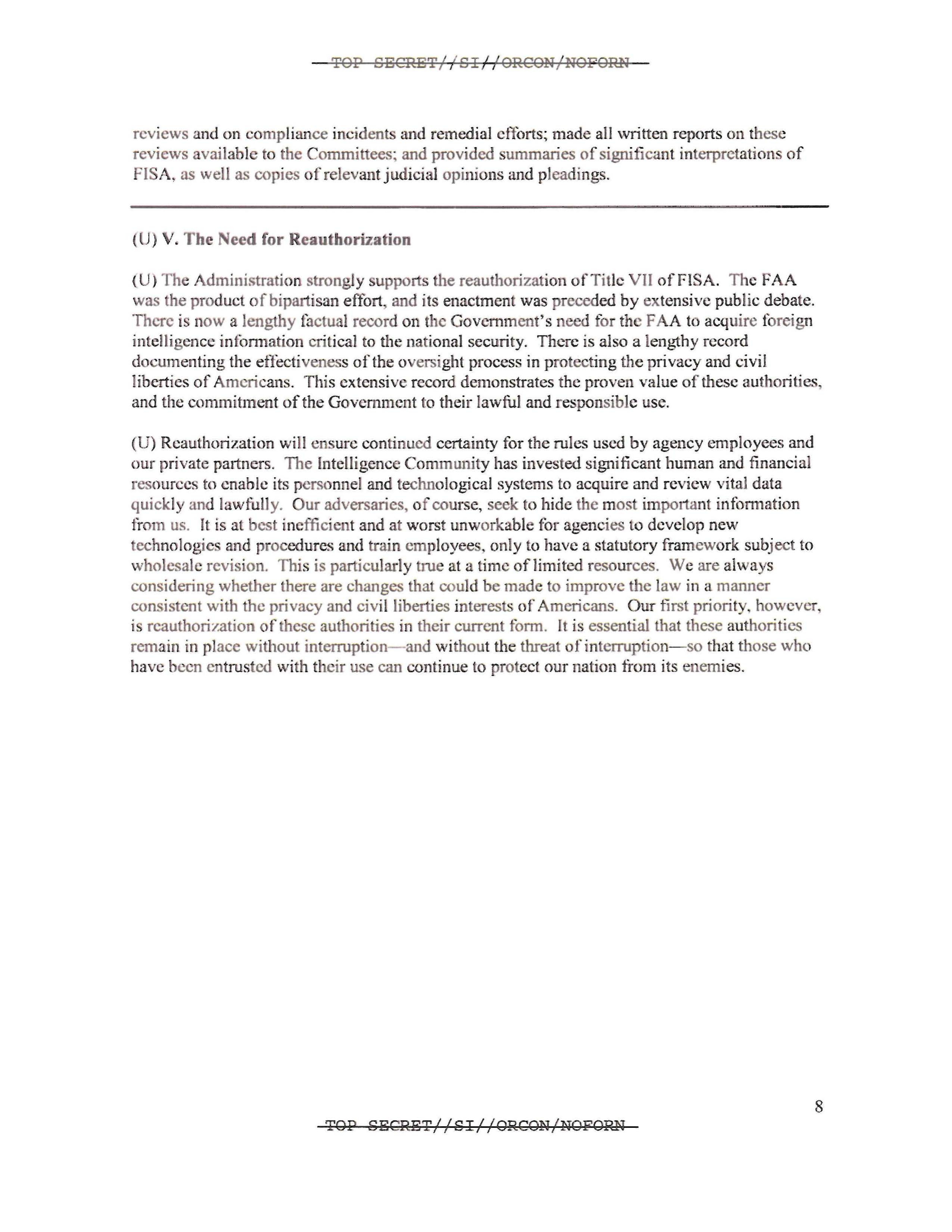
reviews and on compliance incidents and remedial efforts; made all written reports on these reviews available to the Committees; and provided summaries of significant interpretations of FISA, as well as copies of relevant judicial opinions and pleadings.
(U) V. The Need for Reauthorization
(U) The Administration strongly supports the reauthorization of Title VII of FISA. The FAA was the product of bipartisan effort, and its enactment was preceded by extensive public debate. There is now a lengthy factual record on the Government's need for the FAA to acquire foreign intelligence information critical to the national security. There is also a lengthy record documenting the effectiveness of the oversight process in protecting the privacy and civil liberties of Americans. This extensive record demonstrates the proven value of these authorities, and the commitment of the Government to their lawful and responsible use.
(U) Reauthorization will ensure continued certainty for the rules used by agency employees and our private partners. The Intelligence Community has invested significant human and financial resources to enable its personnel and technological systems to acquire and review vital data quickly and lawfully. Our adversaries, of course, seek to hide the most important information from us. It is at best inefficient and at worst unworkable for agencies to develop new technologies and procedures and train employees, only to have a statutory framework subject to wholesale revision. This is particularly true at a time of limited resources. We are always considering whether there are changes that could be made to improve the law in a manner consistent with the privacy and civil liberties interests of Americans. Our first priority, however, is reauthorization of these authorities in their current form. It is essential that these authorities remain in place without interruption—and without the threat of interruption—so that those who have been entrusted with their use can continue to protect our nation from its enemies.
8
TOP SECRET//SI//ORCON/NOFORN
TOP SECRET//SI//ORCON/NOFORN
Attachment
Value of Section 702 Collection
(U) Section 702 is a critical intelligence collection tool that has helped to protect national security. The following are "real-life" examples that demonstrate the broad range of important information that the Intelligence Community has obtained.
[REDACTED]
[REDACTED]
[REDACTED]
[REDACTED]
9
TOP SECRET//SI//ORCON/NOFORN
TOP SECRET//SI//ORCON/NOFORN
[REDACTED]
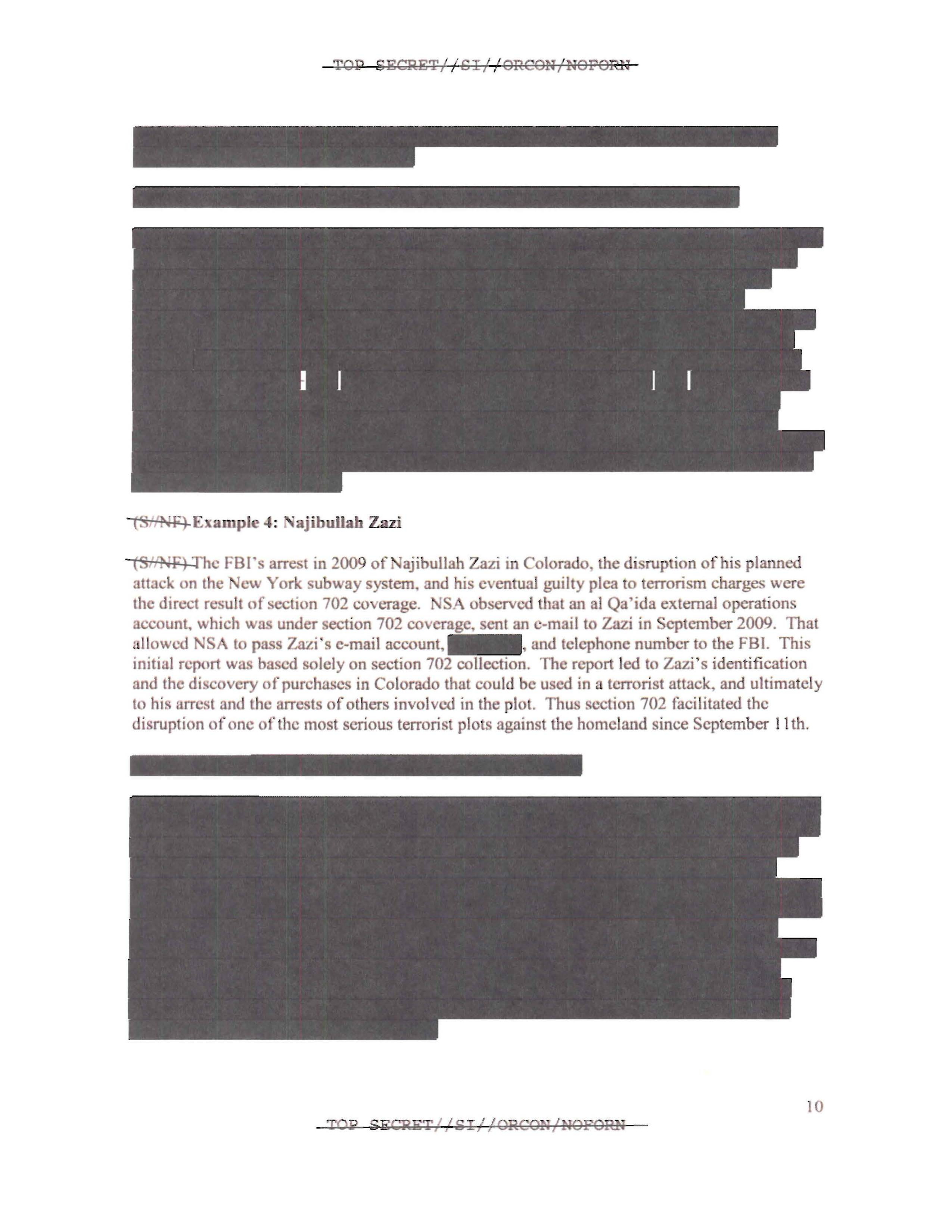
(S//NF) Example 4: Najibullah Zazi
(S//NF) The FBI's arrest in 2009 of Najibullah Zazi in Colorado, the disruption of his planned attack on the New York subway system, and his eventual guilty plea to terrorism charges were the direct result of section 702 coverage. NSA observed that an al Qa'ida external operations account, which was under section 702 coverage, sent an e-mail to Zazi in September 2009. That allowed NSA to pass Zazi's e-mail account, [REDACTED] and telephone number to the FBI. This initial report was based solely on section 702 collection. The report led to Zazi's identification and the discovery of purchases in Colorado that could be used in a terrorist attack, and ultimately to his arrest and the arrests of others involved in the plot. Thus section 702 facilitated the disruption of one of the most serious terrorist plots against the homeland since September 11th.
[REDACTED]
10
TOP SECRET//SI//ORCON/NOFORN
TOP SECRET//SI//ORCON/NOFORN
[REDACTED]
[REDACTED]
11
TOP SECRET//SI//ORCON/NOFORN
Related Documents
-
-
-
-
-
Microsoft Corporation's First Amended Motion for Declaratory Judgment or Other Appropriate Relief Authorizing Disclosure of Aggregate Data Regarding Any FISA Orders It Has Received, In re Motion to Disclose Aggregate Data Regarding FISA Orders FOIA [pdf]
FISC/FISCR Court Filings
ACLU,EFF ↗ (2013-09-09)