Tag: user tracking 4 documents
Search documents matching “user tracking” →Free-text subjects the curators added. Unlike the other axes these are not necessarily from the documents' own vocabulary, so they are the loosest thing to browse by (and the most forgiving).
Graphs
By Banner
Refine (combine with another filter, via search)
Sort: Title
Documents
-
Advanced HTTP Activity Analysis [pdf]
This NSA training document from 2009 teaches intelligence analysts how to analyze HTTP internet traffic and exploit it using the XKEYSCORE surveillance system to monitor and identify internet users globally.
“XKEYSCORE: NSA’s Google for the World’s Private Communications” - The Intercept ↗ (2015-07-01) · “No Place to Hide” - Metropolitan Books ↗ (2014-05-13) · Marquis-Boire, Morgan · Greenwald, Glenn · Lee, Micah -
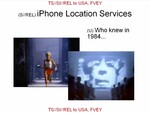
How the NSA Accesses Smartphone Data [pdf]
This document reveals how the NSA and its Five Eyes partners developed sophisticated methods to exploit iPhone location services and BlackBerry communications, framing smartphone users as “zombies” willingly sharing data. It includes examples of intercepted geolocation data and decrypted BlackBerry emails, illustrating targeted surveillance capabilities against both consumer and government communications.
-
Kaspersky User-Agent Strings [pdf]
This September 2008 NSA technical report reveals that the agency discovered Kaspersky antivirus software's user-agent strings contain encoded serial numbers and can function as unique machine identifiers, allowing tracking of individual computers running the Russian security software across intercepted network traffic collected through the YACHTSHOP surveillance program.
-
PINWALE: Transnational DNI Training [pdf]
This presentation is a classified NSA training guide on PINWALE, a SIGINT database used for the storage, retrieval, and analysis of intercepted digital network intelligence (DNI) communications. It outlines system capabilities, query creation, search tools, and interfaces such as NEXUS, UIS, and AGILITY, explaining how analysts search, retrieve, and analyze both content and metadata — including FISA-partitioned data — within the Five Eyes intelligence framework.