Tag: file download 3 documents
Search documents matching “file download” →Free-text subjects the curators added. Unlike the other axes these are not necessarily from the documents' own vocabulary, so they are the loosest thing to browse by (and the most forgiving).
Graphs
By Banner
Refine (combine with another filter, via search)
Sort: Title
Documents
-
FOXACID Overall Briefing [pdf]
FOXACID is the NSA's exploit server infrastructure designed to gain "initial access" to target computers by tricking them into visiting malicious websites through spam emails, man-in-the-middle attacks, or split-second packet injection techniques that redirect legitimate web traffic. The document reveals how the agency has evolved from low-success spam operations (less than 1% success rate) to sophisticated "QUANTUM" techniques that achieve up to 80% success rates by exploiting web browsers through services like Yahoo and Facebook, allowing the NSA to compromise any target whose web traffic passes through monitored network chokepoints—with the chilling assessment that "if we can get the target to visit us in some sort of web browser, we can probably own them."
Programs: FOXACID · WILLOWVIXEN · GENUINEDRAFT · SECONDDATE · QUANTUMTHEORY · TURMOIL · TURBINE · WEBSNIPER · QUANTUMINSERT · QUANTUMBISCUIT · QUANTUMDIRK · QUANTUM · VALIDATOR · OLYMPUS · MISTYVEAL · SSO · STRAIGHTBIZARRE · ISLANDTRANSPORT -
Free File Uploaders [pdf]
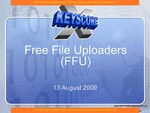
This 2009 NSA training presentation for the XKEYSCORE system details how analysts can monitor Free File Uploader (FFU) websites like Zshare and RapidShare, which are difficult to track due to a lack of strong selectors. The guide introduces the "Web File Transfer" plug-in, a specialized tool designed to extract key metadata like original filenames and download/delete links from FFU web traffic.
-
GRIMPLATE - First Steps Toward Identifying Adversarial Use of BitTorrent [pdf]
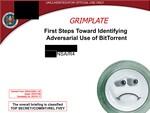
This document outlines the NSA's GRIMPLATE program, which was developed to monitor and analyze BitTorrent traffic on the Department of Defense's NIPRnet to identify potentially malicious activity. The program focuses on crawling the Distributed Hash Table (DHT) of BitTorrent networks to gather data on file-sharing nodes and peer connections, in order to detect and mitigate threats while building a case for halting unauthorized P2P usage on secure networks.