Tag: BRICS 3 documents
Search documents matching “BRICS” →Free-text subjects the curators added. Unlike the other axes these are not necessarily from the documents' own vocabulary, so they are the loosest thing to browse by (and the most forgiving).
Refine (combine with another filter, via search)
Sort: Title
Documents
-
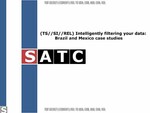
Intelligently filtering your data: Brazil and Mexico case studies [pdf]
These documents reveal that the NSA conducted targeted surveillance operations against high-profile Brazilian and Mexican figures, including President Dilma Rousseff and presidential candidate Enrique Peña Nieto, using advanced contact-graph filtering and data analysis techniques to extract relevant intelligence from intercepted communications. These documents show how NSA analysts systematically developed intelligence on foreign leaders during election periods and diplomatic activities, framing it as “target development,” but in practice enabling deep political espionage under the guise of analytical innovation.
“Veja os documentos ultrassecretos que comprovam espionagem a Dilma” - O Globo ↗ (2013-09-02) · “No Place to Hide” - Metropolitan Books ↗ (2014-05-13) · Greenwald, Glenn -
Quadrennial Intelligence Review Final Report, 2009 [pdf]
This 2009 strategic review from the Director of National Intelligence outlines potential future operating concepts for the US Intelligence Community, including "safe bets" like mass data analysis (Sentient Enterprise) and controversial "strategic hedges" such as using clandestine cyber operations to acquire proprietary technology from foreign corporations to benefit US industry (Technology Acquisition by All Means).
People: Shedd, David R. -
Responsibility 3B: Implications of Technology & Geopolitical Trends [pdf]
This document outlines a classified NSA report on geopolitical trends from 2011 to 2016, highlighting key issues like global energy security, military modernization in China and Russia, cyber threats, and the rise of extremism. Notably, climate change is ranked 31st out of 34 priorities, reflecting its relatively low importance compared to issues.