Banner: UNCLASSIFIED//FOR OFFICIAL USE ONLY 4 documents
Search documents matching “UNCLASSIFIED//FOR OFFICIAL USE ONLY” →The marking line each document prints.
Graphs
Refine (combine with another filter, via search)
Sort: Title
Documents
-
BOUNDLESSINFORMANT – Frequently Asked Questions [pdf]
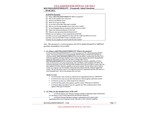
This document outlines the NSA’s internal metadata analysis tool, designed to provide real-time visualizations and statistics on global SIGINT collection by country, organization, and site. It explains the tool’s purpose, data sources, technical architecture, views, data limitations, and the process for requesting feature enhancements, highlighting its role in cataloging surveillance activity without human intervention.
Programs: BOUNDLESSINFORMANT · ASDF · GAO · RAMPART-A · SPINNERET · GM-PLACE · FALLOUT · TUSKATTIRE · FASCIA · MUSCULAR · Terrestrial RF · MachineShop · TurkeyTower · CloudBase · GXT · ExtGWT · JUGGERNAUT · LOPER · FLAWMILL · SSO · MAPREDUCE“Boundless Informant: the NSA's secret tool to track global surveillance data” - The Guardian ↗ (2013-06-08) · “NSA-files repeatedly show collection of data «against countries» - not «from»” - Dagbladet ↗ (2013-11-22) · “New NSA Revelations: Inside Snowden's Germany File” - Der Spiegel ↗ (2014-06-18) · Greenwald, Glenn · MacAskill, Ewen · Becker, Sven · Gude, Hubert · Horchert, Judith · Müller-Maguhn, Andy · Poitras, Laura · Reißmann, Ole · Rosenbach, Marcel · Schindler, Jörg · Schmid, Fidelius · Sontheimer, Michael · Stark, Holger -
Lesson 4: So you got U.S. Person Information? [pdf]
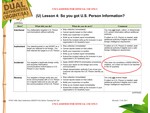
This slide is used in a training course for NSA intelligence collectors and analysts. It tells the trainees what to do if they collect communications "to, from or about" a U.S. citizen, green card holder or company. The slide's revision date is nearly one month after the Foreign Intelligence Surveillance Court ruled on Oct. 3, 2011 that the NSA's handling of some "U.S. Persons" data was unlawful. The highlighted portion of the slide is notable because it shows that "incidentally" acquired U.S. communications, which may account for the highest volume of American content collected, are not purged from NSA databases. Analysts do not need to report "incidental" collection to the NSA Inspector General because it is not deemed a violation of rules. They may use the data routinely in "minimized" form, with identities masked, and with supervisory permission they may unmask the identities of U.S. persons in reports if the "customer set" requires them.
-
N.S.A. Timeline of Surveillance Law Developments [pdf]
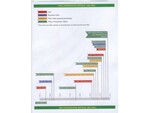
This chart, apparently from an internal N.S.A. presentation, lists milestones in surveillance rules over nearly four decades. The July 2002 “Raw Take” sharing order, whose existence has not previously been disclosed, is just one of three rulings by the Foreign Intelligence Surveillance Court to make the list. The other two were 2004 and 2006 rulings allowing bulk collection of data about emails and phone calls.
-
Re: Ehsanul Sadequee FISA Request [pdf]
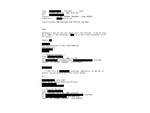
This NSA email chain from April 2006 shows NSA analysts urgently requesting FBI FISA authorization documents for Ehsanul Sadequee so they could conduct a "TAO operation" (Tailored Access Operations hack) to retrieve a file he had shared, racing against the FBI's impending arrest which would invalidate their surveillance authority. The emails reveal the NSA's dependence on FBI-obtained FISA warrants to justify their operations and their need to complete the hack before Sadequee's arrest made their authorization "invalid."
Programs: CADENCEPeople: Sadequee, Ehsanul Islam